










Wall Protection Designed as an Architectural Feature
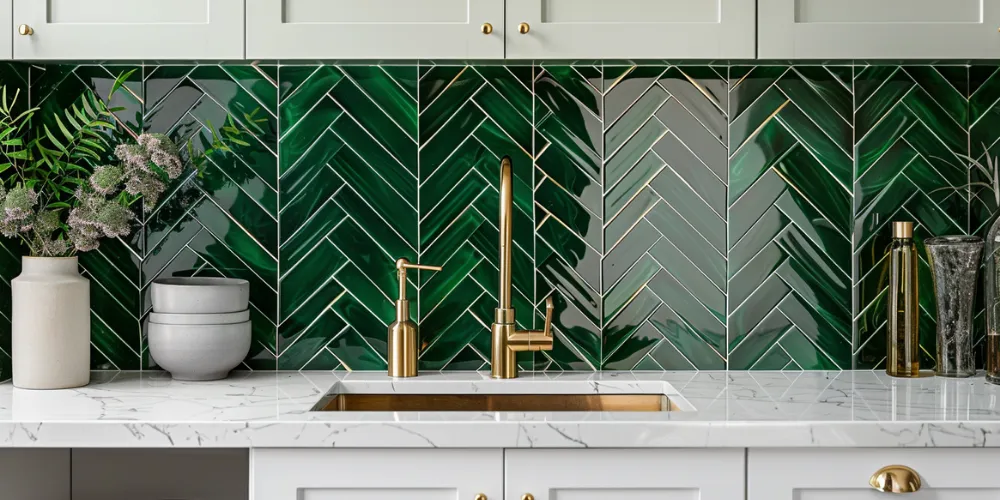
A backsplash protects the wall behind counters, sinks, vanities, ranges, bars, and other active surfaces while creating an important visual layer within the room.
Backsplashes may be installed as a compact section behind a sink or cooking area, extended between countertops and upper cabinets, or carried across an entire wall as a continuous decorative surface.
Natural stone and mosaic backsplashes introduce pattern, texture, grout detail, color movement, and material character. For additional options, explore our tile backsplash collection or browse all mosaic tiles .
Benefits of Installing a Backsplash
Material, finish, grout, layout, sealing, installation, and maintenance determine how the finished backsplash performs in daily use.
Wall Protection
Helps protect painted or finished walls from water, cooking residue, grease, food splashes, cosmetics, soaps, and everyday contact.
Visual Character
Pattern, color, texture, grout, and natural variation introduce a distinct design feature without changing the room’s full material palette.
Material Coordination
A backsplash can connect countertops, cabinets, floors, fixtures, hardware, paint colors, and surrounding wall finishes.
Layout Flexibility
Subway, herringbone, hexagon, basket weave, arabesque, geometric, and decorative designs support varied interiors.
Defined Finish
Properly planned edges, corners, moldings, grout joints, and termination points create a more complete installation.
Popular Backsplash Materials
Compare color, variation, finish, pattern, maintenance, exposure, grout, and surrounding materials before selecting the final surface.
Marble Mosaics
Natural veining and polished, honed, or textured finishes create refined backsplashes for traditional, transitional, and contemporary kitchens or bathrooms.
Explore marble mosaicsDolomite Mosaics
Bright white and soft gray tones provide a clean, light-reflective surface for vanities, kitchens, showers, niches, and decorative walls.
Explore dolomite mosaicsLimestone Tile
Cream, beige, ivory, and gray limestone introduces subtle fossils, quiet movement, and a soft architectural surface for neutral interiors.
Explore limestone tilesTravertine Tile
Warm earth tones, pores, and mineral movement create textured backsplashes suited to Mediterranean, rustic, traditional, and natural interiors.
Explore travertineGeometric Mosaics
Hexagon, herringbone, basket weave, arabesque, fish scale, and mixed geometric patterns create stronger visual movement.
Shop by patternDecorative & Mixed-Stone Designs
Waterjet-inspired layouts, contrasting borders, mixed stones, accent pieces, and architectural patterns create statement backsplash installations.
View all mosaicsWhere Can Backsplash Tile Be Used?
Suitability depends on the material, finish, substrate, moisture, heat exposure, grout, sealer, installation, and manufacturer recommendations.
Kitchen Counter Walls
Protect and finish the space between countertops and upper cabinets while coordinating cabinets, counters, fixtures, flooring, and appliances.
Range & Cooking Features
Create a centered feature behind the range using framed mosaics, herringbone layouts, contrasting borders, slabs, or decorative tile compositions.
Bathroom Vanities
Protect the wall behind sinks and faucets while connecting countertops, mirrors, lighting, fixtures, and cabinetry.
Wet Bars & Beverage Areas
Add pattern and protection behind sinks, coffee stations, serving counters, wine areas, and entertainment cabinetry.
Fireplace & Feature Walls
Selected products may be used for fireplace surrounds, media walls, niches, framed panels, and decorative architectural features.
Selected Outdoor Kitchens
Outdoor use must be confirmed for the specific tile, stone, backing, climate, substrate, installation system, moisture exposure, and freeze-thaw conditions.
Choosing the Right Backsplash
Start with the countertop, cabinetry, room lighting, hardware, floor, and desired level of visual movement.
- Material: Natural stone provides authentic variation, while other tile types may offer a more consistent appearance.
- Pattern: Simple grids create calm surfaces; herringbone and geometric layouts create more movement.
- Color: Match surrounding finishes for a quiet look or introduce contrast for a stronger focal point.
- Finish: Polished surfaces reflect more light, while honed and textured finishes create softer visual depth.
- Maintenance: Consider cooking residue, water, cosmetics, acids, oils, grout joints, sealing, and cleaning requirements.
Plan the Pattern and Termination Points
A backsplash should be laid out before installation to coordinate focal points, cuts, corners, outlets, cabinets, windows, and exposed edges.
- Dry-lay representative sheets: Review pattern flow, color, direction, sheet lines, borders, cuts, and grout spacing.
- Center important areas: Align patterns behind ranges, sinks, mirrors, faucets, shelves, and architectural features.
- Plan exposed edges: Use finished edges, moldings, pencil trims, metal profiles, or professionally cut terminations.
- Review tile scale: Compare formats with our tile size guide .
- Test grout color: Similar grout softens the layout, while contrast emphasizes pattern and individual pieces.
Prepare the Wall and Setting System
Successful installation depends on a flat, clean, stable substrate and materials compatible with the selected tile or natural stone.
- Prepare the wall: Remove loose finishes, grease, dust, moisture, uneven areas, and contaminants before installation.
- Use compatible mortar: Light-colored stone may require appropriate white setting materials to reduce discoloration risk.
- Adjust mosaic sheets: Match the spacing between sheets to the internal joints within each sheet.
- Plan outlets and fixtures: Confirm cuts, box extensions, faucet clearances, cabinet lines, shelves, and edge details.
Allow for Cuts, Pattern Alignment & Repairs
Order calculations should include more than the exact measured wall area.
- Include additional material: Allow for cuts, outlets, corners, breakage, pattern alignment, color selection, and borders.
- Inspect before installation: Review finish, dimensions, color, variation, damage, quantity, and application suitability.
- Blend multiple boxes: Distribute natural stone variation across the complete backsplash surface.
- Retain spare pieces: Matching material from the original production lot may simplify later repairs or alterations.
Maintaining Backsplash Tile
Cleaning requirements depend on the material, finish, grout, location, cooking activity, moisture exposure, and selected sealer.
Clean Residue Promptly
Remove water, grease, food, oils, cosmetics, soaps, and colored liquids before residue builds up.
Use Suitable Cleaner
Natural stone generally requires a pH-neutral, stone-safe cleaner rather than acidic or abrasive products.
Seal When Recommended
Sealing and resealing depend on the material, finish, grout, exposure, staining risk, and selected sealer.
Maintain Grout and Joints
Inspect grout, perimeter joints, corners, sealant, transitions, and areas around fixtures periodically.
Backsplash FAQs
Helpful answers about kitchens, bathrooms, materials, grout, sealing, cleaning, installation, height, samples, and outdoor suitability.
What is the purpose of a backsplash?
A backsplash helps protect the wall behind counters, sinks, ranges, vanities, and active work areas while adding color, texture, pattern, and architectural detail.
Which backsplash material is best?
The best material depends on design, maintenance, exposure, finish, budget, natural variation, cleaning requirements, and surrounding surfaces.
Can natural stone be used for a kitchen backsplash?
Yes. Marble, dolomite, limestone, travertine, and other suitable natural stones may be used. Consider oils, acids, heat, staining, sealing, grout, and cleaning requirements.
How high should a backsplash extend?
A backsplash may extend a few inches above the counter, reach the underside of upper cabinets, continue behind a range hood, or cover the entire wall.
Does natural stone backsplash tile need sealing?
Many natural stone installations benefit from a suitable penetrating sealer. Requirements and frequency depend on the stone, finish, grout, exposure, and selected product.
Can I install backsplash tile myself?
Some straightforward installations may be suitable for experienced DIY users. Natural stone, complex mosaics, uneven walls, decorative patterns, outlets, and exposed edges may benefit from professional installation.
Can backsplash tile be used outdoors?
Outdoor suitability must be confirmed for the specific tile, stone, finish, backing, climate, freeze-thaw exposure, substrate, mortar, grout, and installation system.
Can I order backsplash samples?
Sample availability depends on the product. Review the product page or contact Stone Market USA to confirm material, color, finish, pattern, chip size, dimensions, inventory, and sample options.
Need Help Selecting a Backsplash?
Contact Stone Market USA for assistance comparing materials, colors, patterns, finishes, chip sizes, grout options, quantities, samples, and current availability.