






Soft Natural Tones for Warm, Refined Interiors
Limestone tiles combine quiet color, subtle texture, fossil detail, and natural mineral movement for floors, walls, bathrooms, kitchens, and architectural features.
Each tile may display natural differences in tone, pores, shells, fossils, sediment lines, mineral markings, and surface texture. These geological characteristics create an authentic installation rather than a perfectly uniform manufactured appearance.
Limestone tiles can be coordinated with matching limestone pavers , pool coping, wall caps, mosaics, moldings, and other limestone products to create a continuous indoor and outdoor material palette.
Benefits of Limestone Tile
Properly selected, installed, and maintained limestone tile provides a calm natural stone surface for a variety of residential and commercial interiors.
Soft Natural Palette
Cream, beige, ivory, taupe, and gray tones create warm, understated interiors that coordinate easily with other materials.
Architectural Versatility
Limestone complements modern, traditional, coastal, Mediterranean, minimalist, and transitional interiors.
Finish Options
Honed, brushed, tumbled, sandblasted, and other textured surfaces provide varied levels of sheen and character.
Multiple Applications
Suitable products may support floors, walls, bathrooms, backsplashes, fireplaces, feature walls, and entry areas.
Coordinated Design
Tiles can coordinate with limestone pavers, coping, mosaics, wall caps, steps, and architectural stone details.
Where Can Limestone Tiles Be Used?
Application suitability depends on the specific limestone, finish, dimensions, thickness, traffic, moisture, substrate, sealing, maintenance, and installation system.
Living Rooms & Dining Areas
Create warm, continuous flooring that coordinates with wood, cabinetry, rugs, metals, plaster, and natural textiles.
Kitchens
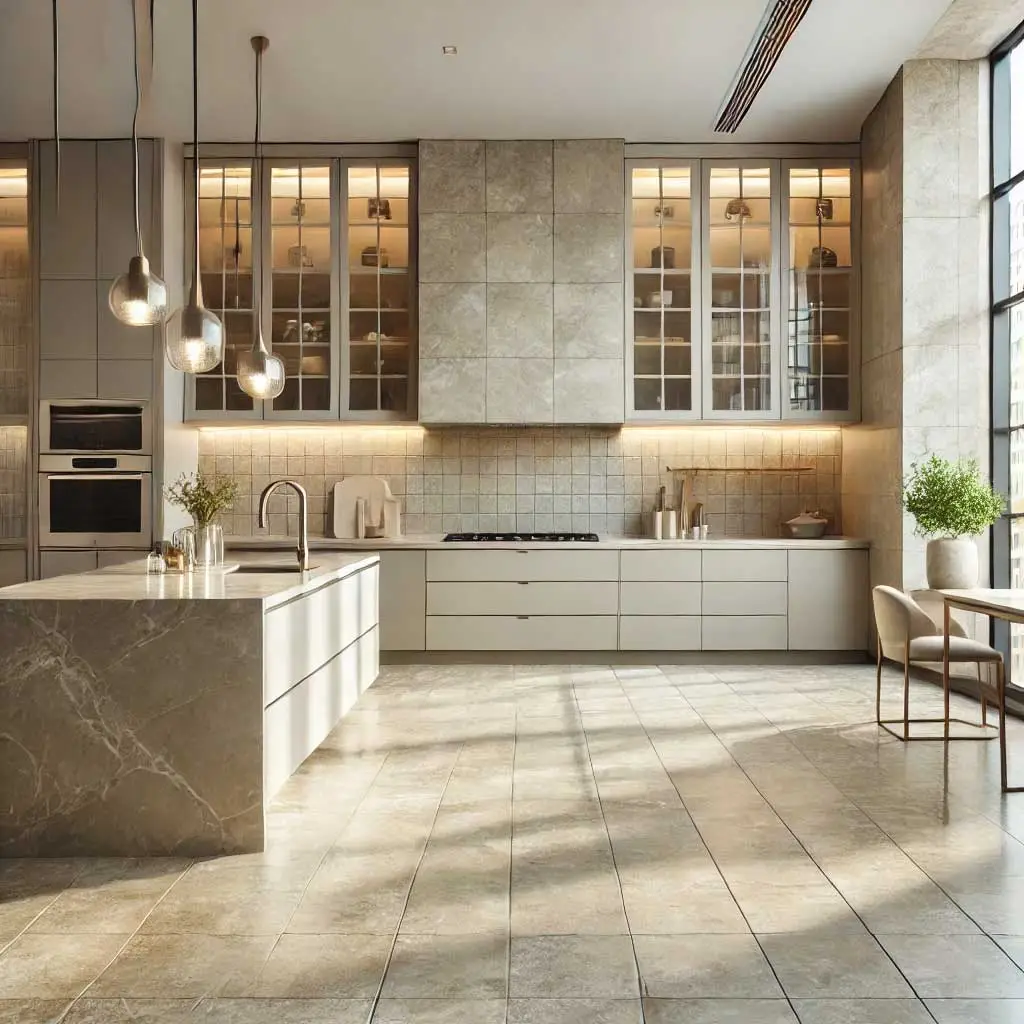
Suitable limestone tiles may support kitchen floors, backsplashes, walls, islands, and surrounding living areas when exposure and maintenance are considered.
Bathrooms
Limestone can create calm bathroom floors, vanity walls, tub surrounds, and decorative surfaces when moisture, finish, sealing, and installation are properly planned.
Entryways & Hallways
Natural stone flooring can introduce subtle architectural character through foyers, corridors, and transitional spaces.
Fireplaces & Feature Walls
Use limestone tile to create fireplace surrounds, entertainment walls, framed panels, and understated architectural focal points.
Commercial Interiors
Selected limestone products may support hotels, restaurants, offices, retail spaces, lobbies, and other professionally specified interiors.
Limestone Tile Finishes
Finish affects color depth, sheen, texture, traction, maintenance, weathering, and suitability for the intended application.
Honed Limestone
A smooth matte or low-sheen surface creates a calm, refined appearance that highlights natural color without strong reflection.
Tumbled Limestone
Softened edges and a textured surface create a relaxed, aged appearance suited to traditional, Mediterranean, and rustic-inspired interiors.
Brushed or Textured Limestone
Brushed, sandblasted, and related treatments introduce tactile character while making fossils and natural mineral movement more visible.
Variation Is Part of Limestone’s Identity
Tiles should be reviewed across multiple boxes before installation so natural color, fossil detail, and mineral movement can be intentionally distributed.
Fossils & Shells
Shell fragments, fossils, sediment lines, and organic markings may appear naturally throughout limestone.
Tonal Variation
Pieces may shift between lighter, darker, warmer, cooler, cream, beige, gray, or blended tones.
Pores & Mineral Detail
Natural pores, veins, deposits, fissures, and mineral markings may occur between individual tiles.
Finish Response
The stone may appear different when honed, tumbled, brushed, wet, sealed, shaded, or viewed under varied lighting.
Choosing the Right Limestone Tile
Review application, finish, color, size, thickness, traffic, moisture, maintenance, and surrounding materials before ordering.
- Application: Confirm whether the tile is suitable for floors, walls, bathrooms, backsplashes, wet areas, or commercial use.
- Finish: Honed and textured surfaces create different visual, cleaning, traction, and maintenance characteristics.
- Color: Cream and ivory create lighter spaces, while beige, taupe, and gray add stronger tonal movement.
- Tile size: Large formats create fewer grout lines, while smaller dimensions support detailed layouts and compact rooms.
- Natural variation: Review representative samples and expect differences between individual tiles and production lots.
Plan the Complete Surface Before Installation
Layout influences grout lines, cuts, transitions, focal areas, room proportions, and the distribution of natural variation.
- Dry-lay representative tiles: Review color, fossils, finish, direction, joints, cuts, borders, and transitions.
- Blend multiple boxes: Distribute natural tone and mineral variation throughout the complete installation.
- Review tile scale: Compare dimensions using our tile size guide .
- Coordinate grout: Similar grout creates a quieter surface, while contrast makes individual tiles more visible.
- Plan transitions: Review doorways, thresholds, cabinetry, corners, floor levels, niches, and adjacent materials.
Prepare a Flat, Stable Substrate
Long-term performance depends on substrate preparation, flatness, structural support, waterproofing, mortar coverage, movement joints, and installation workmanship.
- Check substrate flatness: Uneven walls or floors can contribute to lippage, alignment issues, voids, and irregular grout joints.
- Use stone-compatible materials: Select mortar, grout, membranes, sealers, and cleaners suitable for natural limestone.
- Prepare wet areas: Bathrooms and showers require appropriate waterproofing, drainage, slope, joints, and substrate preparation.
- Plan movement joints: Perimeter, expansion, and structural movement requirements should be incorporated into the installation.
Allow for Cuts, Variation & Future Repairs
Order calculations should include more than the exact measured square footage of the completed surface.
- Include additional material: Allow for cuts, breakage, color selection, layout, borders, and installation complexity.
- Inspect before installation: Review dimensions, finish, variation, damage, quantity, and application suitability.
- Retain spare tiles: Matching material from the original production lot may simplify future repairs or alterations.
- Confirm coordinating pieces: Order trims, borders, thresholds, mosaics, steps, and transitions before installation begins.
Maintaining Limestone Tile
Care requirements vary according to the limestone, finish, application, traffic, moisture, grout, selected sealer, and daily exposure.
Remove Dust and Grit
Use a soft broom, dust mop, or hard-floor vacuum to reduce abrasive particles on floor surfaces.
Use pH-Neutral Cleaner
Avoid vinegar, lemon, acidic bathroom cleaners, abrasive powders, and products unsuitable for limestone.
Seal When Recommended
Sealing and resealing frequency depend on the stone, finish, room, traffic, moisture, exposure, and selected sealer.
Clean Spills Promptly
Remove oils, acidic liquids, cosmetics, soaps, colored products, and cooking residue promptly.
Limestone Tile FAQs
Helpful answers about floors, walls, bathrooms, kitchens, finishes, sealing, cleaning, outdoor use, variation, installation, and samples.
Can limestone tile be used on floors and walls?
Selected limestone tiles may be used on floors, walls, or both. Confirm product dimensions, thickness, finish, substrate, traffic, moisture, and installation suitability.
Can limestone tile be used in bathrooms?
Suitable limestone products may be used in bathrooms when moisture, finish, traction, waterproofing, slope, grout, sealing, and maintenance are properly considered.
Is limestone tile suitable for kitchen floors?
Selected limestone may be suitable for kitchen floors. Consider traffic, oils, acidic spills, scratching, cleaning, finish, sealing, and installation requirements.
Can limestone tiles be used for backsplashes?
Yes. Limestone tiles can create warm, neutral backsplash surfaces. Exposure to oils, acids, cooking residue, grout, sealing, and cleaning should be considered.
Does limestone tile need to be sealed?
Many limestone installations benefit from a suitable penetrating sealer. The need and frequency depend on stone type, finish, room, moisture, traffic, exposure, and selected product.
Can limestone tile be installed outdoors?
Outdoor suitability should not be assumed. It depends on the specific limestone, thickness, finish, absorption, climate, freeze-thaw conditions, installation system, and manufacturer approval. For exterior surfaces, review our dedicated limestone paver collection.
Why do limestone tiles vary in color and texture?
Limestone is a natural geological material. Differences in fossils, minerals, pores, tone, sediment, and texture are expected between tiles and production lots.
Can I order limestone tile samples?
Sample availability depends on the product. Review the product page or contact Stone Market USA to confirm color, finish, dimensions, thickness, inventory, and sample options.
Need Help Selecting Limestone Tile?
Contact Stone Market USA for assistance comparing limestone colors, finishes, sizes, interior applications, quantities, coordinating pavers, samples, and current availability.