

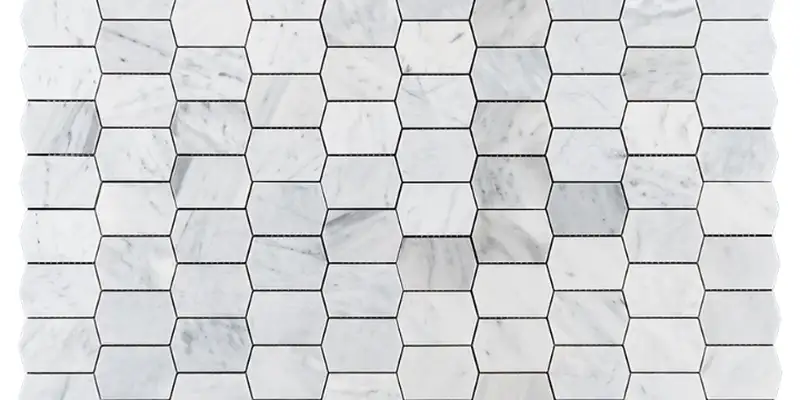
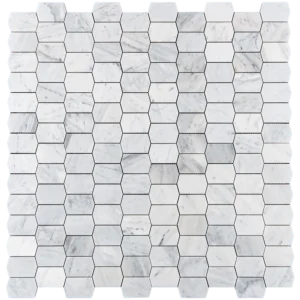
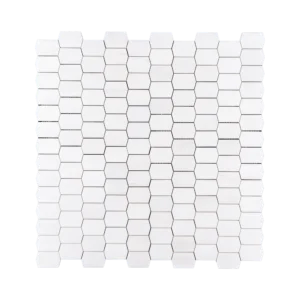
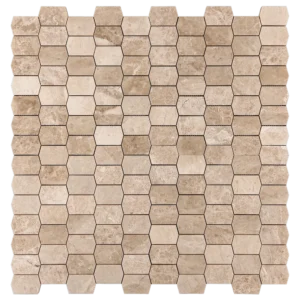
Elongated Geometry with Clean Architectural Movement
Picket mosaic tile combines an elongated central body with angled ends to create a refined pattern that feels linear, geometric, and contemporary.
Sometimes described as an elongated hexagon, the shape introduces more direction than a standard hexagon while remaining softer and less rigid than sharp diamond patterns. Its proportions can visually emphasize height, width, repetition, and architectural rhythm.
Picket mosaics are commonly used for kitchen backsplashes, bathroom walls, shower surrounds, vanity areas, fireplaces, bars, niches, and feature walls. Marble, dolomite, porcelain, and mixed-stone options support both subtle and high-contrast design concepts.
Why Choose Picket Mosaic Tile?
Picket tile combines clean directional geometry, flexible orientation, natural stone character, and strong compatibility with modern and transitional interiors.
Elongated Geometric Form
Angled ends and a longer central body create a distinctive alternative to traditional rectangular and hexagon mosaics.
Directional Visual Effect
Vertical or horizontal layouts can emphasize the height, width, or visual flow of an installation.
Flexible Layout Options
Picket pieces can be stacked, offset, vertically aligned, horizontally arranged, or incorporated into custom layouts.
Refined Material Character
Marble and dolomite introduce natural veining, tonal movement, mineral variation, and surface depth.
Picket Materials and Design Styles
Compare material movement, finish, grout contrast, orientation, maintenance, color, and room scale before selecting a picket mosaic.
Dolomite Picket
Bright white backgrounds with subtle gray movement for clean kitchens, bathrooms, vanity walls, and light interiors.
Carrara & Calacatta
Classic gray or expressive marble veining for sophisticated backsplashes, bathrooms, fireplaces, and feature walls.
Bardiglio & Gray Marble
Deeper gray tones create stronger outlines, greater movement, and a more dramatic contemporary appearance.
Polished, Honed & Tumbled
Polished finishes reflect more light, while honed and tumbled surfaces create softer, quieter, and more textured results.
Where Can Picket Tile Be Used?
Product suitability depends on the material, finish, moisture, heat, traffic, substrate, and complete installation system.
- Kitchen backsplashes: Add clean linear movement behind ranges, sinks, countertops, bars, and open shelving.
- Bathroom walls: Use picket mosaics on vanity walls, tub surrounds, shower walls, niches, and decorative sections.
- Shower feature walls: Vertical layouts can visually emphasize height and introduce a more architectural appearance.
- Fireplace surrounds: Frame fireplaces with elongated stone geometry and subtle angular transitions.
- Bars and beverage areas: Add refined surface detail behind wet bars, coffee stations, shelving, and entertaining spaces.
- Feature walls and niches: Highlight selected architectural areas without overwhelming the complete room.
Choosing the Right Picket Mosaic
Consider orientation, grout, finish, stone movement, pattern scale, lighting, and surrounding materials before making a final selection.
- Orientation: Vertical layouts emphasize height, while horizontal layouts may visually widen the surface.
- Layout style: Stacked patterns feel structured, while offset layouts introduce softer and less formal movement.
- Grout color: Matching grout reduces contrast; darker grout defines every angled edge and elongated piece.
- Finish: Polished, honed, matte, tumbled, and textured surfaces affect sheen, color depth, maintenance, and character.
- Natural variation: Marble may vary in color, veining, mineral markings, texture, and movement between sheets.
- Room coordination: Review samples with countertops, cabinetry, flooring, fixtures, field tile, paint, hardware, and lighting.
Establish Orientation and Alignment Before Installation
Picket mosaics require careful planning to control direction, points, sheet seams, grout spacing, stone variation, cuts, and pattern continuity across the surface.
Confirm the Orientation
Decide whether the picket pieces will run vertically, horizontally, stacked, or offset before installation.
Dry-Lay Multiple Sheets
Review how neighboring sheets connect and adjust individual pieces to prevent visible transitions.
Blend Multiple Boxes
Mix sheets from different boxes to distribute natural stone color and veining across the project.
Use Suitable Setting Materials
Confirm adhesive, grout, sealer, waterproofing, and substrate preparation for the selected product.
Picket Mosaic Tile FAQs
Helpful answers for comparing orientation, materials, finishes, grout, applications, quantities, samples, sealing, and installation.
What is picket mosaic tile?
Picket mosaic uses elongated tile pieces with angled ends. The shape is also commonly described as an elongated hexagon or picket-fence mosaic.
Where are picket mosaics commonly used?
They are commonly used for kitchen backsplashes, bathroom walls, shower surrounds, vanity areas, fireplaces, bars, niches, and feature walls.
Should picket tile be installed vertically or horizontally?
Both orientations can work. Vertical installation can emphasize wall height, while horizontal layouts may make a surface appear wider.
Can picket mosaic be installed in an offset layout?
Depending on the product and sheet configuration, picket tile may be arranged in stacked, aligned, or offset layouts. Confirm the intended design before installation.
What grout color works best with picket tile?
Matching grout creates a quieter and more continuous surface. Gray, charcoal, or contrasting grout makes every angled edge more visible.
Can picket mosaic be used in shower areas?
Selected products may be suitable for shower walls or floors. Confirm the specific material, finish, traction, waterproofing, drainage, and installation requirements.
Does marble picket tile need sealing?
Many marble and natural stone installations benefit from a suitable penetrating sealer. Requirements depend on the material, finish, grout, exposure, and intended application.
How can visible sheet lines be avoided?
Dry-layout several sheets, adjust individual pieces, maintain consistent spacing, blend multiple boxes, and use an installer experienced with mosaic tile.
How much extra picket tile should I order?
Additional material may be needed for angled cuts, orientation, sheet adjustment, natural variation, breakage, pattern alignment, and future repairs.
Can I order a picket mosaic tile sample?
Sample availability depends on the individual product. Review the product page or contact Stone Market USA to confirm material, color, finish, dimensions, and current inventory.
Need Help Choosing Picket Mosaic Tile?
Contact Stone Market USA for assistance comparing picket materials, colors, finishes, layout direction, grout options, quantities, samples, and current availability.