






Finishing Details for Complete Tile Installations
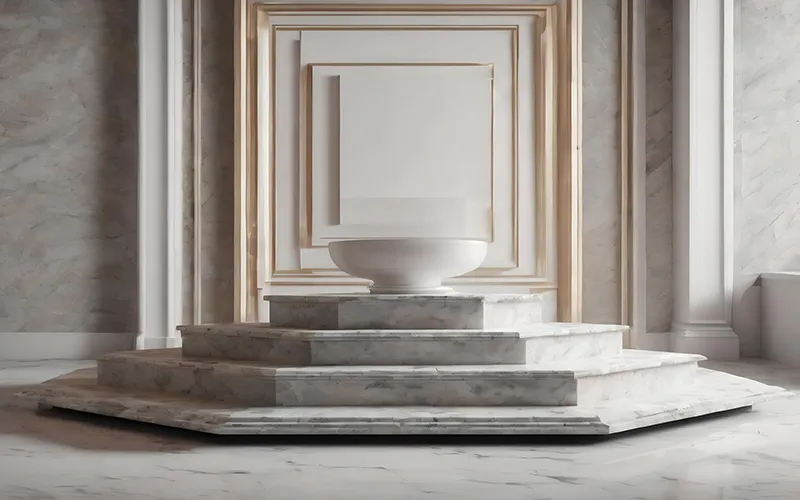
Natural stone moldings protect exposed tile edges, create intentional transitions, and add architectural detail to walls, backsplashes, shower niches, fireplaces, and decorative interior surfaces.
Although moldings occupy a relatively small area, they strongly influence how complete and professionally resolved an installation appears. The right profile can frame a feature, finish an outside edge, separate materials, or establish a decorative transition between surfaces.
Stone Market USA offers marble and natural stone molding profiles designed to coordinate with tile collections , mosaic tiles , backsplashes, bathroom walls, and architectural stone details.
Why Use Natural Stone Moldings?
Moldings combine practical edge protection with visual structure, material coordination, and refined architectural detailing.
Edge Protection
Helps finish and protect exposed tile edges from chipping, impact, wear, and unfinished transitions.
Architectural Detail
Adds depth, shadow lines, proportion, and classical or contemporary character to wall installations.
Material Coordination
Coordinates with marble tiles, mosaics, backsplashes, countertops, shower walls, and surrounding stone surfaces.
Professional Finish
Creates intentional endpoints, framed features, clean transitions, and a more complete finished installation.
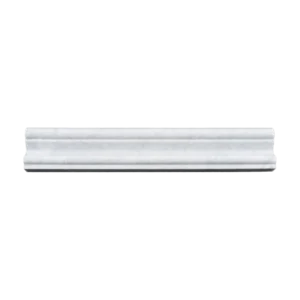
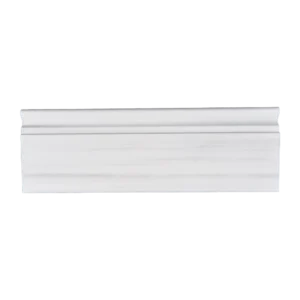
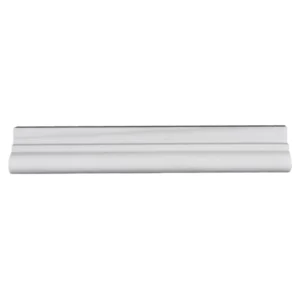
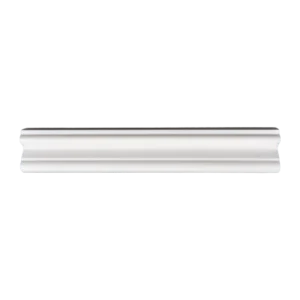
Compare Common Stone Molding Styles
Each profile creates a different level of projection, shadow, detail, and architectural emphasis.
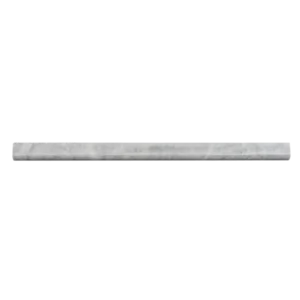
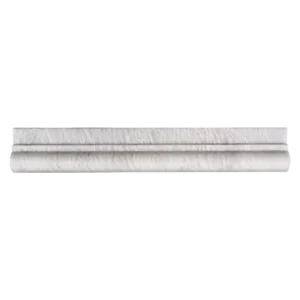
Pencil Moldings
Slim, refined trims suited to backsplash borders, shower niches, mosaic transitions, mirror frames, and exposed edges.
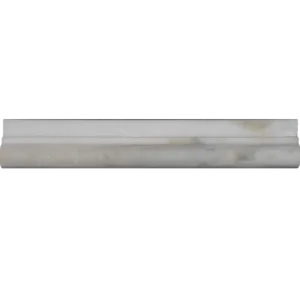
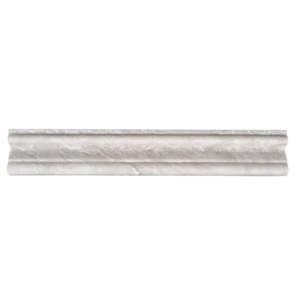
Chair Rail Moldings
More pronounced profiles that add traditional architectural depth to bathroom walls, wainscoting, backsplashes, and decorative panels.
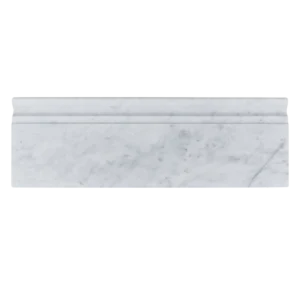
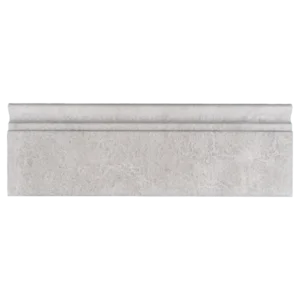
Base Moldings
Stone base profiles create a durable transition between walls and floors while protecting lower wall surfaces.
Crown Moldings
Decorative upper-wall profiles used to frame tiled areas, terminate wall surfaces, and introduce classical proportion.
Where Can Moldings Be Used?
Application suitability depends on the material, profile, dimensions, finish, substrate, exposure, installation method, and surrounding tile assembly.
- Backsplash borders: Frame kitchen and bathroom backsplashes or create a defined transition at exposed upper and side edges.
- Shower niches: Finish recessed shelves, openings, ledges, and framed features with coordinated stone trim.
- Wall transitions: Separate different tile patterns, materials, colors, finishes, or installation heights.
- Baseboard details: Create a durable stone transition between floor and wall surfaces in bathrooms and selected interiors.
- Mirrors and feature walls: Frame decorative wall panels, mirrors, fireplaces, mosaics, artwork, and architectural focal points.
Choosing the Right Molding
Review both the profile and its relationship to surrounding materials before ordering.
- Profile: A pencil trim creates a quieter edge, while chair rails and crown profiles add greater projection and detail.
- Thickness: Confirm how the molding aligns with adjacent field tile, mosaics, adhesive thickness, and wall surfaces.
- Finish: Polished, honed, brushed, and tumbled finishes influence sheen, texture, color depth, and overall coordination.
- Color and variation: Compare samples with surrounding stone because natural veining and tonal variation may differ between pieces.
- Installation location: Consider moisture, traffic, impact, cleaning, corners, cut edges, and termination details.
Coordinate Profile, Finish, Length & Color
Product specifications vary by molding profile and stone. Always verify the individual product page before planning cuts, quantities, transitions, and installation.
Finishes
Polished, honed, brushed, and tumbled options may be available depending on the selected stone and profile.
Lengths
Common lengths may include 12, 18, and 24 inches, depending on the product, material, and profile.
Profiles
Pencil, chair rail, base, crown, and other decorative profiles support different edge and transition needs.
Stone Colors
Collections may include Carrara White, Iceberg, Silver Gray, Diana Royal, Emperador Dark, Milas White, and additional natural stone colors.
Plan Moldings Before Setting Field Tile
Molding dimensions and locations should be incorporated into the tile layout before installation to prevent awkward cuts, misaligned joints, or uneven transitions.
- Confirm dimensions: Measure all borders, niches, edges, corners, returns, interruptions, and transition points.
- Dry-layout profiles: Review color, veining, joint placement, cuts, corners, and sequence before setting materials.
- Coordinate thickness: Confirm alignment with field tiles, mosaics, setting materials, waterproofing, and adjacent wall surfaces.
- Use suitable installation materials: Select mortar, adhesive, grout, sealant, and preparation methods appropriate for natural stone.
Allow for Cuts, Corners & Future Repairs
Molding quantities should include more than the exact measured linear footage.
- Include additional pieces: Allow for cuts, miters, corners, breakage, color selection, pattern alignment, and installation complexity.
- Review natural variation: Blend moldings before installation to distribute color, veining, mineral movement, and tonal differences.
- Keep spare material: Retaining matching profiles from the original production lot can simplify future repairs.
- Confirm availability: Coordinate molding and field tile availability before installation begins to avoid incomplete transitions.
Molding FAQs
Helpful answers about molding profiles, edge protection, shower niches, backsplashes, finishes, dimensions, installation, quantities, and natural variation.
What is tile molding used for?
Tile molding is used to finish exposed edges, frame decorative areas, protect transitions, separate materials, and add architectural detail to tile and natural stone installations.
What is the difference between pencil and chair rail molding?
Pencil molding is generally slimmer and more restrained, making it useful for subtle borders and edges. Chair rail molding has a larger, more decorative profile that creates stronger architectural emphasis.
Can stone moldings be used around shower niches?
Suitable stone moldings may frame shower niches when waterproofing, substrate, slope, adhesive, grout, sealant, thickness, and installation methods are appropriate for the wet-area assembly.
Should the molding match the tile exactly?
Moldings may closely coordinate with the field tile or intentionally provide contrast. Natural stone may vary in tone and veining, so samples should be reviewed together before ordering.
Do natural stone moldings need to be sealed?
Many natural stone installations benefit from a suitable penetrating sealer. Requirements depend on the stone, finish, grout, moisture exposure, application, and selected sealing system.
How much extra molding should I order?
Additional material should be considered for cuts, miters, corners, breakage, natural selection, installation complexity, pattern alignment, and future repairs.
Can moldings be cut or mitered?
Natural stone moldings can often be cut and mitered using suitable professional stone-cutting equipment. Detailed profiles require careful handling to avoid chipping and inconsistent joints.
Does Stone Market USA ship moldings nationwide?
Stone Market USA supports projects throughout the United States. Shipping options depend on product dimensions, quantity, packaging, destination, inventory, and current fulfillment availability.
Need Help Matching Moldings to Your Tile?
Contact Stone Market USA for assistance comparing molding profiles, materials, colors, finishes, lengths, applications, quantities, samples, and current availability.