




















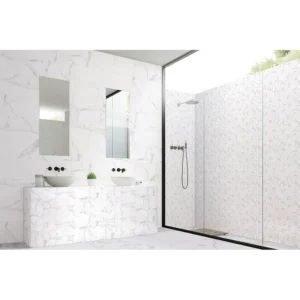
Practical Wall Protection with Decorative Impact
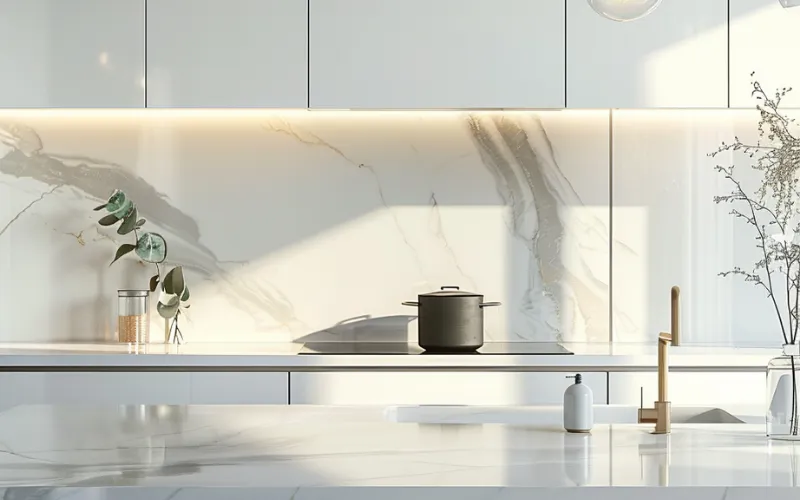
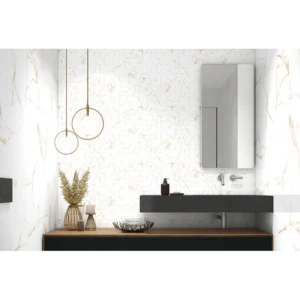
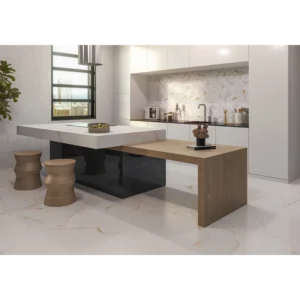
A tile backsplash protects the wall behind active surfaces while creating a finished transition between countertops, cabinetry, fixtures, and surrounding materials.
Tile may be installed as a compact section behind a sink or range, extended beneath upper cabinets, framed as a decorative focal point, or continued across an entire wall.
Format, material, finish, pattern, grout color, lighting, and layout all influence the final appearance. For a broader selection, visit our complete backsplash collection .
Benefits of Choosing a Tile Backsplash
Performance varies by material and finish, but properly selected and installed tile offers a versatile solution for many interior wall applications.
Design Flexibility
Subway, square, hexagon, herringbone, basket weave, arabesque, mosaic, and decorative formats support both quiet and expressive interiors.
Wall Protection
A suitable tile installation helps protect wall surfaces from water, cooking residue, grease, cosmetics, soaps, and everyday contact.
Material Coordination
Tile can connect countertops, cabinetry, flooring, fixtures, paint colors, hardware, and architectural details.
Flexible Coverage
Install a short backsplash, fill the area below cabinets, create a range feature, or cover an entire accent wall.
Finish Variety
Polished, honed, matte, textured, dimensional, and mixed-finish surfaces create different levels of reflection and visual depth.
Popular Tile Backsplash Styles
Select a format that complements the scale of the wall, surrounding finishes, desired grout visibility, and level of visual movement.
Subway Tile
A versatile rectangular format that may be installed in running bond, stacked, vertical, offset, or herringbone layouts.
Mosaic Tile
Smaller pieces mounted on sheets allow detailed pattern, curved transitions, mixed materials, and decorative accents.
Herringbone
An angled layout that introduces direction and movement behind ranges, sinks, vanities, bars, and feature walls.
Hexagon & Geometric
Repeating geometric shapes create a stronger graphic rhythm and may be emphasized with contrasting grout.
Natural Stone Tile
Marble, dolomite, limestone, and travertine introduce authentic veining, mineral movement, and natural variation.
Decorative Feature Tile
Borders, waterjet-inspired patterns, dimensional pieces, contrasting inserts, and mixed materials create focal areas.
How to Choose the Right Tile
Begin with the countertop and cabinetry, then evaluate color, scale, pattern, lighting, finish, and maintenance.
- Coordinate with countertops: Select complementary tones for a quiet look or controlled contrast for a stronger feature.
- Consider the room’s scale: Smaller patterns create more grout detail, while larger formats produce broader surfaces.
- Review lighting: Polished surfaces reflect more light, while honed and matte finishes appear softer.
- Evaluate maintenance: Consider grout joints, cooking residue, oils, moisture, acids, sealers, and cleaning products.
- Order samples: Review the tile beside the actual countertop, cabinetry, paint, flooring, and room lighting.
Plan the Installation Before Setting Tile
The final appearance depends on centered layouts, balanced cuts, consistent joints, finished edges, and carefully planned termination points.
- Dry-lay the pattern: Review sheet spacing, direction, color distribution, borders, corners, and focal points.
- Center visible areas: Align patterns behind ranges, sinks, mirrors, faucets, shelves, and ventilation hoods.
- Plan outlets and switches: Avoid narrow cuts and confirm box depth, cover plates, and surrounding clearances.
- Finish exposed edges: Use compatible trim, moldings, profiles, polished edges, or professionally cut terminations.
- Test grout color: Similar grout blends the layout, while contrasting grout emphasizes individual pieces.
Prepare the Substrate and Setting Materials
A clean, stable, flat wall and compatible installation products are essential for a durable, professional result.
- Inspect the wall: Remove loose paint, grease, dust, moisture, residue, and uneven areas.
- Use compatible mortar: Follow the tile and setting-material manufacturer’s instructions for substrate and application.
- Adjust mosaic sheets: Match spacing between sheets to the joints within each sheet.
- Confirm wet-area requirements: Bathroom and sink applications may require additional waterproofing or moisture-management details.
Details That Can Affect the Finished Result
Most visible installation problems begin with inadequate planning rather than the tile itself.
- Skipping a layout plan: This may result in uneven cuts, off-center patterns, or awkward termination points.
- Ignoring sheet lines: Inconsistent spacing between mosaic sheets can remain visible after grouting.
- Using unsuitable cleaners: Acidic or abrasive products may affect stone, grout, sealers, or delicate finishes.
- Failing to inspect variation: Natural stone and some decorative tiles should be blended before installation.
- Ordering exact quantities: Include additional material for cuts, breakage, alignment, selection, and future repairs.
Maintaining a Tile Backsplash
Cleaning and sealing requirements depend on the tile, finish, grout, exposure, installation area, and manufacturer recommendations.
Clean Regularly
Wipe away cooking residue, water, soap, oils, and colored liquids before buildup develops.
Use Suitable Products
Choose cleaners compatible with the tile, grout, sealer, and finish. Natural stone generally requires pH-neutral care.
Maintain Grout
Clean grout with a suitable soft brush and inspect joints for discoloration, cracking, or separation.
Seal When Required
Sealing frequency varies by material, grout, finish, exposure, and selected sealer rather than following one universal schedule.
Tile Backsplash FAQs
Helpful answers about materials, patterns, installation, grout, sealing, cleaning, and samples.
What tile is best for a kitchen backsplash?
The best option depends on the desired appearance, cooking exposure, cleaning requirements, finish, grout, budget, and surrounding materials. Ceramic, porcelain, glass, and suitable natural stone may all be considered.
Can natural stone be used as backsplash tile?
Yes. Marble, dolomite, limestone, travertine, and other suitable stones may be installed as backsplashes. Consider sealing, staining, acids, oils, finish, grout, and maintenance.
Does backsplash tile need to be sealed?
Some tile and grout installations benefit from sealing, particularly porous natural stone. Requirements depend on the material, finish, grout, exposure, and selected sealer.
What grout color should I choose?
A grout color close to the tile creates a more continuous appearance. Contrasting grout makes the pattern and individual pieces more visible.
Can I install backsplash tile myself?
Simple layouts may be manageable for experienced DIY users. Natural stone, detailed mosaics, uneven walls, outlets, exposed edges, and complex patterns may benefit from professional installation.
How much extra tile should I order?
Allow additional material for cuts, outlets, corners, breakage, pattern alignment, natural variation, selection, and future repairs. The appropriate amount depends on the layout.
Can I order tile backsplash samples?
Sample availability varies by product. Review the product page or contact Stone Market USA to confirm material, finish, dimensions, pattern, color, and current availability.
Need Help Choosing Tile Backsplash?
Contact Stone Market USA for assistance comparing materials, colors, patterns, finishes, grout options, quantities, samples, and current inventory.