













Natural Marble for Refined Shower Walls & Bathroom Surfaces
Marble shower tiles bring natural color, distinctive veining, and architectural depth to shower walls, selected shower floors, niches, benches, tub surrounds, and coordinated bathroom designs.
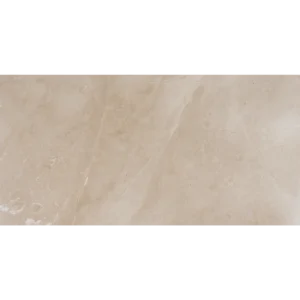
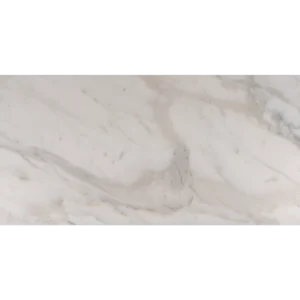
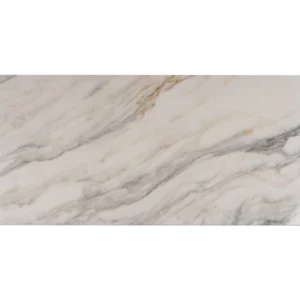
Because marble is a natural stone, every shower installation develops its own visual character through variations in background color, veining, crystalline structure, and mineral movement. Tile size, finish, layout, grout, and lighting further influence how the stone appears within the finished bathroom.
Coordinate marble shower tile with marble mosaics , borders, thresholds, natural stone moldings , and complementary marble tiles for a coordinated bathroom material palette.
Why Choose Marble Tile for a Shower?
Marble combines genuine natural stone character with a wide range of colors, formats, finishes, and coordinating pieces for carefully designed shower and bathroom environments.
Natural Stone Character
Every marble tile can display unique color, veining, crystals, and geological movement.
Wall & Floor Options
Suitable marble products can support shower walls, selected floors, niches, and other bathroom surfaces.
Multiple Tile Formats
Larger field tiles, smaller formats, and mosaics allow different scales within one coordinated shower design.
Finish Selection
Honed, polished, and selected textured finishes create different levels of sheen, texture, and visual depth.
Coordinated Bathrooms
Marble can connect showers with bathroom floors, vanity areas, tub surrounds, and decorative details.
Where Can Marble Tiles Be Used in a Shower?
Product suitability depends on the specific marble, finish, tile format, wet-area location, traction requirements, waterproofing system, drainage, substrate, sealing, grout, and maintenance requirements.
Shower Walls
Marble field tile can create continuous natural stone surfaces across shower walls while showcasing color, veining, and mineral movement.
Shower Floors
Selected marble products may be appropriate for shower floors when format, finish, traction, drainage, slope, and installation requirements are suitable.
Shower Niches
Marble can coordinate recessed niches with surrounding shower walls through matching field tile, mosaics, borders, or contrasting stone details.
Benches & Ledges
Selected natural stone pieces may be incorporated into shower benches, ledges, shelves, and related details when properly specified and installed.
Tub Surrounds
Marble shower tile can extend beyond the enclosure to tub surrounds and adjacent wet-area walls for a more continuous bathroom design.
Bathroom Accent Areas
Coordinating marble can connect the shower with vanity walls, bathroom floors, decorative panels, and other selected surfaces.
Marble Shower Wall Tile vs. Shower Floor Tile
Shower walls and shower floors have different functional requirements. A marble tile appropriate for a vertical wall should not automatically be assumed suitable for the shower floor.
Shower Wall Tiles
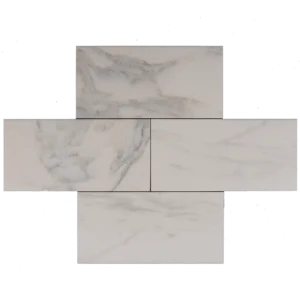
Wall applications can accommodate a wider range of tile sizes and surface appearances. Larger marble tiles can reduce grout joints and emphasize broad natural veining.
Shower Floor Tiles
Floor selection requires additional attention to traction, slope, drainage, format, finish, grout joints, and the suitability of the specific marble.
Marble Mosaics
Smaller marble mosaics can follow shower floor slopes more easily and introduce additional grout joints, while also providing a coordinated decorative element.
Designing a Shower Around Natural Marble
Marble shower tile is available across a broad natural palette. Background color, undertone, vein intensity, tile size, grout, fixtures, lighting, and surrounding bathroom materials all influence the finished design.
White & Light Marble
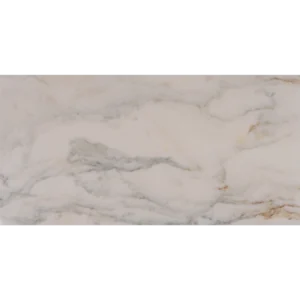
White, ivory, and pale marble can create bright shower environments while gray, silver, beige, or contrasting veins introduce natural movement.
Beige & Warm Marble
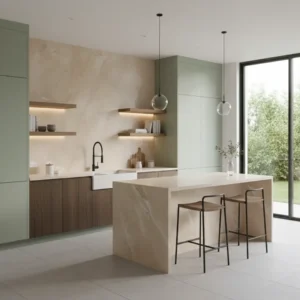
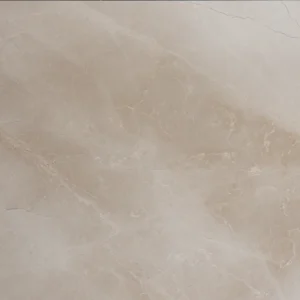
Cream, beige, sand, and warmer stone tones can coordinate naturally with wood cabinetry, warm metals, and softer bathroom palettes.
Gray & Contrasting Marble
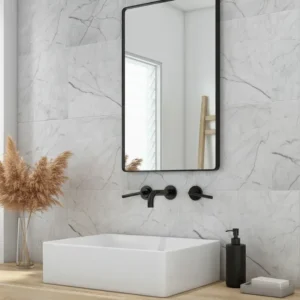
Silver, gray, charcoal, and stronger veining can create a more architectural shower design alongside black, chrome, nickel, glass, or wood details.
Marble Shower Tile Finishes
Finish affects appearance, reflection, tactile character, maintenance, and potentially the suitability of a marble product for a particular shower surface.
Honed Marble Shower Tile
Honed marble has a smooth matte or low-sheen appearance that softens reflection and emphasizes the natural character of the stone. Explore honed marble tiles for suitable bathroom applications.
Polished Marble Shower Tile
Polished marble creates a smoother reflective surface that can deepen color and emphasize veining. Application suitability should be confirmed for the specific shower location. Explore polished marble tiles .
Textured & Mosaic Surfaces
Selected textured marble and mosaic formats can introduce tactile variation and smaller-scale geometry for shower floors, niches, accents, and other appropriate applications.
Natural Variation Is Part of a Marble Shower
Marble is a geological material rather than a manufactured uniform surface. Differences in color, veining, crystalline detail, and mineral markings should be expected and reviewed across the complete shower installation.
Background Color
Natural marble may vary in tone between individual tiles, boxes, mosaics, and coordinating pieces.
Veining
Veins may be subtle, linear, cloudy, branching, or strongly contrasted depending on the stone.
Mineral & Crystal Detail
Crystalline areas, deposits, fissures, pores, and geological markings can naturally occur throughout genuine marble.
Wet Appearance
Marble may appear darker, more saturated, or more contrasted when wet, so samples should be reviewed with the intended bathroom environment in mind.
Choosing Marble Tile for a Shower
Select marble according to the specific shower surface rather than appearance alone. Finish, tile size, moisture, traction, maintenance, natural variation, and installation requirements should all be considered.
- Confirm the application: Determine whether the product is intended for shower walls, floors, niches, or other wet-area surfaces.
- Choose the finish carefully: Finish influences sheen, texture, appearance, cleaning, and suitability for the intended location.
- Consider tile size: Larger formats can reduce grout lines on walls, while smaller formats and mosaics may be more practical for sloped shower floors.
- Review color & veining: Examine representative pieces for background tone, vein intensity, mineral movement, and wet appearance.
- Plan maintenance: Natural marble requires stone-appropriate cleaning and may require sealing depending on the product and installation.
Build a Cohesive Marble Shower Design
Tile size, grout, fixtures, glass, cabinetry, lighting, niches, flooring, and adjacent bathroom materials should be considered together before installation.
- Coordinate field tile & mosaics: Use related marble colors or deliberate contrast between shower walls, floors, and niches.
- Plan grout color: Similar grout can create a quieter surface, while contrasting grout emphasizes individual tiles.
- Coordinate fixtures: Chrome, nickel, brass, bronze, black, and other metal finishes can create very different relationships with the color and veining of natural marble.
- Consider glass & lighting: Shower glass, daylight, vanity lighting, and recessed lighting can change how marble color, reflection, and veining are perceived.
- Dry-lay representative pieces: Review field tile, mosaics, niches, and trim together so color variation and vein movement are intentionally distributed.
Waterproofing Is Essential Behind Marble Shower Tile
Marble tile itself is not the waterproofing system. A properly designed shower requires a compatible waterproof assembly behind or beneath the stone together with correctly detailed transitions, penetrations, joints, and drainage.
- Use a complete waterproofing system: Walls, floors, corners, penetrations, niches, benches, and transitions should be detailed according to the selected shower system.
- Protect penetrations: Plumbing fixtures, valves, shower heads, body sprays, and accessories require appropriate waterproof detailing.
- Coordinate niches & benches: Recessed and horizontal surfaces should be designed to manage water and integrate with the overall membrane system.
- Use compatible materials: Membranes, mortars, grout, sealants, and related products should be appropriate for natural marble and the complete wet-area assembly.
Manage Water Across Shower Floors & Details
Shower performance depends on directing water efficiently toward the drain and minimizing areas where moisture can remain trapped against stone, grout, or surrounding details.
- Plan floor slope: The shower floor should be designed to direct water toward the selected drain system.
- Select an appropriate tile format: Smaller tiles and mosaics can accommodate shower floor slopes more readily than many larger rigid formats.
- Review drain placement: Center drains, linear drains, curbless entries, and other configurations influence tile layout and slope planning.
- Address horizontal surfaces: Niches, benches, curbs, shelves, and ledges should be detailed so water does not remain unnecessarily on the finished surface.
Install Marble Shower Tile as a Complete System
Successful marble shower installations depend on substrate preparation, waterproofing, tile layout, mortar coverage, joint detailing, drainage, setting materials, and professional workmanship.
- Prepare the substrate: Shower walls and floors should be properly constructed, flat where required, and compatible with the selected waterproofing and tile system.
- Use marble-compatible mortar: Select setting materials appropriate for natural stone, moisture exposure, tile size, and the installation assembly.
- Achieve appropriate coverage: Proper troweling, mortar transfer, and tile placement are important for supporting the stone and reducing voids.
- Plan movement & changes of plane: Corners and transitions should be detailed with appropriate movement accommodation rather than treated as ordinary field joints.
- Inspect before setting: Review color, veining, finish, size, quantity, and visible damage before installation begins.
Allow for Cuts, Niches, Veining & Future Repairs
Marble shower projects generally require more material than the exact measured square footage because of corners, niches, plumbing cuts, pattern layouts, color selection, breakage, and natural variation.
- Include additional material: Allow for cuts around valves, fixtures, drains, niches, benches, curbs, corners, and transitions.
- Blend multiple boxes: Distribute background color, veining, mineral movement, and natural variation throughout the shower.
- Coordinate field tile and mosaics: Confirm quantities for walls, shower floors, niches, accents, and other related surfaces separately.
- Review vein placement: Reserve visually distinctive pieces for focal walls, niches, or other areas where deliberate placement matters.
- Retain spare material: Keeping stone from the original production lot may make future repairs easier to coordinate.
Caring for Marble Shower Tiles
Marble shower maintenance depends on the specific stone, finish, water chemistry, ventilation, grout, soap residue, cleaning products, moisture exposure, and selected sealer. Regular stone-appropriate care helps preserve the surface and reduce buildup.
Use pH-Neutral Cleaner
Marble is acid-sensitive. Avoid vinegar, lemon, acidic bathroom cleaners, harsh descalers, and abrasive products not intended for natural stone.
Reduce Soap & Mineral Buildup
Routine rinsing and drying can help limit soap film, mineral deposits, and standing moisture on marble and grout surfaces.
Seal When Recommended
Sealing requirements vary by marble, finish, porosity, grout, exposure, and selected product. Follow recommendations for the specific installation.
Support Ventilation
Appropriate bathroom ventilation can help the shower dry between uses and reduce prolonged surface moisture.
Marble Shower Tile FAQs
Helpful answers about marble shower walls, shower floors, mosaics, finishes, waterproofing, traction, sealing, cleaning, natural variation, and installation planning.
Is marble tile suitable for showers?
Suitable marble products can be used in shower applications when the specific stone, finish, location, waterproofing, drainage, installation, sealing, and maintenance requirements are properly addressed.
Can marble tile be used on shower walls?
Yes, suitable marble tiles are commonly considered for shower walls. Tile size, finish, substrate, waterproofing, setting materials, grout, natural variation, and maintenance should be reviewed.
Can marble tile be used on a shower floor?
Selected marble products may be appropriate for shower floors, but finish, traction, tile size, slope, drainage, grout joints, water exposure, and stone suitability require careful consideration.
Are marble mosaics good for shower floors?
Marble mosaics are often considered for shower floors because smaller pieces can follow floor slopes more easily and create additional grout joints. The specific marble, finish, traction, and installation still need to be appropriate for the application.
What marble finish is best for a shower?
There is no single finish that is best for every shower surface. Honed, polished, mosaic, and textured surfaces have different appearance, maintenance, and performance characteristics. Wall and floor requirements should be evaluated separately.
Can polished marble be used in a shower?
Polished marble may be suitable for selected shower wall applications depending on the specific stone and installation. Floor use requires additional consideration of traction and wet conditions.
Does marble shower tile need waterproofing behind it?
Yes. Tile and grout are not substitutes for a complete shower waterproofing system. The underlying assembly should be designed and installed to manage water independently of the decorative stone surface.
Does marble shower tile need to be sealed?
Many marble installations may benefit from an appropriate penetrating sealer, but requirements vary by stone, finish, porosity, grout, moisture exposure, and selected sealing product.
Does marble change color when wet?
Some marble can appear temporarily darker, deeper, or more saturated when wet. The degree of change depends on the specific stone, finish, porosity, and moisture exposure.
How do you clean marble shower tile?
Use cleaning methods and pH-neutral products appropriate for natural stone. Avoid acidic cleaners, vinegar, lemon, abrasive products, and harsh chemicals that can etch or damage marble.
Can marble shower tile stain?
Staining risk varies according to the marble, finish, porosity, sealing, water chemistry, soaps, cosmetics, cleaning products, and maintenance conditions.
Should marble shower tiles be blended before installation?
Yes. Reviewing and blending material from multiple boxes helps distribute color, veining, crystals, and natural variation throughout the shower rather than concentrating similar pieces together.
How much extra marble shower tile should I order?
Additional material should be considered for cuts around fixtures, niches, drains, benches, corners, pattern layouts, breakage, natural variation, and future repairs. The appropriate allowance depends on the specific shower design.
Can I order samples of marble shower tiles?
Sample availability depends on the individual product. Review the product page or contact Stone Market USA to confirm marble color, veining, finish, size, thickness, shower suitability, inventory, and current sample options.
Need Help Selecting Marble Shower Tiles?
Contact Stone Market USA for assistance comparing marble shower wall tiles, shower floor mosaics, colors, veining, honed and polished finishes, sizes, niches, quantities, samples, and current product availability.