

How to Match Shower Wall Tile With Mosaic Floor Tile
Choosing tile for a shower is not just a matter of finding one wall tile and one floor mosaic that look attractive on their own. The two surfaces need to work together in scale, color, texture, pattern, and maintenance expectations. Because the wall tile usually covers a larger visual area while the floor mosaic introduces more grout lines and detail, small mismatches can become noticeable quickly.
This guide explains how to evaluate shower wall and floor tile combinations, including practical ways to coordinate color, pattern, material, grout, and natural variation before you order or install anything.
If you are still comparing styles and materials, you can shop mosaic tiles to see how different formats and patterns may change the overall direction of the shower.
Start with the relationship between scale and visual weight
The first decision is how much attention each tile should receive. A large-format wall tile with a quiet surface can provide a calm background for a more detailed mosaic floor. Conversely, a patterned or strongly veined wall tile may pair better with a simpler floor mosaic so the surfaces do not compete.
Scale matters because a mosaic is already visually active. Small pieces create repeated joints and a distinct pattern, even when the colors are restrained. If the wall tile also has a busy geometric design, multiple colors, or pronounced veining, the shower can begin to look fragmented.
A useful approach is to assign one surface the primary role and let the other support it:
- Quiet wall tile, expressive floor: A plain or softly varied wall surface gives a mosaic pattern room to stand out.
- Expressive wall tile, restrained floor: A veined stone or decorative wall tile can remain the focal point when the floor uses a simpler mosaic.
- Similar visual weight: Two understated materials can work together when their colors are clearly related and the grout does not create an unintended third pattern.
Coordinate color without trying to match every detail
Exact color matching is not necessary, and it can be difficult when natural stone is involved. A more reliable strategy is to identify one shared undertone or color family. Warm ivory walls may coordinate with a floor containing beige, cream, or muted taupe. Cool gray walls may work with a mosaic that includes gray, charcoal, soft white, or subdued blue-gray accents.
Pay attention to undertones rather than judging each tile only by its headline color. Two tiles may both be described as white, yet one may lean warm and the other cool. Under bathroom lighting, that difference can be more apparent than it was in a showroom or online image.
Contrast can also be intentional. A dark floor with light walls creates a defined base, while a light mosaic floor with medium or dark walls can make the wall material more prominent. The key is to decide whether the contrast should come from color, pattern, texture, or all three. Combining high contrast in every category often makes coordination harder.
Use material and finish to create connection
Wall and floor tile do not have to be the same material. They can still feel related if they share a color family, finish, edge character, or design language. For example, a simple wall tile and a stone mosaic may coordinate through muted color and natural texture, while two porcelain tile surfaces may connect through a common geometric pattern.
Natural stone requires a little more visual planning because pieces can differ in color, veining, movement, and texture. A sample can help you assess the general direction, but it cannot represent every piece in a natural-stone installation. If consistency matters, review as much of the available material as possible and discuss expected variation with the supplier or installer.
Finish deserves separate attention. A polished wall surface, a honed mosaic, and a textured accent may reflect light differently even when their colors are similar. Compare samples under the lighting planned for the bathroom rather than relying on a single photograph.
Let the floor mosaic influence the wall selection
Many people choose wall tile first because it covers more area, but beginning with the floor mosaic can make the design process easier. The floor often establishes the smallest pattern, the strongest grout presence, and the most specific color combination. Once those elements are selected, the wall tile can be chosen as a complementary background or controlled contrast.
Examine the mosaic from a short distance and then from across the room. Up close, individual chips may appear highly varied. From farther away, the installation may read as a single field of color with a particular visual temperature. The wall tile should be compared at both distances so it does not clash with the floor once the room is viewed as a whole.
For more focused guidance on format, material, and selection considerations, review this resource on mosaic tiles for shower floors.
Think carefully about grout color and joint pattern
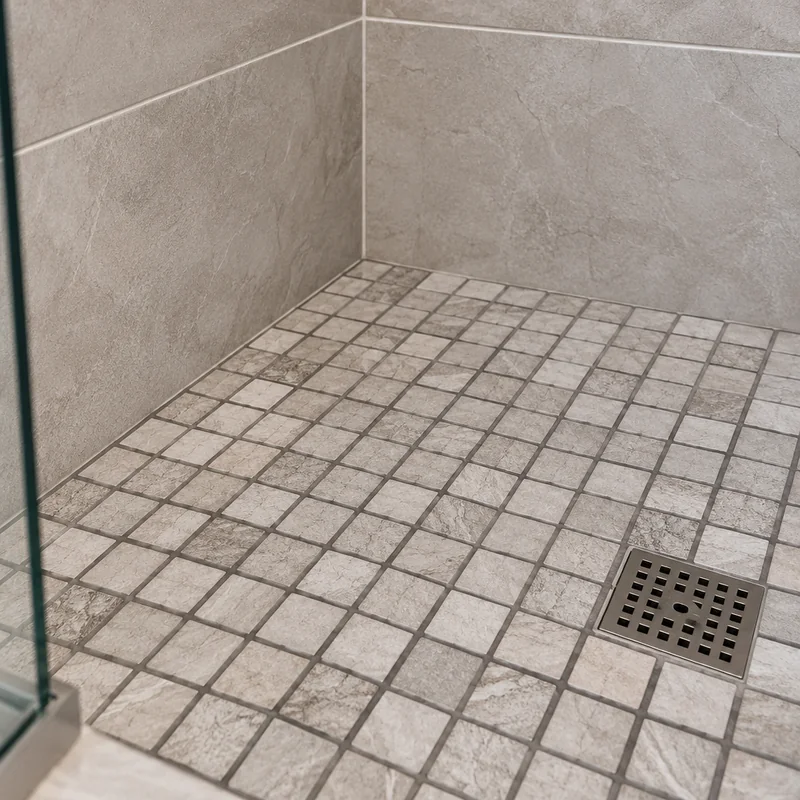
Grout is part of the visible design, especially with mosaic tile. A grout color close to the tile can soften the pattern and create a more continuous appearance. A contrasting grout can outline individual pieces and emphasize the mosaic layout. Neither approach is automatically better; the right choice depends on whether you want the floor to read as a unified surface or a clearly defined pattern.
Compare the proposed grout with both tile selections, not just the mosaic. A grout color that works with the floor may create too much contrast against the wall tile. Also remember that grout samples and cured grout may not look identical, so final color should be evaluated using the installation materials and conditions recommended for the project.
Joint alignment is another design consideration. Wall tile joints do not always need to line up with the mosaic pattern, and forcing alignment can make the layout less flexible. More important is a balanced transition at corners, niches, benches, and changes in tile size. These details should be planned with the installer before setting begins.
A single sample cannot represent every piece of natural stone. Review multiple pieces or the expected variation range when possible.
Check practical compatibility before committing to a combination
A visually attractive pairing still needs to be evaluated for the specific shower assembly. Tile selection does not replace proper substrate preparation, waterproofing, setting materials, movement accommodation, or installation practices. Those details depend on the project conditions, selected materials, manufacturer instructions, qualified installer recommendations, and applicable requirements.
For the floor mosaic, ask whether the selected material and format are appropriate for the intended shower application according to the relevant manufacturer or supplier guidance. For natural stone, ask about care expectations and whether the stone is sensitive to particular cleaners or substances. Sealing, where recommended for a specific stone, does not make it waterproof, stain-proof, or maintenance-free.
It is also worth checking the thicknesses and transitions of the materials before ordering. A wall tile and floor mosaic that differ in thickness may require layout planning at edges, thresholds, niches, or other transitions. Do not assume that two products will meet flush simply because their colors coordinate.
If you want to compare broader material considerations before choosing a specific mosaic, see this guide to the best tiles for shower floors.
Combination ideas that are easy to evaluate
Rather than copying a single style, use these pairings as a framework for comparing samples:
- Light, calm walls with a two-tone mosaic: Keep the wall surface relatively quiet and let two related floor colors provide definition.
- Soft stone-look walls with a small-format neutral mosaic: Use a restrained floor pattern to support movement or variation on the walls.
- Dark or saturated wall tile with a pale mosaic: Let the floor provide visual relief, while checking that the grout does not create excessive contrast.
- Monochromatic walls and floor: Use differences in scale or finish to separate the surfaces when the colors are closely related.
- Patterned wall tile with a single-color mosaic: Keep the mosaic quiet so the wall pattern remains legible rather than competing with another graphic element.
Common mistakes to avoid
- Choosing from separate screens or lighting conditions: Digital images and showroom lighting can change how color and texture appear.
- Ignoring undertones: Warm and cool neutrals may look mismatched even when their surface colors seem similar at first.
- Using contrast everywhere: Strong differences in color, pattern, finish, and grout can make the shower feel visually busy.
- Forgetting natural variation: A single stone sample cannot show the complete range of movement or shade in the installation.
- Waiting too long to plan details: Niches, corners, benches, drains, and transitions can affect the best tile layout.
- Treating maintenance as an afterthought: Select materials and cleaning practices with the specific tile and stone in mind, rather than assuming all surfaces can be cared for the same way.
A practical sample-review process
Before making a final decision, place samples of the wall tile, mosaic, grout color, trim or edge material, and any other prominent finish together. View them in the bathroom if possible. Check them in daylight, at night, and under the lighting that will normally be used.
Look for the relationship between the samples rather than asking whether each one is attractive in isolation. Does one material clearly lead while the other supports it? Do the undertones agree? Is the grout helping or disrupting the pattern? If the project includes natural stone, remember that the sample establishes a general design direction, not a guarantee of uniformity.
Finally, confirm the intended layout and material information with the installer before ordering. A short review at this stage can identify issues involving transitions, available sizes, placement around niches, or the way variation should be distributed.
Make the pairing deliberate, not identical
The strongest shower wall and floor tile combinations usually share a clear design relationship without being exact copies. Start with the floor mosaic or the surface that has more pattern, identify its dominant color and visual weight, and choose the other tile to balance it. Then review grout, finish, natural variation, and installation details as part of the same decision.
When samples look compatible in the actual room and the practical requirements have been confirmed, you can move forward with much more confidence than you would get from matching product names or relying on online images alone.
Frequently asked questions
Practical answers to common questions related to this material, application, care, selection, and project planning.
Should shower wall tile and floor mosaic tile be the same color?
No. They can share an undertone or color family without being identical. A controlled difference in shade can help distinguish the wall from the floor while keeping the room cohesive.
Can a patterned mosaic be used with veined wall tile?
It can, but both surfaces should be evaluated for visual activity. If the wall has strong movement, a simpler mosaic and less contrasting grout may create a more balanced result.
Is natural stone suitable for every shower floor?
Suitability depends on the specific stone, finish, installation system, care requirements, and project conditions. Confirm the intended use with the relevant product guidance and a qualified installer rather than relying on appearance alone.
How many tile samples should I compare?
Compare enough samples to judge the complete relationship: wall tile, mosaic, grout, and any trim or adjacent finish. For natural stone, review more than one piece when possible because color and pattern can vary.
Find the Right Tile or Stone for Your Project
Browse Stone Market USA collections or contact our team for help comparing materials, finishes, applications, samples, quantities, and current availability.