Loading... (Warehouse Local Time)
A shower floor is a small area, but it’s one of the most demanding surfaces in the home. It has to deal with constant water, daily foot traffic, soap film, shampoo residue, and repeated wet-to-dry cycles. And unlike a standard bathroom floor, a shower pan is built with a subtle slope so water flows into the drain instead of lingering around your feet.
That’s why shower floor tile decisions are never “just about the look.” The best shower floors feel stable underfoot, drain cleanly, and still look great years later. In this guide, we’ll break down the practical side (safety + drainage), and the design side (how to choose a finish and style that actually fits your space).
If you want to browse options while reading, start with our Bathroom Tiles page for coordinated bathroom looks, and our Mosaic Tiles collection for shower-friendly formats.
People usually notice shower tile problems in two ways: either the floor feels slippery, or water doesn’t drain cleanly. Both issues often come down to the same root causes: tile format, finish, and how well the layout adapts to the shower’s slope.
A shower floor must pitch toward the drain. Even a well-built slope is subtle, so the tile surface needs to “follow” it. Larger tiles can resist that pitch, especially near the drain where cuts and angles come together. This is where you see lippage (tile edges that don’t align perfectly), or small puddles that take forever to dry.
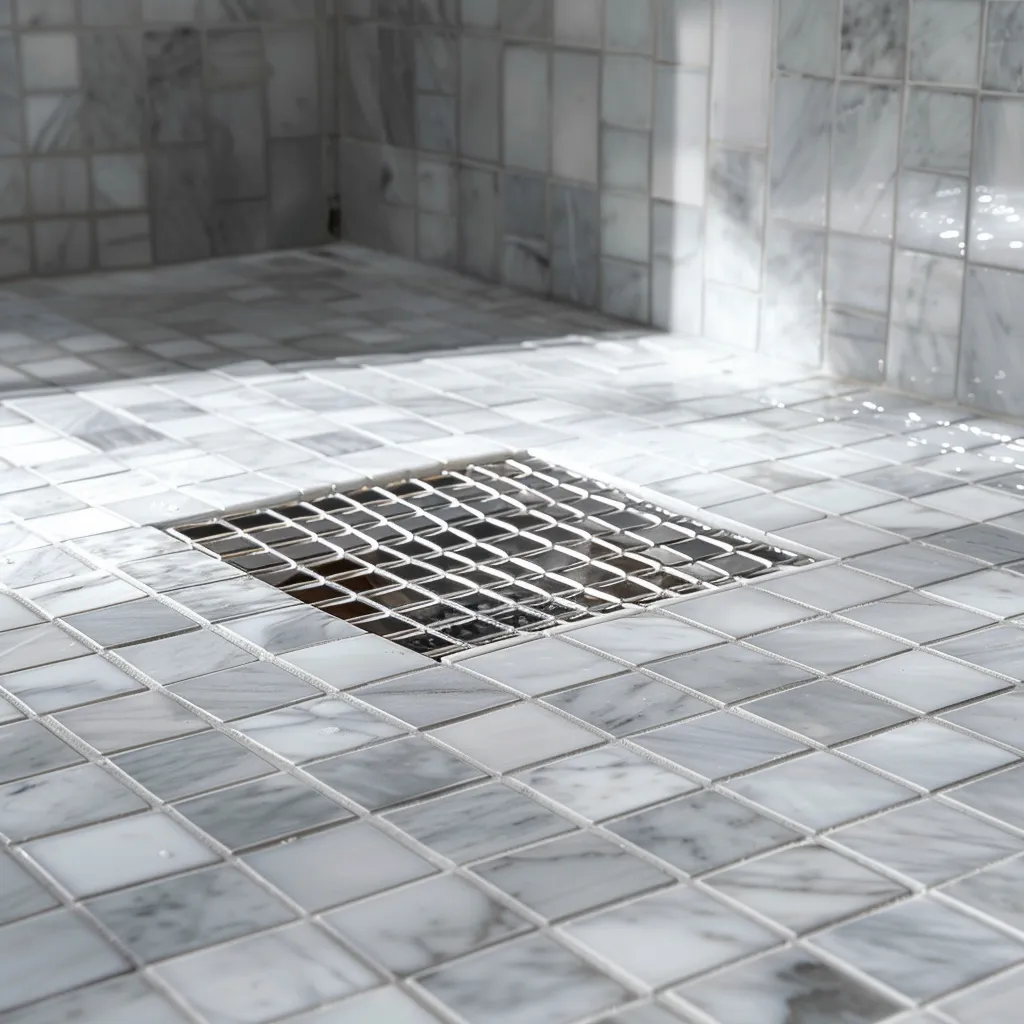
Drainage + slope compatibility
This is why mosaic tiles are so common in shower floors. Small pieces naturally conform to pitch changes, especially around the drain area. The surface ends up feeling more uniform — and in most installs, water moves toward the drain with less resistance.
Another detail many homeowners miss: a shower floor is almost always a “high residue” zone. Soap film and conditioner create a slick layer over time. A tile choice that feels okay on day one can feel very different after a month of real-life use. This is where finish and grout lines matter.
Mosaic tiles get labeled as a “decor choice,” but on shower floors they’re a performance decision. The main advantage is simple: mosaics create more grout joints. Those grout joints add texture and grip underfoot, which helps reduce that slippery feeling that can happen with large smooth surfaces.
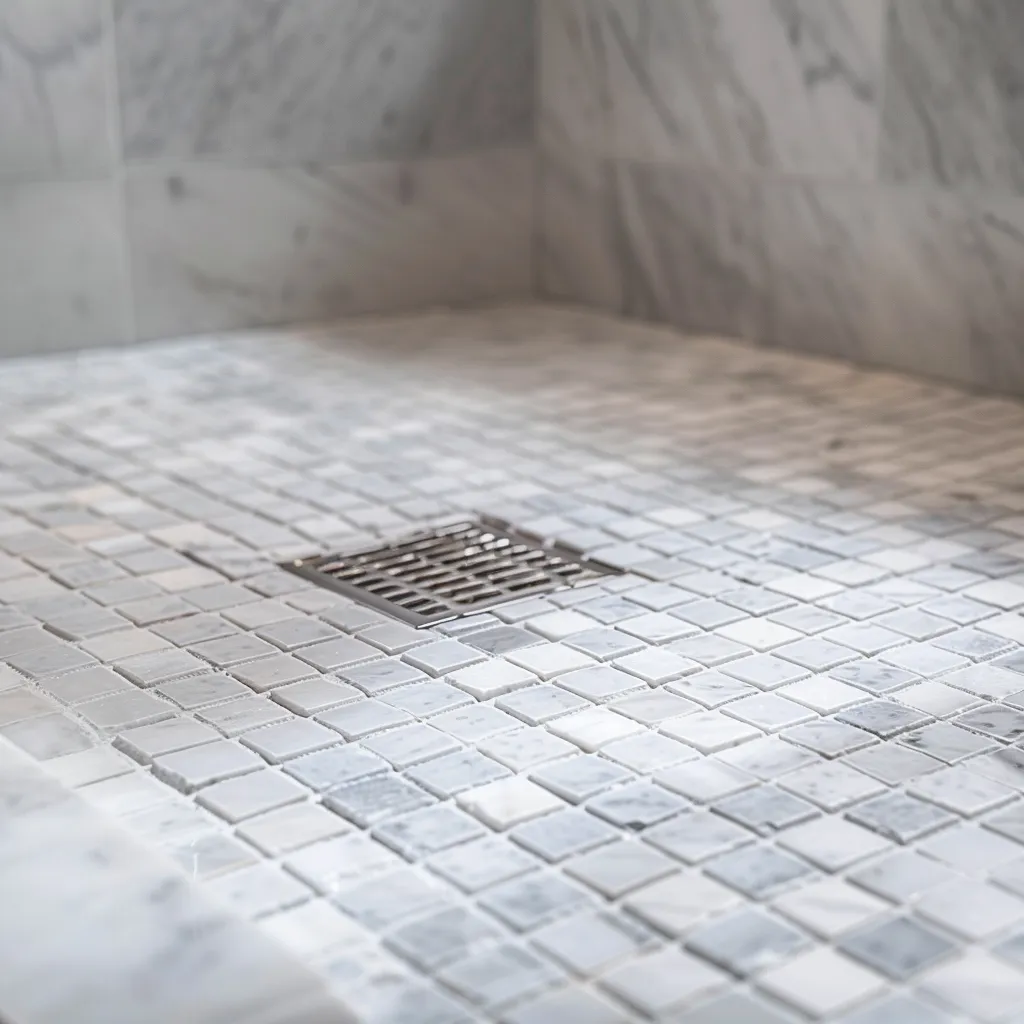
Grip + visual flexibility
A well-chosen mosaic can also make a shower feel more intentional. It can echo the veining in marble wall tile, tie into a niche detail, or add contrast so the floor “anchors” the space. But the hidden benefit is traction: more grout lines mean more micro-edges, and your foot feels that.
Mosaic sheets also help installers shape the surface around drains without awkward cuts. That means fewer stress points, fewer sharp transitions, and a finished look that doesn’t feel patched together.
Want to browse shower-friendly formats? Start here: Mosaic Tiles.
Finish is one of those choices that seems cosmetic until you live with it. The same stone can feel dramatically different depending on whether it’s honed or polished. In showers, the question isn’t “which is prettier?” — it’s “which still feels good and safe after months of daily use?”
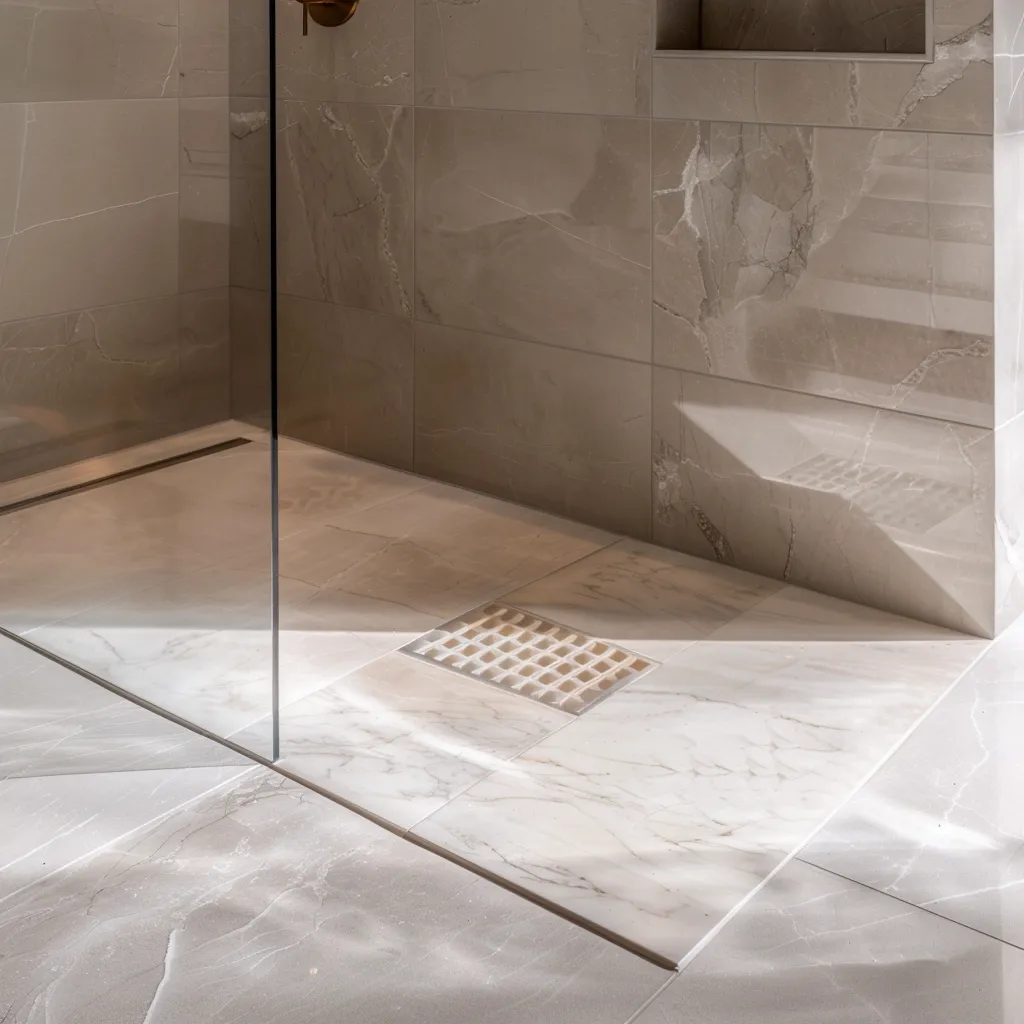
Honed finish (matte)
Honed stone has a soft, matte appearance. It reflects less light, hides small water spots better, and typically feels more grounded underfoot. In a shower environment, honed finishes are often the safer, easier-to-live-with option — especially for family bathrooms or guest baths where you want fewer “rules” for daily use.
Honed marble mosaics are a classic combination because you get two safety advantages at once: a less glossy surface plus more grout lines. If you’re trying to keep the look upscale without creating a slippery floor, this pairing is a smart place to start.
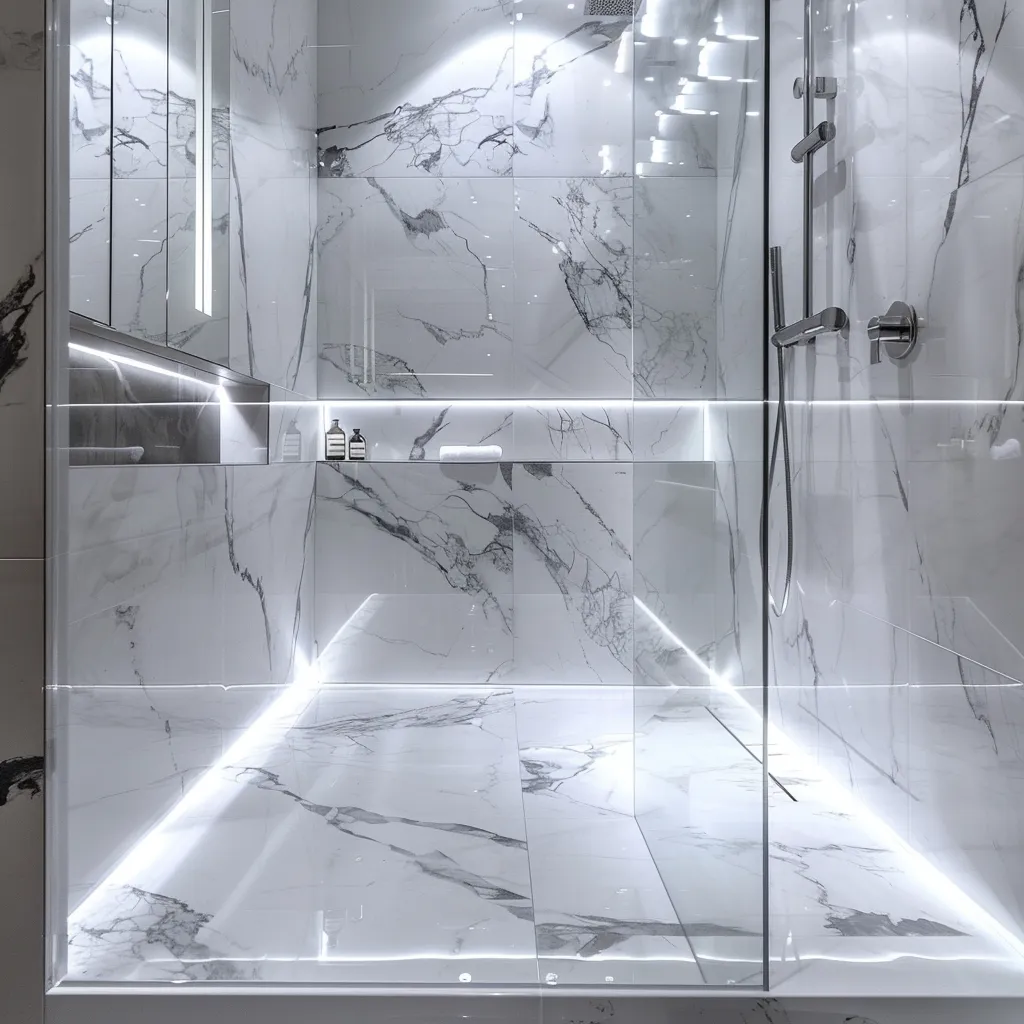
Polished finish (glossy)
Polished marble is visually stunning. It catches light, brightens the room, and can make a shower feel like a boutique hotel. The tradeoff is that polished surfaces can feel slick when wet, especially if the tile format is large and grout lines are minimal.
That doesn’t mean polished is “wrong.” It just means the format becomes more important. If you love the polished look, choosing it in a mosaic or smaller-format floor is usually the safest path. You keep the elegance, but the grout joints help add grip.
Large format tiles can look incredibly clean and modern. Fewer grout lines create a smooth visual field that many people love. However, showers are not flat planes. Cuts around the drain, slope transitions, and anti-slip concerns make large format floors more demanding.
If you want a large tile look, the safest approach is often to keep large format tile on the walls and use a coordinating mosaic on the floor. That way you get the sleek design you want while still respecting how shower floors actually behave.
For larger sizes and coordinated wall looks, browse our full Tiles collection.
Material choice affects two things: how the shower looks and how the shower lives. Natural stone is premium for a reason — it has depth, character, and real texture. Porcelain is popular because it’s low-maintenance and consistent. Both can work. The key is selecting the right finish and format for a wet, high-residue environment.
One more thing: don’t overlook trim and transitions. The difference between a “nice bathroom” and a truly finished bathroom often comes down to edges, corners, and how cleanly things terminate. That’s where moldings and trim pieces make a real impact.
For finishing details, explore: Stone Moldings.
Shower floors are visually small, but they control the mood. A light Carrara-style mosaic can make a small bathroom feel brighter. A slightly darker mosaic can anchor a bright wall and add depth. If your walls are calm and minimal, the floor can carry texture. If your walls are bold, the floor can be quiet and supportive.
A simple way to make the design feel intentional is to repeat one element across the shower: a matching floor mosaic and niche mosaic, or a floor mosaic that picks up a tone from the wall veining. It’s subtle, but it reads as “designed,” not accidental.
A great shower floor should feel secure, drain cleanly, and stay attractive without constant babysitting. For many homes, the most balanced solution is a honed stone mosaic: it handles slope, adds grout-line traction, and keeps the look timeless.
Explore options in: Bathroom Tiles, Mosaic Tiles, and the full Tiles collection.