

Can Porcelain Tile Be Used Outdoors? What to Check Before Installing
Yes, porcelain tile can be used outdoors—but not every porcelain tile is automatically appropriate for exterior installation. The decision depends on the specific product, local weather, the type of outdoor surface, and how the tile will be installed.
Outdoor porcelain tile is often considered for patios, terraces, walkways, balconies, outdoor kitchens, and other areas where a consistent manufactured surface is preferred. Before choosing it, you should verify its exterior suitability, evaluate the installation conditions, and consider how the surface will perform when exposed to moisture, temperature changes, dirt, and regular foot traffic.
If you are comparing styles and formats, you can begin by browsing Stone Market USA’s porcelain tiles and pavers category, then confirm the technical information for any specific tile under consideration.
Why porcelain tile is considered for outdoor spaces
Porcelain is made from refined clay and fired at high temperatures. In general, this produces a dense tile with relatively low water absorption compared with many other ceramic products. That characteristic is one reason porcelain is commonly evaluated for exterior applications.
It also offers a wide range of colors, patterns, sizes, and surface appearances. Some designs resemble stone or wood, while others have a more uniform architectural look. Unlike natural stone, manufactured porcelain does not have the same piece-to-piece geological variation, although shade and texture can still vary between production lots.
These qualities can make porcelain appealing when a project needs a coordinated look between indoor and outdoor areas. They do not, however, prove that a particular product is suitable for every exterior condition. The product’s documentation and the installation plan still matter.
What to verify before choosing outdoor porcelain tile
1. Exterior suitability for your climate
Temperature is one of the most important considerations. In regions that experience freezing weather, water that enters a material or installation assembly can freeze and expand. Ask whether the specific tile is approved or tested for the climate and exterior use you have in mind.
Do not rely on the word “porcelain” alone. A tile may be dense, yet the complete outdoor installation can still be affected by the setting materials, substrate, drainage, edge conditions, and water management. If your project is in a freeze-thaw region, confirm the requirements with the manufacturer and a qualified installer before ordering.
2. The intended surface
A tile used on a covered exterior wall has different demands from one installed on an exposed patio. Horizontal walking surfaces must be evaluated for pedestrian use, weather exposure, drainage, and the conditions that may make a surface wet or dirty.
Ask whether the product is intended for your particular application, such as a patio, walkway, balcony, stair area, or exterior wall. Also consider whether the surface will be fully exposed, partially covered, or adjacent to landscaping that may introduce soil and moisture.
3. Surface texture and traction
Outdoor surfaces can become wet from rain, irrigation, condensation, or cleaning. A smooth, polished appearance may not be the right choice for every walking area. The appropriate surface depends on the location, slope, expected traffic, footwear, and local requirements.
Request the product’s available surface and performance information rather than assuming that a textured tile is automatically safe or that a matte tile is suitable for every wet condition. A qualified professional can help match the surface to the actual risks of the site.
4. Size, thickness, and installation format
Large-format tile can create a clean visual field, but larger pieces also require careful handling, a properly prepared substrate, appropriate coverage beneath the tile, and attention to movement. Thin tile, standard tile, and purpose-designed paver formats may have different installation requirements.
Do not select a format based only on appearance. Confirm that the tile’s dimensions and thickness are compatible with the proposed installation method. A product intended for a particular outdoor paver system may not be installed the same way as tile bonded to a conventional mortar bed.
Installation details can determine outdoor performance
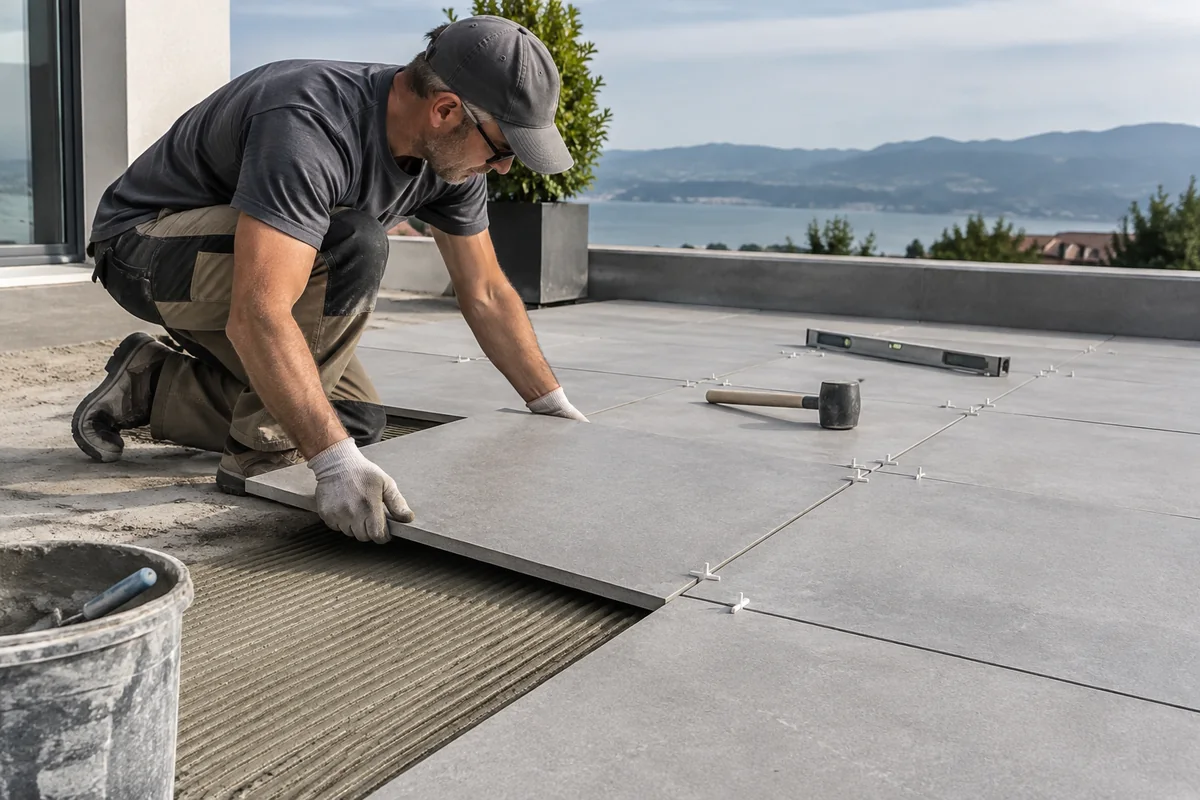
Even a suitable tile can fail when the installation does not manage water or movement correctly. Exterior tile assemblies should be planned around the existing substrate, drainage, slope, expansion and contraction, perimeter conditions, and transitions to adjacent materials.
Depending on the project, the installer may need to evaluate the condition of the slab or deck, identify cracks or movement, select setting and grout materials intended for the application, and provide movement accommodation where required. These are project-specific decisions, so general online guidance should not replace the product instructions, applicable building requirements, or advice from a qualified tile professional.
Water management deserves particular attention. A tile surface alone is not the same thing as a waterproofing system. Where an area is above occupied space, connected to a building envelope, or exposed to significant water, the underlying assembly may require a properly designed waterproofing and drainage approach.
For additional background before discussing installation options, review a detailed porcelain tile guide that explains how porcelain differs from other tile materials and what characteristics to compare.
Outdoor porcelain tile compared with natural stone
Porcelain and natural stone can both be appropriate in outdoor design, but they present different selection and maintenance questions.
- Appearance: Porcelain usually offers more predictable patterning from piece to piece. Natural stone has inherent variation in color, veining, movement, texture, and shade, so a sample cannot represent every piece in the finished installation.
- Maintenance: Maintenance depends on the specific material and environment. Natural stone may require cleaning and, in some applications, sealing guidance from the supplier or manufacturer. Sealing does not make stone waterproof, stain-proof, or maintenance-free.
- Installation: Both materials require a suitable substrate and installation system. The correct approach varies by product, location, climate, and format.
- Design continuity: Porcelain may be useful when a homeowner wants a consistent manufactured appearance across multiple areas. Natural stone may be preferred when natural variation is an important part of the design.
Understanding what porcelain tile is can help clarify why its density and manufacturing process are relevant, but those general characteristics should still be separated from the verified specifications of a particular product.
Common mistakes to avoid
- Assuming all porcelain is outdoor-rated: Confirm the product’s intended use instead of relying on the material name.
- Choosing by color alone: Outdoor performance involves surface, format, climate, and installation—not just appearance.
- Ignoring the substrate: Tile does not correct an unstable, poorly drained, or improperly prepared base.
- Overlooking transitions: Doorways, steps, drains, edges, and changes in material require planning before installation begins.
- Ordering without checking the full project quantity: Shade, caliber, and availability can vary by production lot or order. Confirm the details with the seller before finalizing a project.
- Treating cleaning as an afterthought: Soil, leaves, food, grease, and hard-water deposits may require a maintenance plan suited to the selected surface and grout.
A practical checklist before you order
Before purchasing outdoor porcelain tile, gather the following information:
- Where will the tile be installed, and will the area be exposed to rain, snow, freezing temperatures, or heavy sun?
- Is the product approved or documented for that exterior application and climate?
- What surface finish is available, and is it appropriate for the expected walking conditions?
- Which installation method, setting materials, grout, movement joints, and substrate preparation are required?
- How will water drain from the area, and are transitions or waterproofing details part of the design?
- Will the selected size and thickness work with the project’s base and installation method?
- Can you review a sample while remembering that a sample may not show every production-lot variation?
If the answers are unclear, pause before ordering and ask the tile supplier, manufacturer, or installer for project-specific guidance. It is much easier to resolve suitability questions before materials arrive than after an exterior installation is underway.
So, can porcelain tile be used outdoors?
Yes, porcelain tile can be a suitable outdoor material when the specific product is approved for the application and installed as part of a properly planned exterior assembly. The safest decision is not based on the label “porcelain” alone. Consider the climate, surface conditions, traction needs, format, substrate, drainage, and installation instructions together.
For a purchase decision, compare products using those criteria rather than choosing solely by color or pattern. A qualified installer can then confirm whether the selected tile and installation system fit the conditions of your project.
Frequently asked questions
Practical answers to common questions around selection, installation, care, and project planning.
Can any porcelain tile be installed on a patio?
No. Patio use depends on the specific tile’s documented suitability, the climate, the surface conditions, and the proposed installation method. Verify all of these before purchasing.
Is outdoor porcelain tile waterproof?
Porcelain tile itself should not be treated as a complete waterproofing system. Water management depends on the entire assembly, including the substrate, drainage, joints, transitions, and any required waterproofing layer.
Does outdoor porcelain tile need to be sealed?
Sealing requirements are product-specific. Many porcelain surfaces do not require the same sealing approach as some natural stones, but grout and the surrounding installation may have separate maintenance requirements. Follow the applicable product guidance.
Can porcelain tile be used in freezing climates?
It may be possible, but the specific tile and installation assembly must be confirmed for freeze-thaw exposure. Ask for the relevant documentation and review the project with a qualified installer.
Find the Right Tile or Stone for Your Project
Browse Stone Market USA collections or contact our team for help comparing materials, finishes, applications, samples, quantities, and current availability.