

Porcelain Tile: How to Choose the Right Tile for Your Space
Porcelain tile is used across floors, walls, kitchens, bathrooms, entryways, and many other applications, but choosing the right option involves more than selecting a color or pattern. Tile composition, finish, size, edge treatment, installation conditions, and maintenance expectations all affect whether a product suits a particular project.
This guide explains what porcelain tile is, how it compares with ceramic tile, which characteristics deserve attention, and what to confirm before ordering. If you are ready to compare styles and formats, you can begin with the porcelain tile collection.
What is porcelain tile?
Porcelain tile is a type of ceramic tile made from refined clay and other mineral materials, then pressed and fired at high temperatures. The process produces a dense tile with relatively low water absorption compared with many other ceramic products. Exact performance depends on the product, its construction, and the applicable testing or classification information.
That density is one reason porcelain tile is widely considered for areas that receive regular foot traffic or exposure to moisture. It does not mean every porcelain tile is appropriate for every setting, however. The surface finish, texture, format, installation system, substrate, climate, and manufacturer guidance still need to be evaluated.
Porcelain tile compared with ceramic tile
Porcelain and ceramic tile are related materials, so the distinction is not simply that one is suitable and the other is not. Both can be available in numerous colors, patterns, finishes, and sizes. The more useful comparison centers on the product's water absorption, intended application, surface characteristics, and installation requirements.
- Composition and density: Porcelain is generally manufactured to be denser and less absorbent than standard ceramic tile.
- Design range: Both materials can replicate stone, wood, concrete, or other visual effects. Appearance alone does not reliably identify the tile type.
- Cutting and installation: A denser tile may require appropriate blades, tools, setting materials, and installer experience. The installation plan should be based on the specific product and job conditions.
- Application: Neither label by itself confirms suitability for a wet area, exterior location, floor, wall, or commercial environment. Product documentation and project requirements should make that determination.
For a remodel, the most important question is not whether porcelain is automatically better than ceramic. It is whether the selected tile has the characteristics needed for the location and whether it can be installed correctly on the existing substrate.
Important characteristics to compare
Finish and surface texture
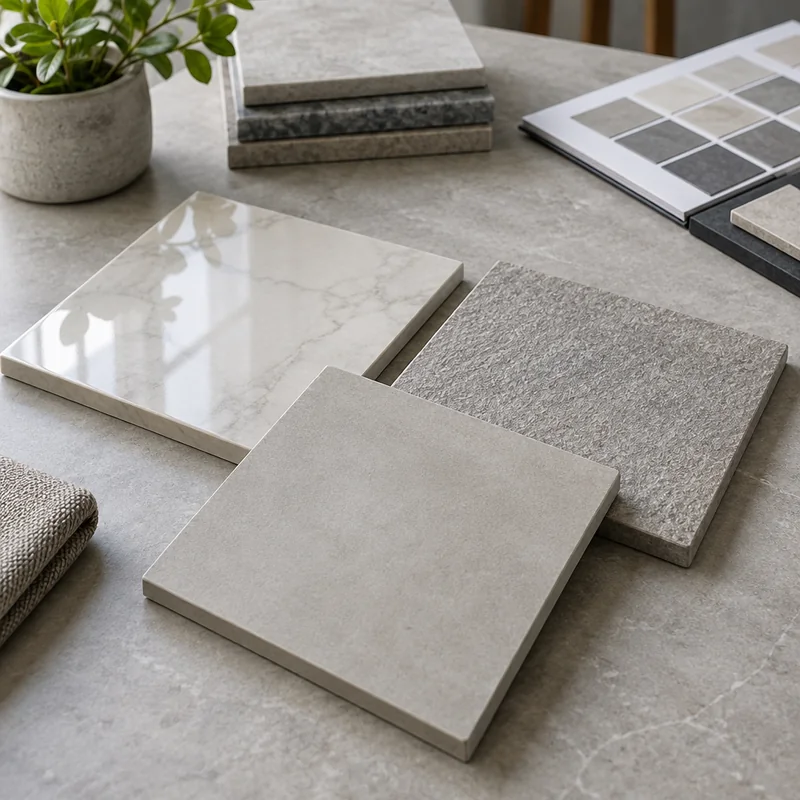
Tile finish affects appearance, cleaning, and how the surface feels underfoot. Polished surfaces can create a reflective appearance but may show smudges, water marks, or scratches more visibly. Matte and textured surfaces may provide a softer visual effect, although deeper texture can require more attention during cleaning.
Be cautious about treating a textured or matte finish as proof of slip resistance. Slip performance depends on the specific product, testing, footwear, contaminants, slope, and conditions of use. If the tile will be installed where slipping is a concern, review the product's documented rating and discuss the application with a qualified professional.
Color, pattern, and visual variation
Porcelain tile can reproduce the appearance of marble, limestone, travertine, wood, cement, and other materials. Before choosing a design, consider how repeated patterns will look across the full installation. Some products have a tightly controlled pattern, while others are designed with variation between pieces.
A small sample is useful for checking color, texture, and scale, but it may not show the complete range of visual variation across a larger floor or wall. For projects where pattern continuity matters, ask how the tile is intended to be laid out and plan the placement before setting begins.
Size, shape, and layout
Large-format tile can reduce the number of grout joints, but it also places greater demands on substrate flatness, handling, coverage, and layout. Smaller formats may be easier to work around transitions, corners, drains, or irregular rooms, though they create more grout lines.
Rectangular planks, squares, mosaics, and specialty shapes each create different visual rhythms. A layout should account for room dimensions, focal points, doorways, cabinets, plumbing fixtures, and transitions to adjoining materials. Do not choose a format based only on the dimensions printed on a sample board; confirm actual product information and installation recommendations before ordering.
Edges and grout joints
Rectified tile is mechanically finished to create more dimensionally consistent edges, while non-rectified tile may have a softer or more varied edge. The edge treatment influences the appearance of grout joints, but it does not eliminate the need for a joint that follows the product and installation requirements.
Grout color also affects the finished design. A closely matched grout can make a pattern feel more continuous, while contrasting grout emphasizes individual pieces. Grout remains part of the maintenance plan, especially in areas where cooking residue, soil, or frequent moisture is present.
Where porcelain tile may make sense
Porcelain tile is commonly considered for residential floors, walls, backsplashes, bathrooms, kitchens, mudrooms, and entry areas. It can also be evaluated for other settings when the product documentation confirms that the tile and installation system are suitable.
For wet areas, the tile itself is only one part of the assembly. Drainage, waterproofing, slope, substrate preparation, movement accommodation, grout, sealants, and transitions all matter. Porcelain tile should not be described as a substitute for a properly designed waterproofing system.
Exterior projects require additional review. Freeze-thaw exposure, moisture behind the installation, temperature changes, surface conditions, setting materials, and local requirements may affect the result. Do not assume that a porcelain tile intended for an interior wall or floor is automatically appropriate outdoors.
Maintenance and everyday care
Routine care generally begins with removing loose grit and cleaning with a product compatible with the tile and grout. Dust, sand, and other abrasive debris can contribute to surface wear over time, particularly in busy entry areas. Spills are easier to manage when they are addressed before they dry or spread into grout joints.
Maintenance needs vary with the finish, grout, traffic, and substances encountered in the room. Avoid assuming that every cleaner is appropriate for every tile surface, grout, or adjacent natural stone. Follow the tile and cleaning-product guidance, and test an unfamiliar cleaner in an inconspicuous area before broad use.
Porcelain tile itself generally does not require the same type of sealing decision as many porous natural stones, but grout and other components of the installation may have different care requirements. Sealing grout does not make the complete surface maintenance-free or waterproof.
Using wood-look porcelain tile
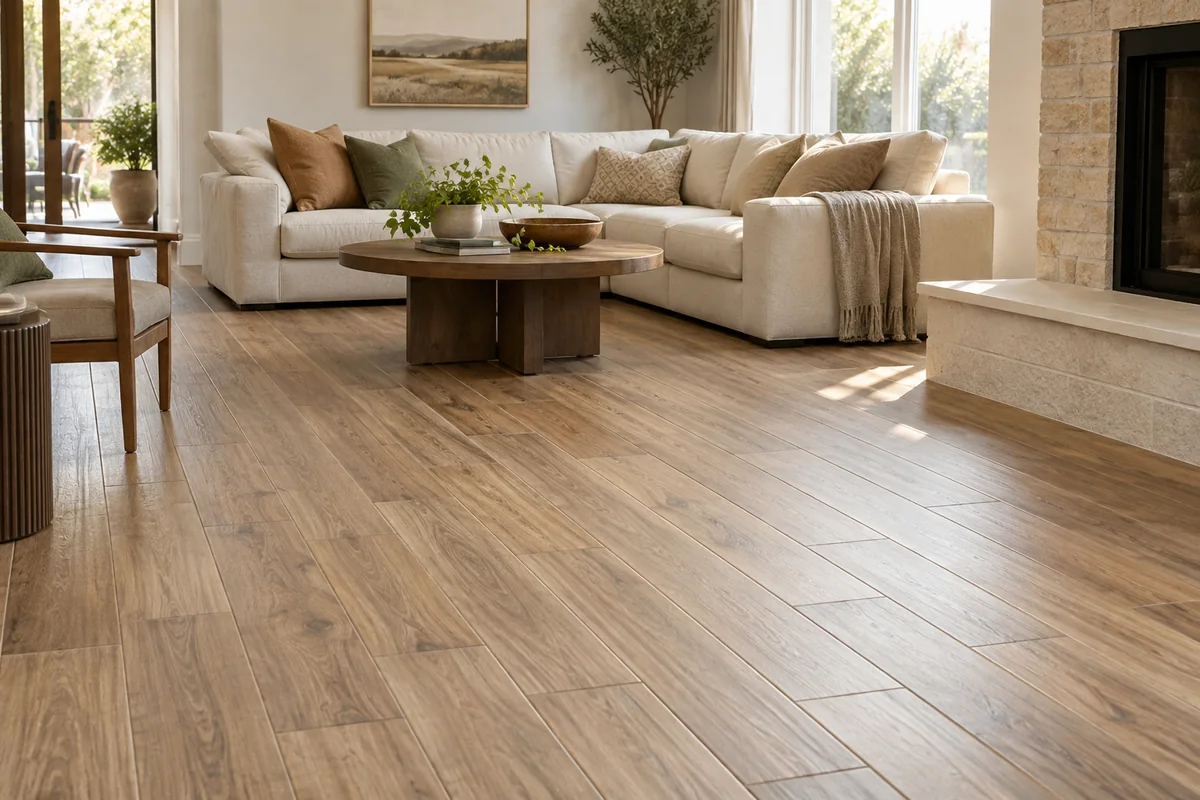
Wood-look porcelain tile is often selected when a project calls for the visual direction of wood with the practical characteristics of a tile surface. The most convincing result depends on more than the printed pattern. Plank direction, stagger, joint alignment, color distribution, transitions, and the relationship to cabinetry or adjacent rooms all influence the finished appearance.
Acorn Mahogany porcelain tile can be reviewed as one approved product example when comparing wood-inspired options. The product page should be consulted for current details, installation information, and any application guidance rather than relying on the name alone.
Acorn Walnut porcelain tile offers another approved product example to place alongside other wood-look choices during a visual comparison. Compare samples in the actual room's lighting and consider how the selected pattern will repeat across the planned layout.
Questions to answer before ordering
- Where will the tile be installed, and is that application supported by the product documentation?
- Will the surface encounter regular moisture, soil, chemicals, cooking residue, or heavy traffic?
- What finish, texture, color variation, and grout appearance are appropriate for the room?
- Does the selected format work with the room dimensions, transitions, drains, and existing substrate?
- Are samples representative enough to evaluate the design, or should additional pieces be reviewed?
- What tools, setting materials, joint requirements, and installer qualifications will the project require?
Before placing an order, verify product-specific dimensions, shade or dye-lot considerations, quantity, and installation instructions from the current source of information. A qualified installer can also identify substrate or layout issues that may not be visible during the design phase.
Frequently asked questions
Quick answers to practical questions related to selection, installation, care, and project planning.
Is porcelain tile waterproof?
No tile should be treated as a complete waterproofing system. Porcelain is relatively low in water absorption, but the overall installation still depends on the substrate, joints, grout, transitions, drainage, and—where required—a properly designed waterproofing assembly.
Is porcelain tile suitable for floors?
Many porcelain products are considered for flooring, but suitability depends on the specific product, finish, location, expected use, and installation conditions. Check documented product information before selecting tile for a floor.
Does porcelain tile need to be sealed?
The tile surface and the grout are separate components with potentially different care requirements. Do not assume that sealing is necessary, unnecessary, or sufficient for every installation; follow product guidance and consider the grout and surrounding materials.
Can porcelain tile be installed outdoors?
Some products may be designed for exterior applications, while others are not. Outdoor suitability depends on product documentation, climate, moisture management, installation materials, substrate conditions, and local requirements. Confirm all of these factors before proceeding.
Making the selection
The strongest porcelain tile choice balances appearance with the realities of the installation. Start with the room, exposure, traffic, maintenance expectations, and substrate. Then compare finish, format, pattern variation, grout, and documented application guidance. Reviewing samples and discussing the installation with a qualified professional can prevent a visually appealing choice from becoming a difficult project later.
Find the Right Tile or Stone for Your Project
Browse Stone Market USA collections or contact our team for help comparing materials, finishes, applications, samples, quantities, and current availability.