

Porcelain Tile vs. Natural Stone: Which Should You Choose?
Choosing between porcelain tile and natural stone is less about finding one universally superior material and more about matching the surface to your design priorities, maintenance expectations, installation conditions, and budget. Porcelain can offer consistent sizing and a wide range of manufactured looks, while natural stone brings geological variation that cannot be reproduced exactly from piece to piece.
This comparison explains the practical differences between porcelain tile and natural stone, including appearance, care, durability, installation, and the questions worth answering before you order materials.
What is the main difference?
Material Guidance
Appearance and design control
Material Guidance
Maintenance and everyday care
Care & Maintenance
What is the main difference?
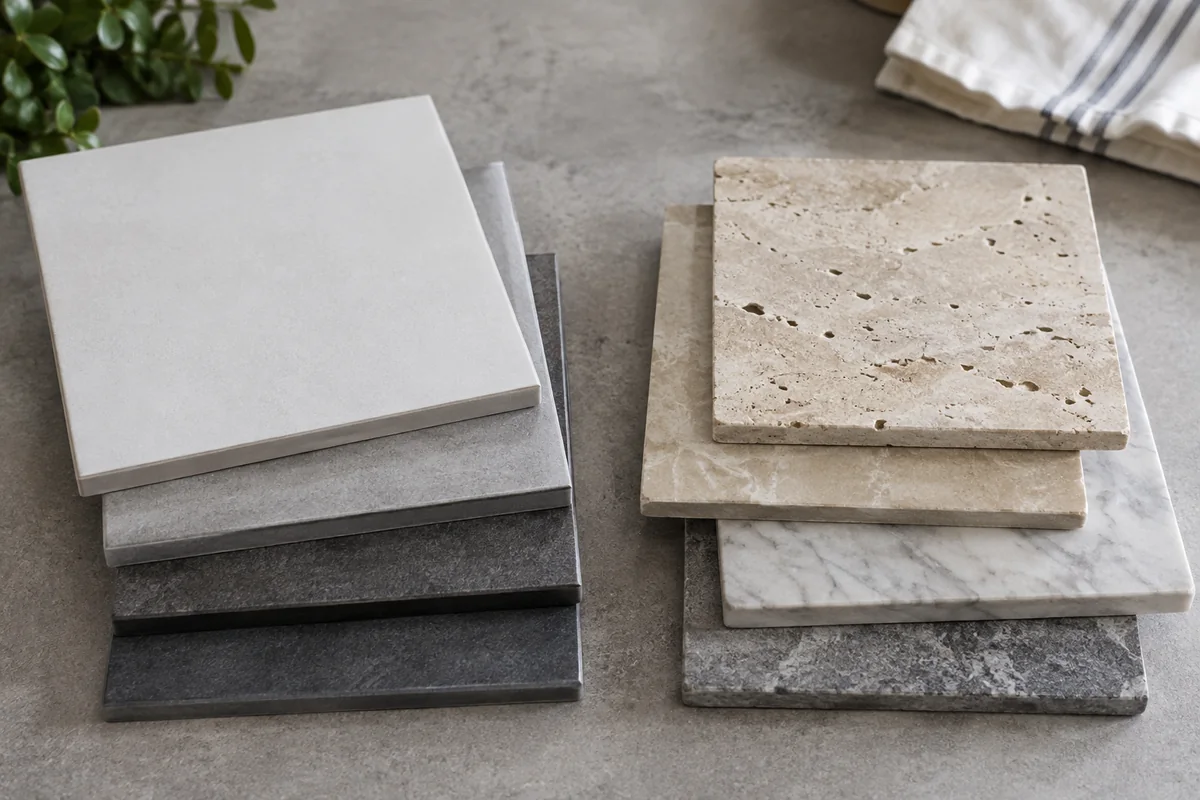
Porcelain tile is a manufactured ceramic surface made from refined clay and other materials, then formed and fired. Its appearance is produced through the manufacturing process, so tiles from the same collection are generally designed to coordinate with one another. Porcelain may be made to resemble stone, wood, concrete, or other materials, but it remains a manufactured product.
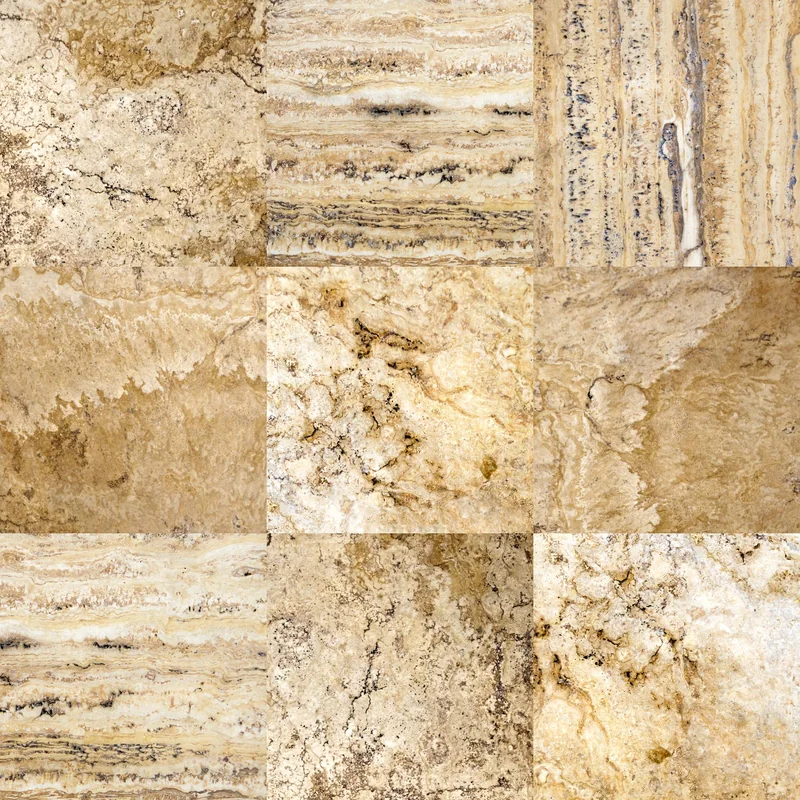
Natural stone is quarried from the earth and cut into usable tile or slab formats. Marble, travertine, limestone, and other stones can contain differences in color, veining, movement, texture, and shade. Those variations are part of the material, not necessarily a flaw. They also mean that a small sample cannot show every detail that may appear across a completed installation.
For a broader look at manufactured tile styles and formats, the porcelain tile collection can help you compare available design directions before narrowing down a specific surface.
Appearance and design control
Porcelain tile
Porcelain is often useful when you want a more controlled visual result. Color, pattern, and surface texture are developed as part of the product design, which can make it easier to plan a coordinated floor, wall, backsplash, or shower design. Stone-look porcelain can provide the visual language of marble, limestone, or other materials without requiring every piece to have natural geological variation.
That consistency is not absolute. Different production runs, lighting conditions, grout color, and installation layout can affect the finished appearance. Before ordering, review current product information and, when possible, evaluate a sample in the room where it will be installed.
Natural stone
Natural stone is selected partly for its individuality. Veining in marble, tonal movement in limestone, and surface variation in travertine can give an installation a character that changes from tile to tile. The same qualities can make design planning more involved. A layout may need to account for variation in shade, pattern, edge, or texture rather than treating every tile as visually interchangeable.
If a highly uniform appearance is important, porcelain may be easier to manage. If the natural origin and variation of the material are central to the design, stone may be worth the additional planning.
Maintenance and everyday care
Porcelain is commonly chosen for its relatively straightforward routine care. Dust, grit, spills, and residue still need to be removed, and grout joints require their own cleaning and maintenance. The type of surface, finish, grout, cleaner, and installation location all affect the appropriate care routine. Follow the product and installation-system guidance rather than assuming that every porcelain surface should be cleaned in exactly the same way.
Natural stone requires a more material-specific approach. Marble, limestone, travertine, and other stones can respond differently to moisture, staining agents, abrasion, and cleaning products. Some installations may benefit from sealing, but a sealer does not make stone stain-proof, waterproof, etch-proof, or maintenance-free. Acidic or abrasive cleaners can be inappropriate for certain stones, so the stone type and care instructions should be confirmed before selecting products.
Think about how you use the room, not just how the surface looks on installation day. A busy entry, kitchen, bathroom, rental property, or vacation home may place different demands on cleaning and long-term care than a low-traffic decorative wall.
Durability is about the application, not just the material
Both porcelain and natural stone can be appropriate for many interior surface applications, but neither category should be judged without considering the specific product and installation conditions. Important factors can include the tile’s intended use, surface finish, dimensions, thickness, substrate, setting materials, grout, traffic, moisture exposure, and local requirements.
Porcelain may appeal to buyers who want a manufactured surface with predictable design characteristics and a care routine that is often relatively simple. Natural stone may appeal to those who accept variation and are prepared to use material-appropriate maintenance practices. In either case, confirm technical information for the exact product rather than applying a general assumption to an entire category.
For a more detailed overview of selection questions, formats, and practical considerations, consult the porcelain tile guide while comparing candidate materials.
Installation considerations
Installation affects the performance and appearance of both porcelain and stone. The substrate must be suitable for the project, the layout should account for the selected tile size and pattern, and the setting system must be appropriate for the material and location. Large-format materials may require additional planning for handling, alignment, coverage, and substrate flatness.
Natural stone may require extra attention during layout because variation can be intentional but still needs to be distributed thoughtfully. Some stones also have surface characteristics that make protection during installation and careful cleaning especially important. Porcelain can offer more visual consistency, but that does not eliminate the need for proper substrate preparation, movement accommodation, grout selection, or installation practices.
For wet areas, exterior applications, heated floors, freeze-prone locations, or demanding commercial spaces, verify the exact product information and consult a qualified installer. Suitability depends on the complete system and project conditions, not simply on whether a material is labeled porcelain or natural stone.
Cost and long-term value
Material price is only one part of the decision. Total project cost can also include freight, waste, trim, setting materials, labor, substrate preparation, sealing or other care products, and future maintenance. Natural stone may involve more selection and layout work, while porcelain may involve different considerations related to cutting, handling, or the chosen format.
Prices vary widely within both categories, so it is not reliable to assume that all porcelain costs less than all natural stone. Compare complete project requirements and ask an installer or supplier what preparation and maintenance the specific material will require.
How to decide between porcelain and natural stone
Start by identifying which compromises you are comfortable making. The following questions can narrow the choice:
- Do you want a controlled, repeatable pattern, or are natural variations part of the design?
- How much ongoing maintenance are you prepared to manage?
- Will the surface be exposed to heavy traffic, spills, moisture, outdoor conditions, or temperature changes?
- Does the exact product have verified information for the intended application?
- Will the installation require a particular substrate, setting system, grout, or layout approach?
- Can you review a sample or several pieces before committing to the full order?
- What are the total material, installation, preparation, and maintenance costs?
Samples are especially important for natural stone because one piece cannot represent every tile in the installation. Samples also help with porcelain by allowing you to evaluate scale, sheen, texture, grout color, and the way the surface responds to the room’s lighting.
Examples to review while comparing materials
If you are considering a stone-inspired manufactured surface, the Salt Stone Ash porcelain tile is one approved product example to place alongside natural-stone samples for a visual comparison. Review the product’s current information before making any application or installation decision.
A warmer color direction can be considered through the Salt Stone Desert porcelain tile. Treat it as a specific design option to evaluate, not as a substitute for checking the technical and installation requirements of your project.
Common mistakes to avoid
- Choosing from a single small sample: Scale, lighting, grout, and natural variation can change the way a surface reads in a full room.
- Assuming category labels answer every technical question: Confirm information for the exact product and intended location.
- Leaving installation planning until after purchase: Substrate conditions, layout, transitions, and setting materials can affect both the result and the project cost.
- Treating sealed stone as maintenance-free: Sealing can be part of a care strategy, but it does not prevent every stain, etch, scratch, or moisture-related issue.
- Comparing only the purchase price: Labor, preparation, waste, care products, and long-term maintenance can change the overall value.
Which material is right for your project?
Porcelain is often a practical direction when you value manufactured consistency, broad design flexibility, and a relatively straightforward care approach. Natural stone may be the better design fit when you want authentic geological variation and are willing to plan around the material’s individual characteristics and maintenance needs.
The most dependable choice comes from evaluating the exact product, not relying on a simple porcelain-versus-stone rule. Compare samples, verify application information, discuss installation conditions with a qualified professional, and consider how the surface will be cleaned and used over time. That process will help you choose a material that suits both the room and the way you live with it.
Frequently asked questions
Quick answers to practical selection, installation, care, and planning questions.
Is porcelain tile more durable than natural stone?
There is no universal answer. Durability depends on the specific product, finish, installation, traffic, exposure, and maintenance. Compare verified information for the materials being considered and the conditions of your project.
Does natural stone require sealing?
Some natural-stone installations may benefit from sealing, but the need and appropriate care depend on the stone, finish, location, and manufacturer or installer guidance. Sealing does not make stone completely resistant to stains, moisture, or etching.
Can porcelain replace the look of natural stone?
Porcelain can reproduce visual characteristics associated with stone, and it may provide a more controlled pattern. It cannot reproduce the exact geological variation of natural stone, so samples should be evaluated before purchase.
Should I choose the tile before speaking with an installer?
It is usually helpful to involve an installer early, especially for large formats, unusual layouts, wet areas, exterior projects, or substrates that may need preparation. Installation conditions can affect which products are appropriate.
Find the Right Tile or Stone for Your Project
Browse Stone Market USA collections or contact our team for help comparing materials, finishes, applications, samples, quantities, and current availability.