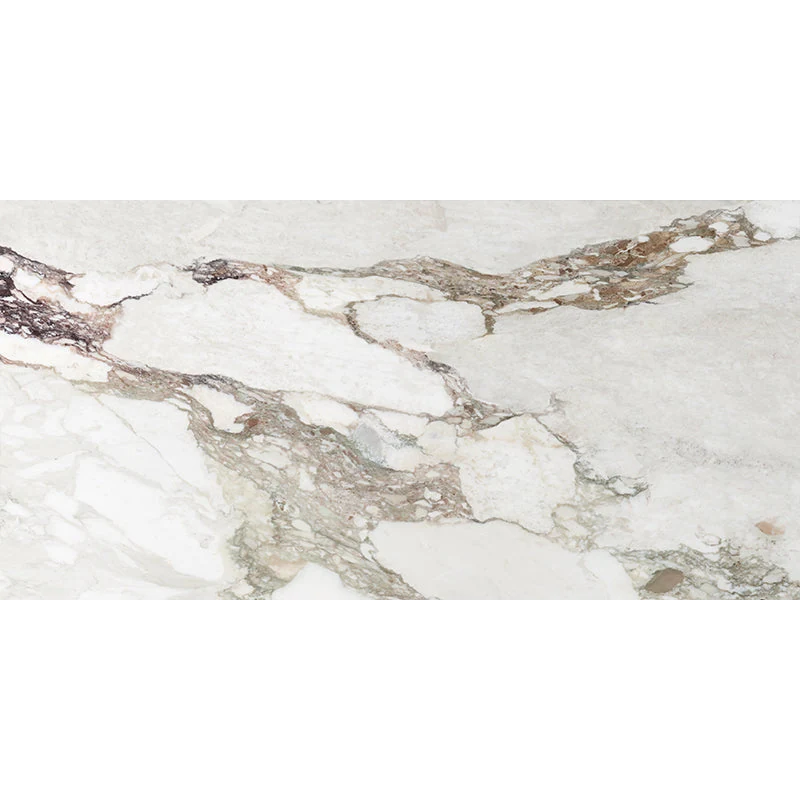
Kobe Calacatta Viola 12×24 Porcelain Tile Polished Rectified
Bring statement-making marble character to modern spaces with the Kobe Calacatta Viola 12×24 porcelain tile. Its polished surface amplifies the dramatic Calacatta Viola-inspired veining, while the elongated 12×24 format minimizes grout lines for a sleek, continuous look on walls or floors. Precision rectified edges support tight, consistent joints and clean transitions.
Engineered in durable porcelain, this tile combines high-end style with everyday practicality. A PEI 4 wear rating and a DCOF of 0.50 offer confident performance in active residential areas, and frost resistance expands design options to exterior facades in freeze–thaw climates. At 3/8 inch (10mm) thick, it balances strength and refined detailing across a range of applications.
Use on its own for a bold focal point or pair with complementary neutrals to create layered, architectural interest. The polished finish lends depth and clarity to the veining for a refined, gallery-ready presentation.
Features
- Porcelain body for durability and easy care
- Color: Calacatta Viola aesthetic
- Finish: Polished
- Edge: Rectified for precise, narrow grout joints
- Size: 12×24 format
- Thickness: 3/8 in (10mm)
- PEI 4 wear rating
- DCOF: 0.50
- Frost resistant for freeze–thaw exterior wall use
Recommended Applications
- Residential interior floors
- Residential interior walls
- Light commercial interior floors
- Commercial interior walls
- Backsplashes
- Shower walls
- Fireplace surrounds
- Exterior walls/facades (freeze–thaw)
Installation Guide – Kobe Calacatta Viola 12×24 Porcelain Tile Polished Rectified
Important Advisory
Always follow the tile manufacturer’s instructions, local building codes, and recognized industry standards (ANSI A108/A118 and TCNA guidelines). Verify substrate suitability, movement accommodation, and waterproofing/drainage where required.
Step 1: Layout & Planning
- Confirm the substrate is clean, dry, structurally sound, and flat within tolerances appropriate for 12×24 tile.
- Dry lay to balance cuts and center the layout; avoid sliver cuts at perimeters and focal areas.
- Blend material from multiple boxes to distribute shade and pattern variation.
- Select an appropriate joint width for rectified tile, and incorporate movement joints per TCNA EJ171.
Step 2: Tile Installation
- Use a polymer-modified thinset mortar approved for porcelain and for the tile’s size/format.
- Key mortar into the substrate, then comb in straight lines; back-butter to enhance coverage as needed.
- Set tiles with a slight sliding motion to collapse ridges and promote full contact.
- Use a leveling system where appropriate to help reduce lippage on larger-format installations.
- Observe mortar cure times before grouting or allowing light traffic, per manufacturer guidance.
Step 3: Cutting
- Cut with a wet saw and a quality diamond blade rated for porcelain.
- Measure and support the tile fully to minimize chipping; ease exposed cut edges as needed.
- Use appropriate safety gear and dust control practices.
Step 4: Joint Filling
- Choose a grout suitable for porcelain and the selected joint width; follow manufacturer mixing and curing directions.
- Pack joints fully and clean diagonally; remove grout haze promptly with clean water and soft tools to protect the polished surface.
- Use flexible sealants at movement joints and changes of plane; do not grout these areas.
- Protect the installation from traffic until grout has cured.
Step 5: Cleaning & Maintenance
- Clean routinely with a pH-neutral cleaner formulated for porcelain.
- Avoid acids, alkaline strippers, and abrasive pads that may damage the polished finish.
- Use entry mats and furniture glides to reduce tracked-in grit and abrasion.
- Maintain grout per manufacturer recommendations; seal cementitious grout if advised.
Disclaimer
Installation should be performed by qualified professionals. Verify actual materials, lot-to-lot variations, and suitability for the intended application before installation. Stone Market USA is not responsible for issues arising from improper installation, handling, or site conditions.