

Nested Geometry with Sculptural Architectural Presence
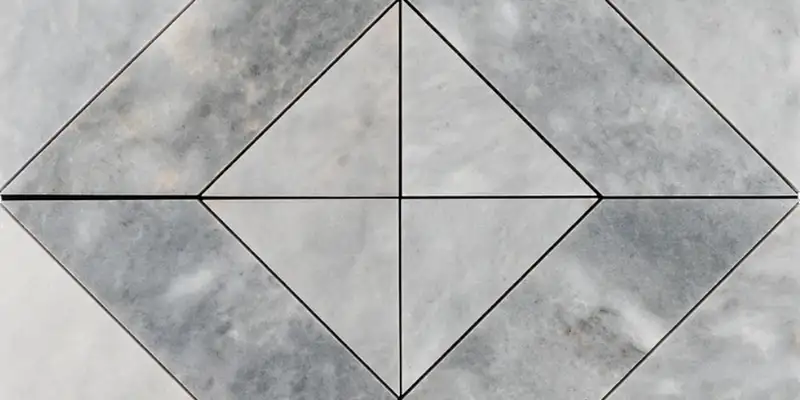
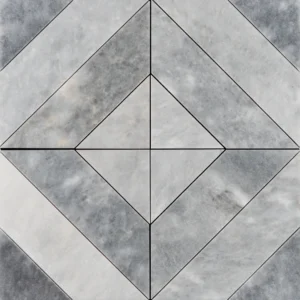
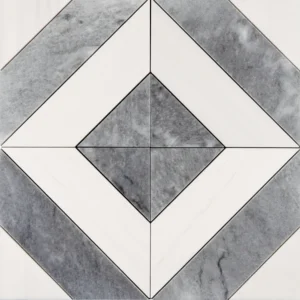
Piela mosaic tile combines angled natural stone pieces to form nested diamonds, framed squares, and repeating modular geometry.
Unlike smaller repeating mosaics, the Piela pattern creates a broader architectural composition that can function as a centered focal point, continuous feature wall, decorative panel, or statement floor installation.
Light and dark marble combinations emphasize the nested geometry, while coordinated stones produce a softer and more continuous effect. The pattern works especially well in entryways, bathrooms, kitchens, fireplaces, living areas, hotel interiors, and refined commercial environments.
Why Choose Piela Mosaic Tile?
Piela tile combines sculptural geometry, visual depth, modular symmetry, and the individual character of carefully coordinated natural stone.
Sculptural Geometry
Nested diamonds and framed-square forms create a distinctive composition with strong architectural character.
Layered Visual Depth
Angled pieces and contrasting tones make the surface appear dimensional without requiring physical relief.
Statement-Focused Design
The larger modular layout is ideal for creating focal points in entryways, feature walls, and fireplaces.
Natural Stone Variation
Marble and dolomite introduce authentic veining, mineral movement, tonal contrast, and individual surface detail.
Piela Materials and Design Styles
Compare stone combinations, finish, grout contrast, module scale, natural variation, maintenance, and intended application before selecting a Piela pattern.
Dolomite Piela
Bright white backgrounds and subtle gray movement for clean, elegant, and light-filled feature installations.
Carrara & Calacatta
Classic gray or expressive marble veining for sophisticated foyers, bathrooms, fireplaces, and statement walls.
Bardiglio & Contrasting Marble
Deeper gray stone emphasizes the nested diamonds and produces a stronger graphic or gallery-inspired composition.
Polished, Honed & Tumbled
Polished surfaces reflect more light, while honed and tumbled finishes create softer, quieter, and more understated results.
Where Can Piela Tile Be Used?
Product suitability depends on the material, finish, traffic, moisture, substrate, module size, and complete installation system.
- Entryways and foyers: Center the pattern to create a medallion-like focal point that guides the eye into the space.
- Bathroom feature walls: Use Piela behind vanities, within shower features, or across selected decorative wall sections.
- Kitchen feature areas: Create a gallery-style backsplash section, bar wall, or decorative panel rather than a conventional field.
- Fireplace surrounds: Frame a fireplace with modular marble geometry and carefully coordinated tonal contrast.
- Living and dining areas: Use the pattern as an architectural wall panel or decorative stone feature.
- Commercial interiors: Introduce a distinctive focal surface in hotels, reception areas, restaurants, boutiques, and offices.
Choosing the Right Piela Pattern
Consider module scale, stone contrast, grout, finish, focal-point placement, lighting, and surrounding materials before making a final selection.
- Module scale: Confirm that the complete nested-diamond repeat fits the installation area without awkward partial modules.
- Stone contrast: Light-on-light combinations appear subtle, while gray or dark marble creates stronger visual definition.
- Grout color: Coordinated grout supports continuity; contrasting grout emphasizes every geometric boundary.
- Finish: Polished, honed, matte, tumbled, and leathered finishes affect reflection, texture, maintenance, and depth.
- Pattern placement: Identify the primary focal point and center the module relative to the wall, floor, fireplace, or entry axis.
- Room coordination: Review samples with flooring, cabinetry, countertops, paint, fixtures, furniture, hardware, and lighting.
Center the Module and Protect the Pattern Symmetry
Piela installations require precise centerlines, dry layout, module alignment, consistent grout joints, point adjustment, stone blending, and careful cuts around the perimeter.
Locate the Visual Center
Establish the room, wall, fireplace, or feature center before positioning the first pattern module.
Dry-Lay Complete Modules
Review nested-diamond orientation, perimeter cuts, stone distribution, and module transitions before setting.
Maintain Consistent Geometry
Adjust points and grout joints carefully so the framed squares and diamonds remain symmetrical.
Use Suitable Setting Materials
Confirm adhesive, grout, sealer, waterproofing, substrate preparation, and coverage for the selected application.
Piela Mosaic Tile FAQs
Helpful answers for comparing materials, modules, finishes, grout, applications, quantities, samples, sealing, and installation.
What is Piela mosaic tile?
Piela is a modular geometric stone pattern made from angled pieces arranged as nested diamonds and framed square forms.
Where is Piela tile commonly used?
Piela is commonly used in entryways, foyers, bathroom feature walls, fireplaces, living areas, kitchen features, hotels, and commercial interiors.
Is Piela tile suitable for an entire wall?
Yes, depending on the room and design concept. It can cover a complete feature wall or be used as a centered decorative panel.
Can Piela tile be used on floors?
Selected products may be suitable for flooring. Confirm the specific stone, finish, traffic rating, substrate, installation system, and maintenance needs.
What grout color works best with Piela tile?
Coordinated grout creates a more continuous field. Gray, charcoal, or contrasting grout emphasizes every diamond, square frame, and stone transition.
Does marble Piela tile need sealing?
Many marble and natural stone installations benefit from a suitable penetrating sealer. Requirements depend on the stone, finish, grout, room, and exposure.
Is Piela tile difficult to install?
The modular format simplifies pattern repetition, but precise centerlines, dry layout, consistent joints, point alignment, and perimeter planning are essential.
How much extra Piela tile should I order?
Additional material may be required for perimeter cuts, module alignment, natural variation, stone selection, breakage, and future repairs.
Can I order a Piela mosaic tile sample?
Sample availability depends on the individual product. Review the product page or contact Stone Market USA to confirm material, color, finish, module dimensions, and current inventory.
Need Help Choosing Piela Mosaic Tile?
Contact Stone Market USA for assistance comparing Piela materials, marble combinations, finishes, grout options, module quantities, samples, and current availability.