
Loading... (Warehouse Local Time)
Mon–Fri: 9:00 AM – 6:00 PM |

Choosing the Best Flooring for Your Art Studio: A Comprehensive Guide

An art studio is a place where creativity meets real-world mess: paint drips, clay dust, heavy tools, rolling chairs, and long hours on your feet. That’s why choosing the right studio flooring matters more than most people think. In this guide, we’ll walk through the best flooring options for art studios and show you practical tips to choose a surface that stays beautiful, easy to clean, and comfortable over time.

If you’re exploring durable, design-forward surfaces, start here: Tiles and Mosaic Tiles. For a brighter, modern stone look, you can also browse the Dolomite Collection and Vanilla Marble Collection.

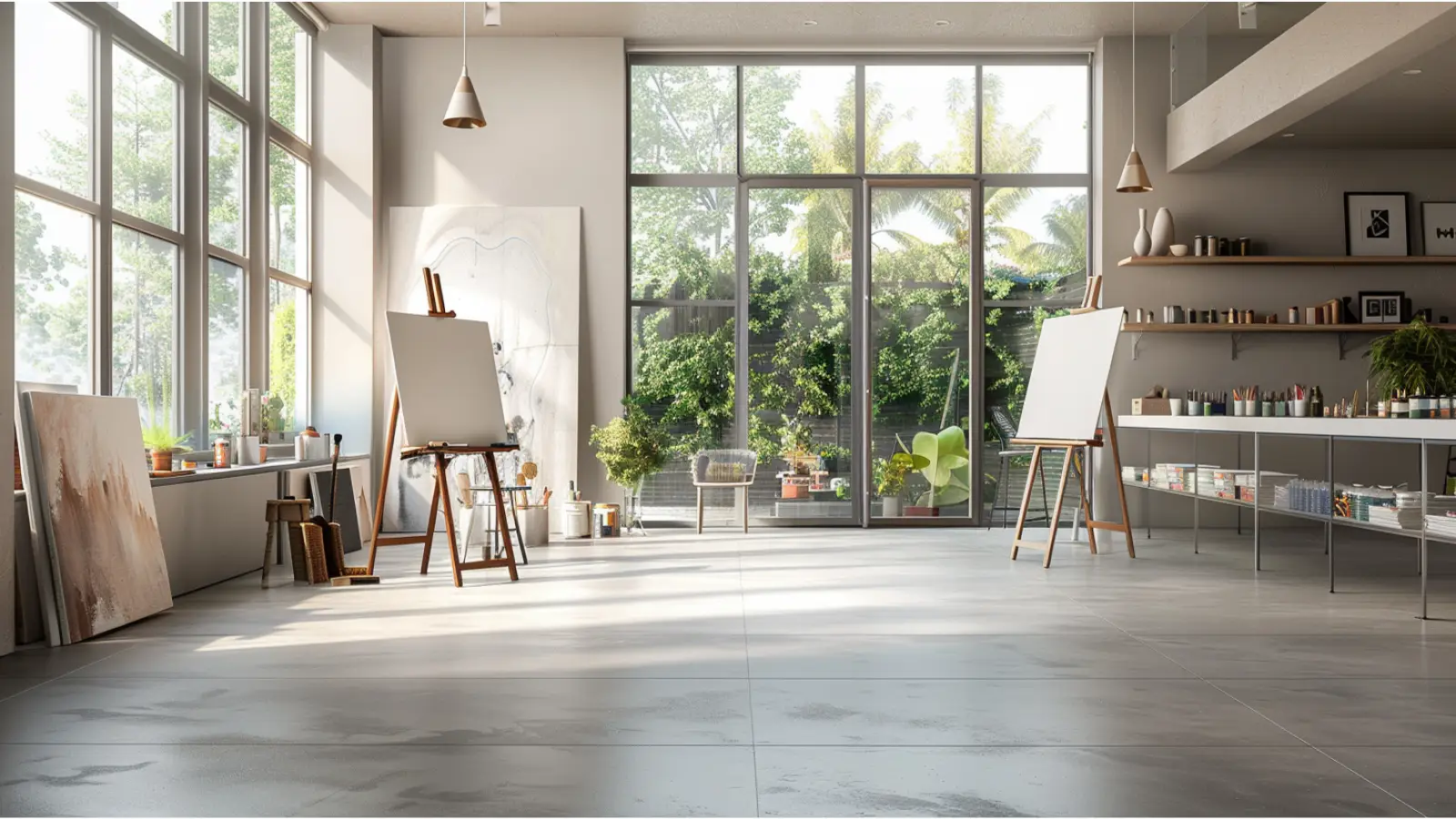
Modern art studio with tile flooring and natural daylight
Modern studio inspiration: tile surfaces pair clean design with easy maintenance.

Understanding the Unique Needs of an Art Studio

Art studios are vibrant spaces where creativity flourishes, often characterized by a variety of artistic activities, including painting, sculpting, and mixed-media projects. These activities have specific requirements and challenges that must be addressed when selecting the appropriate flooring. One of the most critical considerations is durability. Given the physical nature of artistic endeavors, the flooring must withstand heavy foot traffic, potential drops of tools or materials, and occasional accidents without showing evident wear and tear.

Moreover, art studios frequently deal with materials that can cause stains and spills, from acrylic paints and oils to clay and adhesives. Therefore, choosing a flooring material that is resistant to staining and easy to clean is essential. Floors that can be easily wiped down or cleaned with minimal effort will help maintain a tidy workspace, allowing artists to focus on their work rather than on lengthy cleanup procedures. Additionally, flooring that does not absorb stains can preserve the aesthetic appeal of the studio over time.

Comfort is another vital factor, especially for artists standing for long periods. Flooring materials such as cork or high-quality vinyl provide cushioning to support the feet and reduce fatigue, promoting creativity and productivity. In contrast, hard surfaces like certain types of tile may lead to discomfort during extended work sessions. The best studios usually balance durability, easy maintenance, and comfort—often by choosing a strong primary surface (like tile) and adding anti-fatigue mats where you stand most.

Many studios also include a display wall for finished pieces, inspiration boards, or photo backdrops. If you want your studio to look more like a curated gallery space, consider pairing your floor choice with wall surfaces from: Residential Interior Wall.

Material Options for Art Studio Flooring

When selecting flooring for an art studio, it is essential to consider the various material options available, each offering unique advantages and disadvantages. The choice of flooring can significantly affect the studio's functionality and overall aesthetic appeal. Popular materials include hardwood, laminate, vinyl, tile, and concrete, all catering to diverse artistic practices and budgetary requirements.

Hardwood

Hardwood flooring is a classic choice for art studios, known for its durability and timeless beauty. It provides a warm ambiance, making it suitable for a creative environment. However, hardwood can be susceptible to scratches and staining, especially with art supplies like paint and solvents. Regular maintenance and refinishing may be necessary to preserve its appearance.

Laminate

Laminate flooring is often considered a more affordable alternative to hardwood. It is resistant to scratches and easier to clean, making it ideal for busy studios. However, while it mimics the look of wood, it may not offer the same warmth and authenticity, potentially making the space feel less inviting.

Vinyl

Vinyl flooring presents an excellent option for artists seeking versatility. It is water-resistant and available in a wide range of styles and colors. Vinyl is also relatively easy to maintain but may not be as durable as other materials, particularly in high-traffic areas. Additionally, excessive sunlight can fade its colors over time.

Tile and mosaic flooring inspiration for a modern art studio
Tile & mosaic floors are studio-friendly: stain-resistant, durable, and easy to wipe clean.

Tile

Tile flooring is highly regarded for its durability and ease of maintenance. While it is resistant to spills and stains, tiles can be cold underfoot, necessitating considerations for heat retention. Sound insulation can also be a concern, as tile does not absorb sound as effectively as other flooring types.

In an art studio, tile can be one of the most practical long-term choices: you can clean paint splatters quickly, manage clay dust, and handle heavy rolling carts without worrying about permanent damage. If you want to explore options, browse our Tiles for clean, modern surfaces or our Mosaic Tiles if you want more texture, detail, and creative patterns.

Concrete

Finally, concrete flooring has gained popularity in modern art studios due to its industrial aesthetic and unparalleled durability. It can withstand heavy equipment and spills but may require sealing to prevent stains and provide comfort underfoot. As a solid substrate, it offers exceptional support for various artistic activities.

If you like the durability of concrete but want a brighter, more refined “gallery” look, light stone surfaces can be a perfect upgrade. Two modern directions are the Dolomite Collection (clean white/gray tones) and the Vanilla Marble Collection (warm beige elegance).

Evaluating Your Studio's Layout and Environment

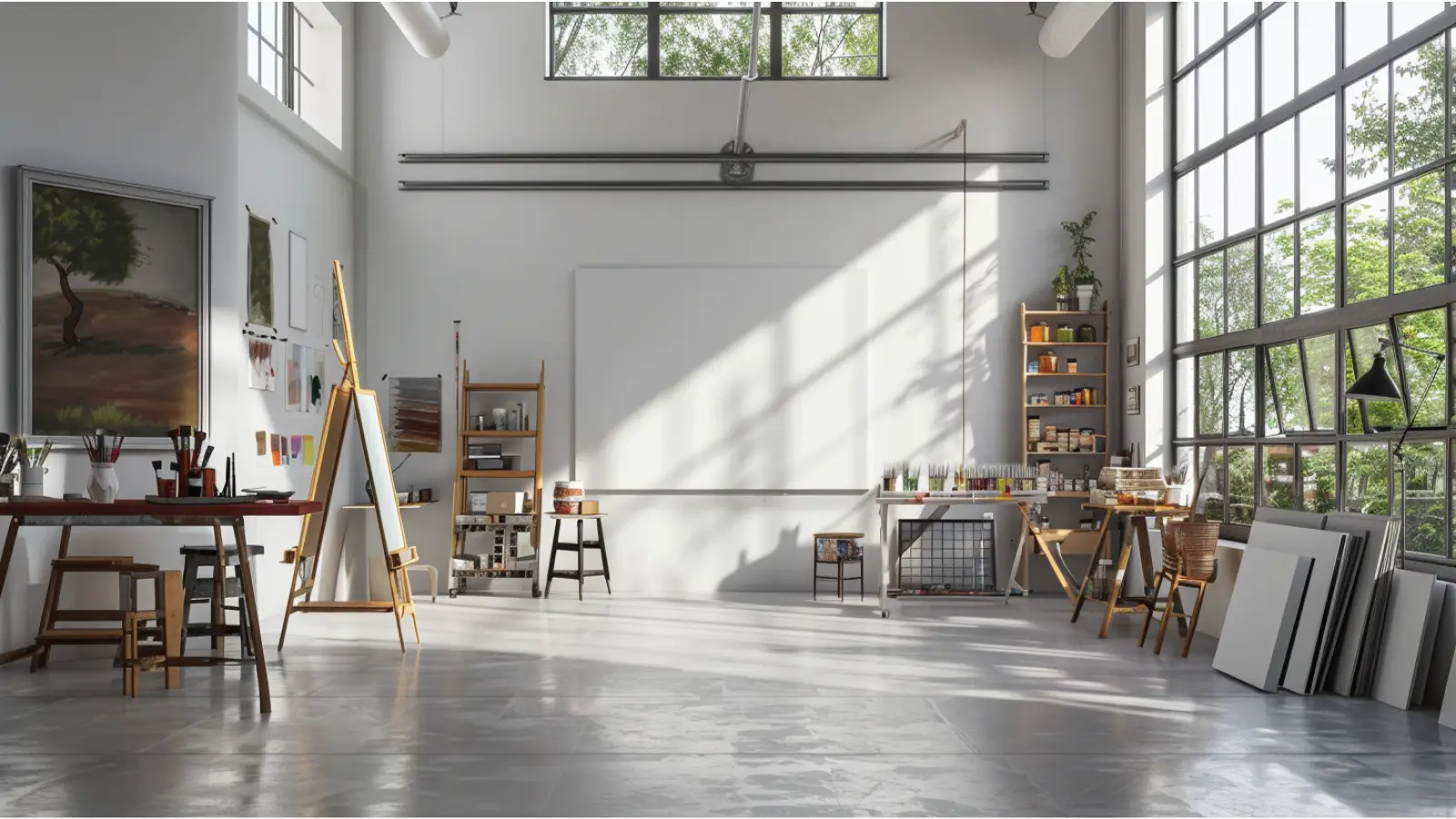
Modern art studio layout with organized work zones and easy-clean flooring
Plan your work zones: wet area, dry area, storage, and high-traffic paths.

When selecting flooring for your art studio, understanding the layout and environmental conditions is crucial. The size and shape of the studio play an integral role in determining the most suitable flooring material. Large studios may benefit from more durable flooring options, such as polished concrete or hardwood, which can withstand heavy equipment and frequent movement. On the other hand, smaller spaces might favor softer, more flexible materials like cork or vinyl, allowing for easier arrangements and a softer underfoot feel.

The type of art created in your studio will also influence your flooring decision. For instance, if painting involves significant amounts of water, it is advisable to consider water-resistant options. Tile or sealed concrete is ideal in this scenario, as it can manage spills effectively without sustaining damage. Conversely, if your artwork features intricate details that require precise movements, opting for a more forgiving material that provides comfort and support might be necessary.

Natural light exposure is another factor to contemplate. Studios with abundant sunlight may necessitate UV-resistant flooring materials to reduce fading and damage over time. Moreover, darker floors can create a captivating aesthetic; however, they may show dust and debris more prominently, which could be a consideration for cleanliness.

Measuring your studio accurately is essential for selecting flooring. Take precise dimensions of all areas, including nooks and crannies, to ensure a fitting choice. Note any challenges, such as areas prone to moisture buildup, which could lead to complications with various flooring types. Additionally, unusual shapes or architectural features may require customized flooring solutions. This comprehensive assessment will lay the groundwork for choosing the optimal flooring tailored to your art studio's design and functional needs.

Installation and Maintenance Tips for Longevity

When selecting flooring for your art studio, understanding the installation process can significantly influence the longevity of your flooring choice. Depending on the type of flooring, you may opt for professional installation or take on a DIY project. For complex materials such as hardwood or luxury vinyl, hiring professionals may be beneficial due to their expertise and the specialized tools required. Conversely, more straightforward flooring options like laminate or carpet tiles may lend themselves well to DIY installation, provided you are comfortable with basic tools. Costs can vary significantly; professional installation could range from $2 to $6 per square foot, while DIY expenses generally include only the cost of materials, thus saving on labor. It's advisable to estimate the time required for installation, as this can differ based on the flooring type and overall space.

Routine maintenance is vital for preserving the aesthetics and durability of your flooring in an art studio setting. Regular cleaning schedules should be established, using appropriate cleaning solutions that match the flooring type. For instance, wooden floors benefit from light dusting and occasional mopping with a mix of water and a pH-neutral cleaner, while vinyl flooring can be cleaned effectively with damp mops and gentle detergents. In addition to routine cleaning, promptly addressing any spills is critical to prevent stains—a necessity in a creative environment.

Protective measures should also be considered to shield your flooring from scratches and dents. Using rugs in high-traffic areas and under art tables can safeguard against damage. Furniture pads placed under easels and tables can help mitigate potential harm. Incorporating these strategies will ensure that your flooring maintains its charm and functionality, allowing your art studio to remain a vibrant and creative space for years to come.


Product Highlight: A Studio-Friendly Large-Format Tile

If you want a modern, professional studio look with an easy-to-clean stone surface, consider a large-format option like: Bardiglio 24x24 Honed Marble Tile . Large tiles can reduce grout lines (faster cleanup) and create a calm, gallery-style floor—perfect for creative workspaces.

Ready to explore more? Start with our Tiles and Mosaic Tiles. For bright stone looks, browse the Dolomite Collection and Vanilla Marble Collection. And if you’re building a cohesive studio aesthetic, don’t miss Interior Wall ideas.

Request a Quote
Tell us briefly about your project, sq ft, and timing.
Category
Category
Material
Material
Color
Color
Size
Size
Finish
Finish
Design
Design
Thickness
Thickness
Application
Usage Area