

Choosing the Best Flooring for Your Art Studio: A Practical, Long-Term Guide
An art studio is where creativity meets real-world wear. Paint drips, clay dust, rolling chairs, heavy tools, long hours on your feet — all of it puts serious demands on your flooring. Choosing the right surface isn’t just about style; it’s about finding a floor that supports your workflow, stays easy to clean, and still looks intentional years later.
In this guide, we’ll walk through the most common flooring options for art studios and explain what actually works in practice — not just what looks good in photos.
If you’re exploring durable, design-forward surfaces, start with Tile and Mosaic Tile options. For a lighter, gallery-style aesthetic, you may also want to explore the Dolomite Collection or the warm, neutral tones of the Vanilla Marble Collection.
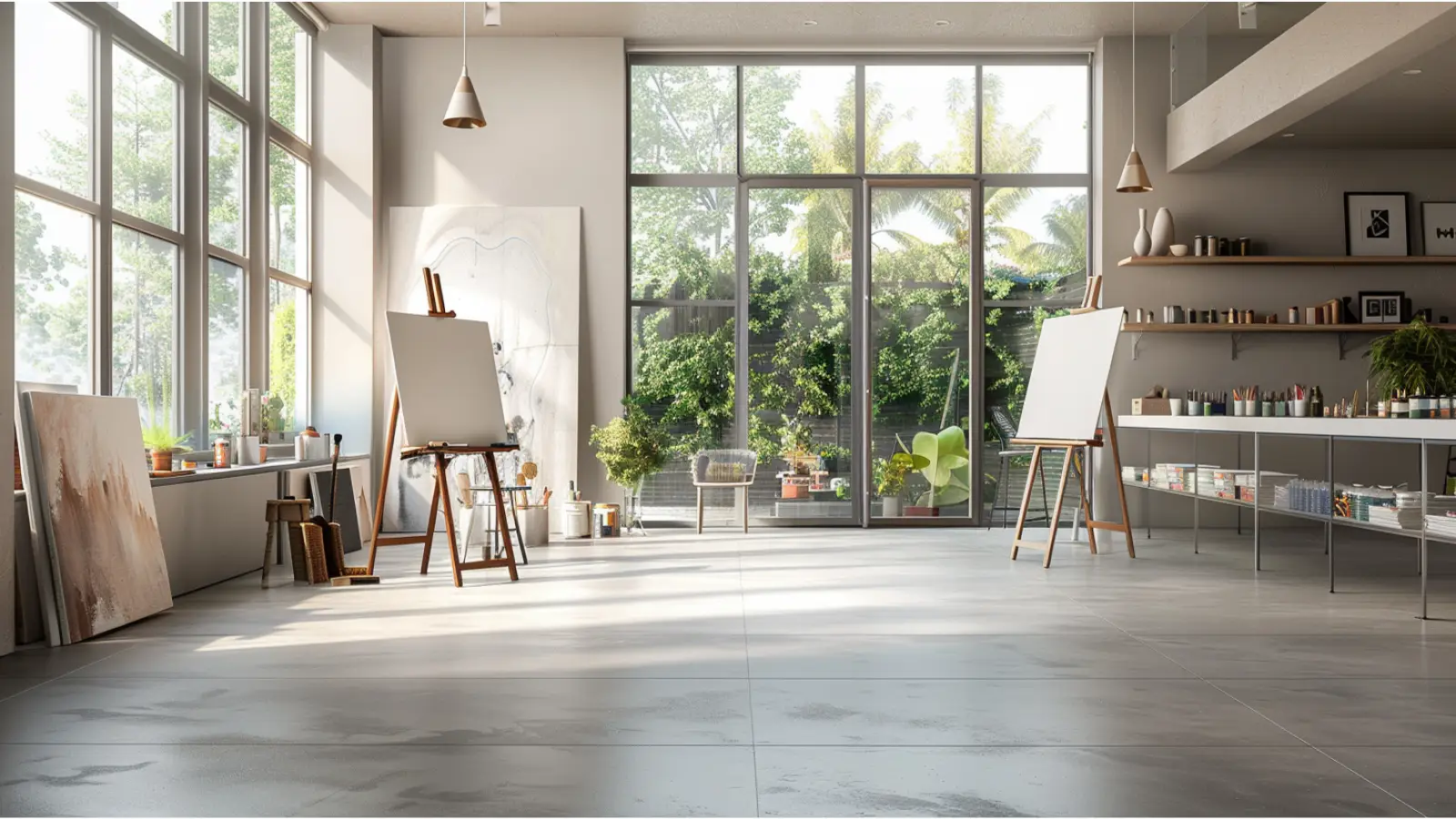
Understanding the Unique Needs of an Art Studio
Unlike standard living spaces, art studios combine physical activity, creative mess, and long working sessions. Flooring must tolerate heavy foot traffic, dropped tools, rolling equipment, and occasional spills without becoming a constant maintenance burden.
Stain resistance and ease of cleaning are critical. Paint, adhesives, inks, and clay residue should be removable without panic. Floors that allow quick wipe-downs help keep your focus on creating, not cleaning.
Comfort matters too. Many artists stand for hours, so even hard surfaces are often paired with anti-fatigue mats in primary work zones. The most successful studios balance durability, maintenance, and comfort rather than optimizing for only one factor.
If your studio also functions as a display or photography space, pairing your flooring with refined wall finishes can elevate the entire room. You can explore complementary ideas in our Residential Interior Wall section.
Material Options for Art Studio Flooring
Each flooring material brings its own strengths and compromises. The right choice depends on how your studio is used, how often it’s cleaned, and how much visual wear you’re comfortable with.
Hardwood
Hardwood offers warmth and character, but it can scratch, stain, and require refinishing in active studios. It’s best suited for light creative work rather than messy or tool-heavy practices.
Laminate
Laminate is budget-friendly and easy to maintain, but it lacks the depth and longevity of natural materials. Over time, damage often means replacement rather than repair.
Vinyl
Vinyl is water-resistant and forgiving underfoot, making it practical for many studios. However, heavy equipment and long-term wear can shorten its lifespan in busy environments.
Tile
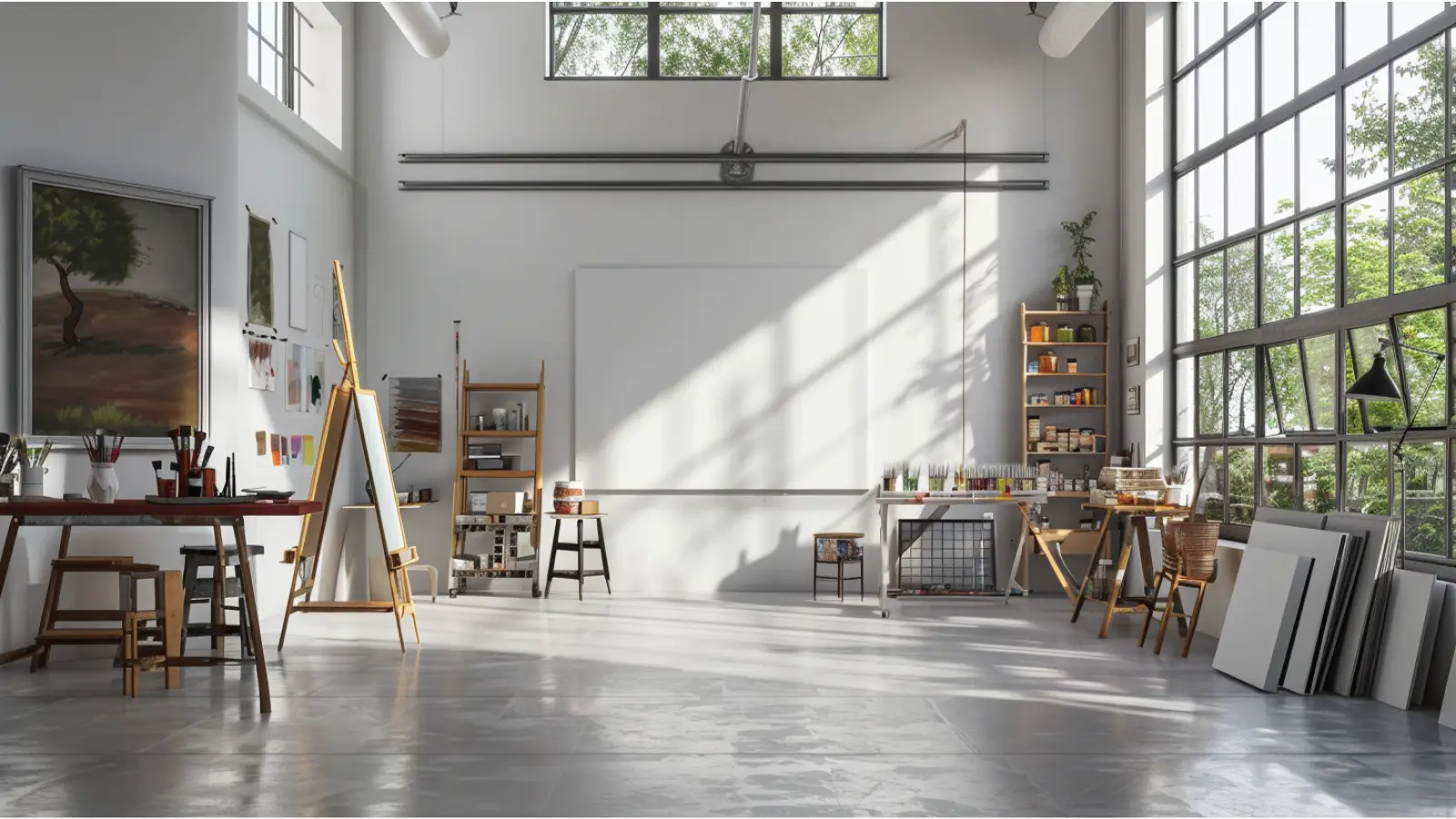
Tile is one of the most reliable long-term options for art studios. It resists stains, handles heavy loads, and cleans easily. Large-format tiles reduce grout lines, while mosaics can add texture or visual interest to specific zones.
Explore practical options in our Tile and Mosaic Tile collections.
Concrete
Concrete delivers unmatched durability and an industrial aesthetic. When properly sealed, it handles spills well, but comfort and brightness can be concerns in long working sessions.
For artists who like concrete’s strength but want a more refined, gallery-style finish, light natural stone surfaces can offer a compelling alternative.
Installation and Maintenance for Long-Term Use
Proper installation is as important as material choice. Professional installation is often worthwhile for tile and stone, ensuring flatness, correct subfloor prep, and long-term stability.
Maintenance should match your reality. Choose surfaces that tolerate frequent cleaning with pH-neutral products and don’t punish you for occasional spills. Mats, furniture pads, and designated work zones can dramatically extend floor life.
Before You Commit: Two Practical Considerations
Before finalizing any flooring choice, many studio owners overlook two important questions: how the material will perform in daily life, and what to expect if they need to reorder the same material in the future.
Natural stone, in particular, varies by batch. Understanding this upfront can prevent frustration later: Can you reorder stone and get the same color?
It’s also worth stepping back and choosing materials based on how you actually use the space — not just how you want it to look on day one. This broader decision-making approach is explained in: Choosing stone tile by lifestyle .