

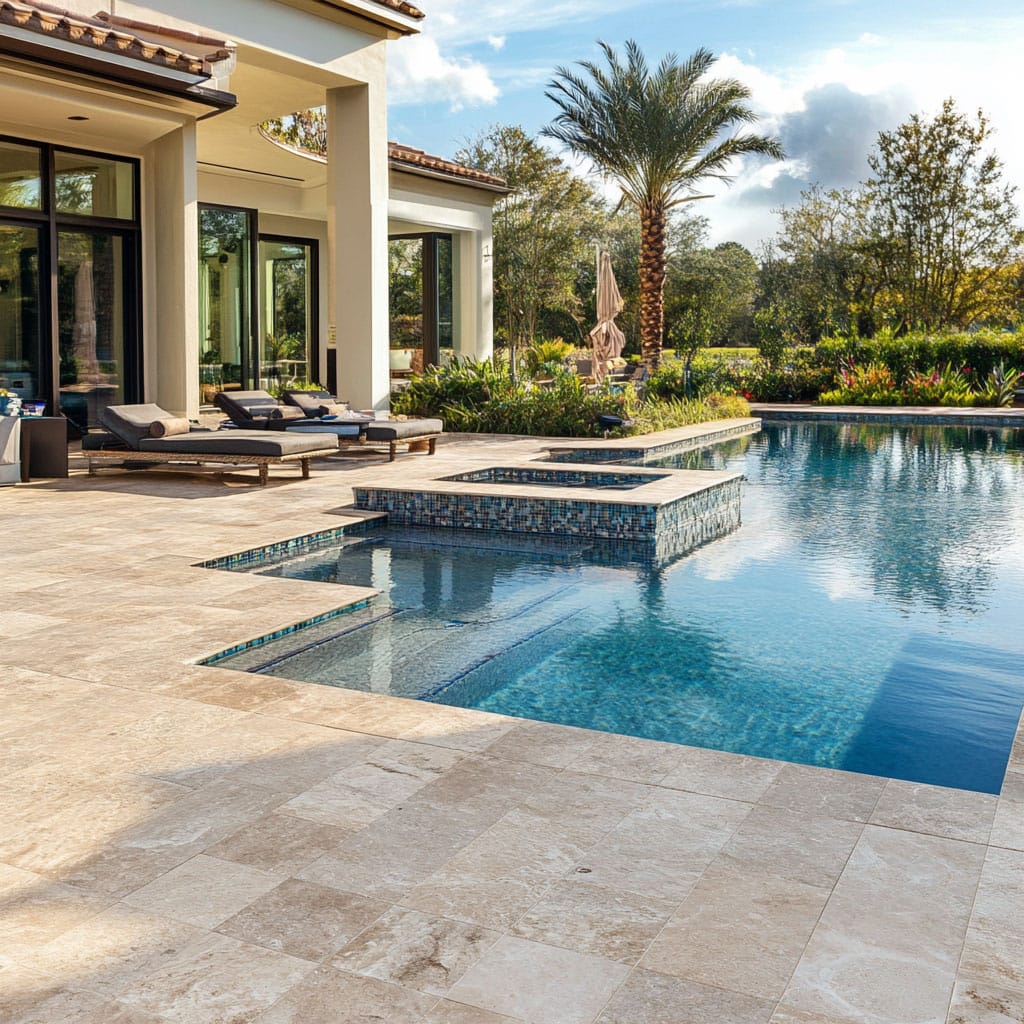
What Is Travertine?
Travertine is a natural stone recognized for its layered movement, warm coloration, open pores, mineral markings, and softly textured architectural appearance.
Common color families include ivory, beige, walnut, silver, gold, and blended earth tones. Because travertine is a natural material, individual pavers may vary in color, pore structure, texture, veining, and mineral detail.
These natural differences should be reviewed and blended during installation rather than treated as imperfections. Explore the complete travertine collection for coordinating tiles, pavers, coping, and architectural products.
Why Is Travertine Popular for Outdoor Projects?
Natural Color
Warm ivory, beige, walnut, and silver tones coordinate naturally with pools, landscaping, stucco, wood, and masonry.
Textured Finishes
Tumbled, brushed, and sandblasted surfaces can provide useful texture for suitable patios and poolside areas.
Design Flexibility
Multiple sizes, formats, patterns, coping profiles, and colors support both modern and traditional landscapes.
Replaceable Pieces
Individually installed pavers may be replaced more easily than a continuous poured surface when matching material remains available.
Timeless Character
Natural texture and tonal movement complement Mediterranean, coastal, resort-inspired, traditional, and contemporary spaces.
Where Are Travertine Pavers Commonly Used?
Pool Decks
Suitable textured pavers can create an elegant transition between the pool, coping, surrounding landscape, and outdoor living areas.
Patios & Courtyards
Travertine provides a natural foundation for seating, dining, entertaining, fire features, and covered outdoor rooms.
Walkways & Garden Paths
Stone pavers help define pedestrian routes through gardens, entrances, courtyards, and landscape areas.
Outdoor Kitchens
Travertine can coordinate with grills, islands, countertops, dining areas, seating zones, and landscape materials.
Terraces
Mixed-size and large-format layouts can create continuous surfaces between architecture and surrounding gardens.
Selected Driveways
Driveway applications require suitable thickness, engineered base preparation, drainage, edge support, and professional installation planning.
Choose Color, Finish and Format Carefully
- Ivory and beige: Create lighter, warmer, and more traditional outdoor palettes.
- Walnut: Introduces deeper brown, tan, and earth-toned movement.
- Silver: Adds cooler gray coloration for contemporary landscapes.
- Tumbled finish: Provides softened edges and a naturally aged appearance.
- Sandblasted or textured finish: Creates a more consistent tactile surface for suitable exterior applications.
Review Installation Conditions Before Ordering
- Confirm thickness: Match the paver to the base, load, application, and installation method.
- Plan drainage: Finished surfaces should direct water appropriately and reduce standing moisture.
- Blend multiple crates: Distribute natural color, texture, pores, and mineral variation.
- Order additional material: Include cuts, breakage, selection, pattern layout, and future repairs.
- Coordinate coping: Review matching pool coping before installation begins.
Does Travertine Always Stay Cool and Slip-Resistant?
Travertine is frequently selected for pool decks because lighter colors and textured finishes may feel more comfortable and provide practical traction. However, surface temperature and slip resistance vary according to color, finish, direct sun, climate, moisture, contaminants, slope, sealing, cleaning, and installation conditions.
Samples should be evaluated in the actual project environment, and the selected product should be confirmed for its intended wet-area or exterior application.
How to Maintain Travertine Pavers
Maintenance requirements vary according to stone, finish, climate, traffic, landscaping, pool chemistry, installation, and selected sealer.
- Remove debris regularly: Sweep or rinse away leaves, soil, sand, and organic matter.
- Use stone-safe cleaner: Choose a pH-neutral product suitable for natural stone.
- Avoid harsh acids: Acidic cleaners can etch or damage travertine surfaces.
- Seal when appropriate: Sealing needs vary by stone, finish, exposure, moisture, and staining risk.
- Inspect drainage and joints: Review settlement, movement, edge support, and standing water periodically.
Explore Travertine Pavers for Your Outdoor Project
Browse available colors, finishes, sizes, patterns, and thicknesses, or contact Stone Market USA for help comparing material, quantity, pool coping, samples, and availability.