

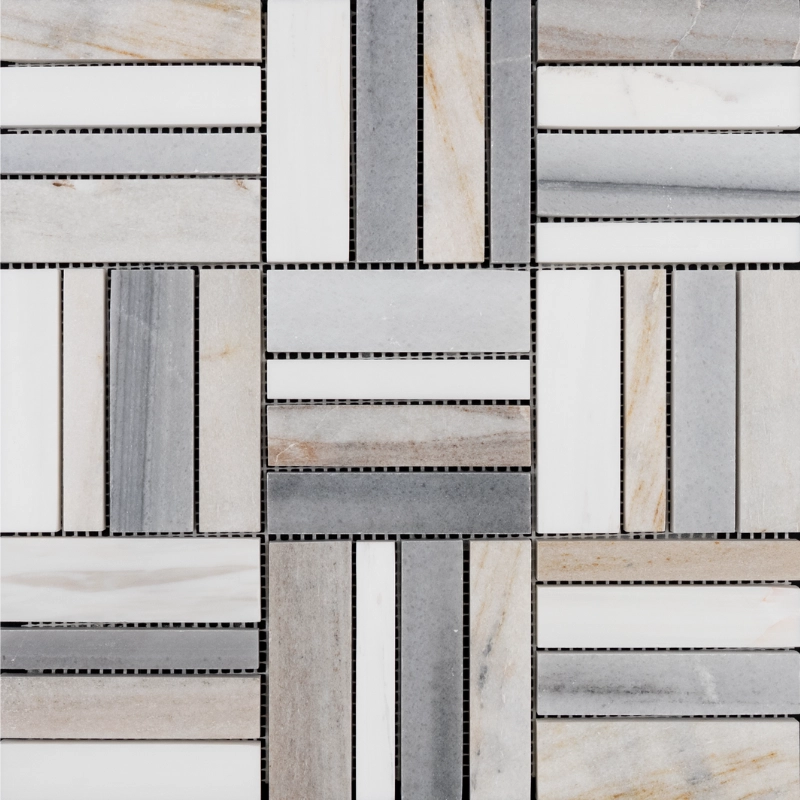
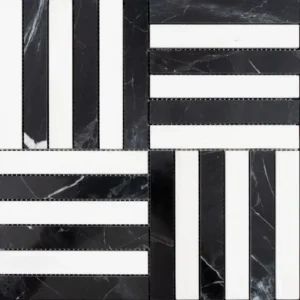
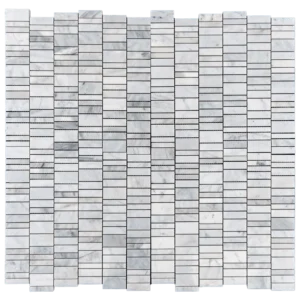
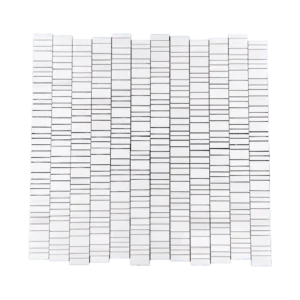
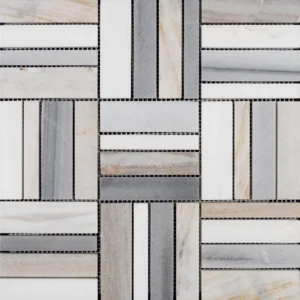
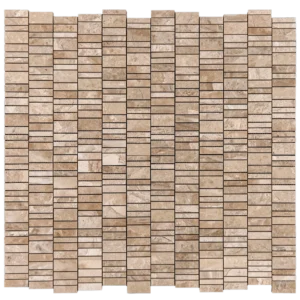
Elongated Stone Geometry with Clean Directional Movement
Linear mosaic tile uses narrow and elongated stone pieces to create structured movement, layered texture, and a clean architectural surface.
Designs may include uniform strips, mixed-width pieces, stacked rows, brick offsets, interlocking sections, or multi-directional arrangements. These variations allow linear mosaics to range from minimal and understated to complex and strongly graphic.
Linear mosaics are commonly used for kitchen backsplashes, bathroom walls, shower features, fireplaces, bars, niches, vanity areas, reception spaces, and decorative feature walls. Marble blends can introduce white, gray, beige, cream, and charcoal tones within the same installation.
Why Choose Linear Mosaic Tile?
Linear mosaics combine directional movement, flexible scale, material variation, and a clean visual language suited to modern, transitional, and refined commercial interiors.
Architectural Direction
Long stone strips guide the eye horizontally or vertically and help organize the visual flow of a surface.
Layered Stone Texture
Mixed widths, lengths, tones, and orientations create depth without relying on sculpted or raised surfaces.
Flexible Design Style
Linear mosaics work across modern, contemporary, transitional, organic, hotel-inspired, and commercial spaces.
Natural Material Variation
Marble and natural stone introduce authentic veining, tonal movement, mineral markings, and individual character.
Linear Mosaic Formats and Stone Combinations
Compare piece width, length, orientation, material blend, finish, color movement, grout contrast, and intended application before selecting a linear mosaic.
Uniform Strip Mosaic
Repeating pieces of similar width create a clean and controlled surface with consistent directional movement.
Mixed-Width Linear Blend
Narrow and wider pieces create greater visual depth and a more dynamic handcrafted composition.
Multi-Stone Blend
White, gray, beige, cream, and deeper stone tones create coordinated contrast within a single mosaic sheet.
Polished, Honed & Textured
Polished finishes reflect more light, while honed, tumbled, and textured surfaces create softer and quieter results.
Where Can Linear Mosaic Tile Be Used?
Product suitability depends on the material, finish, moisture, heat, traffic, substrate, and complete installation system.
- Kitchen backsplashes: Create horizontal or vertical movement behind ranges, sinks, countertops, bars, and open shelving.
- Bathroom walls: Use linear mosaics on vanity walls, shower walls, tub surrounds, niches, and decorative sections.
- Shower feature walls: Introduce clean directional texture within spa-style and contemporary shower designs.
- Fireplace surrounds: Frame fireplaces with elongated natural stone pieces and coordinated tonal variation.
- Bars and beverage areas: Add layered stone detail behind wet bars, coffee stations, shelving, and entertaining spaces.
- Commercial feature walls: Use linear mosaics in reception areas, hotels, restaurants, boutiques, offices, and display spaces.
Choosing the Right Linear Mosaic
Consider direction, stone combination, grout, finish, piece scale, natural variation, lighting, and surrounding finishes before making a final selection.
- Pattern direction: Horizontal layouts may visually widen a wall, while vertical arrangements can emphasize height.
- Piece proportions: Narrow strips create finer detail; wider and mixed-size pieces produce greater visual weight.
- Stone blend: Single-stone mosaics feel quieter, while mixed materials create more contrast and movement.
- Grout color: Matching grout softens the individual strips; darker grout emphasizes every piece and joint.
- Finish: Polished, honed, matte, tumbled, and textured surfaces affect sheen, color depth, maintenance, and character.
- Room coordination: Review samples with cabinetry, countertops, flooring, paint, fixtures, hardware, and lighting.
Maintain Direction and Sheet Alignment Carefully
Linear mosaics require careful planning to control pattern direction, sheet seams, strip alignment, grout spacing, material blending, perimeter cuts, and visual continuity.
Confirm the Direction
Decide whether the mosaic will run horizontally, vertically, or as a custom multi-directional design.
Dry-Lay Multiple Sheets
Review sheet connections and adjust individual strips where needed to prevent visible seams.
Blend Multiple Boxes
Mix sheets from different boxes to distribute stone colors, veining, and material variation evenly.
Use Suitable Setting Materials
Confirm adhesive, grout, sealer, waterproofing, substrate preparation, and coverage for the selected use.
Linear Mosaic Tile FAQs
Helpful answers for comparing materials, layouts, finishes, grout, applications, quantities, samples, sealing, and installation.
What is linear mosaic tile?
Linear mosaic tile uses narrow and elongated pieces arranged in horizontal, vertical, stacked, offset, interlocking, or mixed-direction patterns.
What is a linear blend mosaic?
A linear blend combines different strip widths, lengths, colors, or stone materials within the same mosaic sheet to create layered movement.
Where are linear mosaics commonly used?
They are commonly used for kitchen backsplashes, bathroom walls, shower features, fireplaces, bars, niches, vanity walls, and commercial feature areas.
Should linear mosaic tile run vertically or horizontally?
Either direction can work. Horizontal installation may visually widen a surface, while vertical strips can emphasize height.
What grout color works best with linear mosaic tile?
Coordinated grout creates a quieter continuous field. Gray, charcoal, or contrasting grout makes each strip and joint more visible.
Can linear mosaic tile be used in shower areas?
Selected products may be suitable for shower walls or floors. Confirm the material, finish, traction, waterproofing, drainage, and installation requirements.
Does marble linear mosaic need sealing?
Many marble and natural stone installations benefit from a suitable penetrating sealer. Requirements depend on the stone, finish, grout, exposure, and intended application.
How can visible sheet lines be avoided?
Dry-layout several sheets, adjust individual strips, maintain consistent spacing, blend multiple boxes, and use an installer experienced with mosaic tile.
How much extra linear mosaic tile should I order?
Additional material may be required for cuts, direction changes, sheet adjustment, natural variation, breakage, alignment, and future repairs.
Can I order a linear mosaic tile sample?
Sample availability depends on the individual product. Review the product page or contact Stone Market USA to confirm material, color, finish, dimensions, and current inventory.
Need Help Choosing Linear Mosaic Tile?
Contact Stone Market USA for assistance comparing linear mosaic materials, colors, blends, finishes, pattern direction, grout options, quantities, samples, and current availability.