

Porcelain vs. Ceramic Tile: What's the Difference?
Porcelain and ceramic tile may look alike, but differences in water absorption, manufacturing and product performance can influence where—and how—you use them.
Here is the essential distinction: porcelain is a type of ceramic tile. The term “ceramic tile” also covers non-porcelain products with a wide range of properties. Porcelain meets a particularly low water-absorption classification, while other ceramic tiles vary considerably.
Whether you're planning a kitchen backsplash, bathroom remodel or new floor, this guide compares the practical trade-offs so you can choose a tile that fits your project—not just the label on the box.
Porcelain vs. Ceramic Tile at a Glance
These are general tendencies, not guarantees for every tile. Always check the manufacturer's specifications for the exact product you're considering.
| Feature | Porcelain Tile | Non-Porcelain Ceramic Tile |
|---|---|---|
| Water absorption | 0.5% or less under the applicable test | Varies by classification; generally higher |
| Tile body | Typically denser and less porous | Wider range of compositions and densities |
| Cutting and drilling | Often more demanding; appropriate tools matter | May be easier, depending on the product |
| Cost | Often higher for otherwise comparable products | Many budget-friendly choices, with exceptions |
| Floors | Many floor-rated options | Floor-rated options available; not all are suitable |
| Walls and backsplashes | Suitable products available | Suitable products widely available |
| Showers and outdoors | Product rating and installation system must be checked | Product rating and installation system must be checked |
Fast answer: Porcelain is often a practical starting point for heavily used floors or applications where low tile-body absorption matters. Non-porcelain ceramic is often a smart choice for decorative walls and backsplashes. For either material, the product's intended use and finish come first.
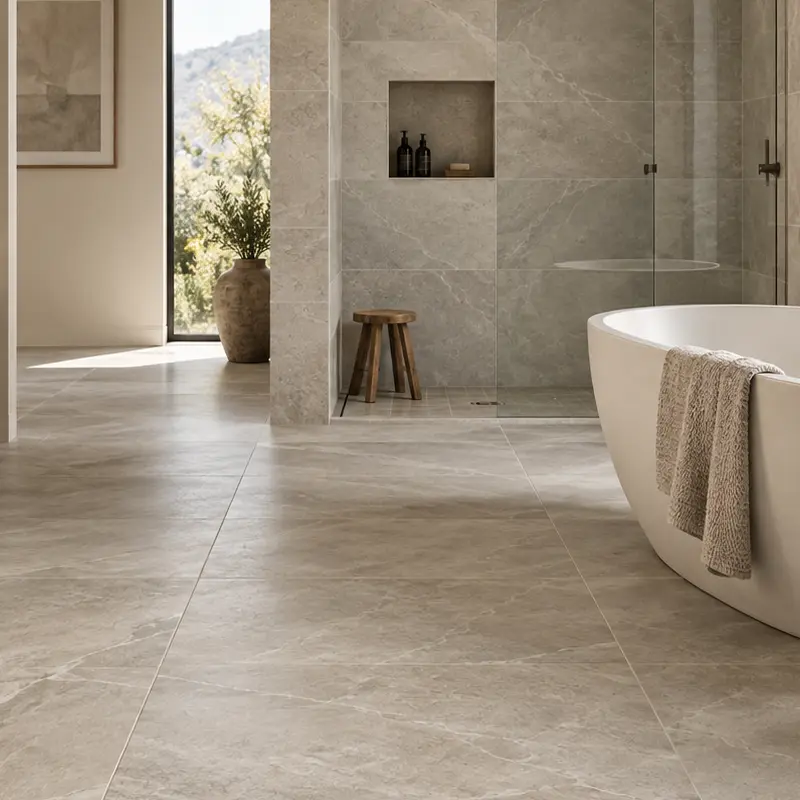
What Makes Porcelain Different?
Both porcelain and other ceramic tiles are manufactured from mineral-based materials that are formed and fired. Porcelain is made to meet a particularly low water-absorption threshold: 0.5% or less, as tested under the applicable standards.
That low absorption can be useful when evaluating tile for moisture exposure and certain climate conditions, but it does not automatically make every porcelain tile suitable for wet floors, freezing conditions or outdoor installation.
Surface finish, abrasion performance, slip resistance, size and installation method still matter. For a deeper introduction, see our guide to porcelain tile.
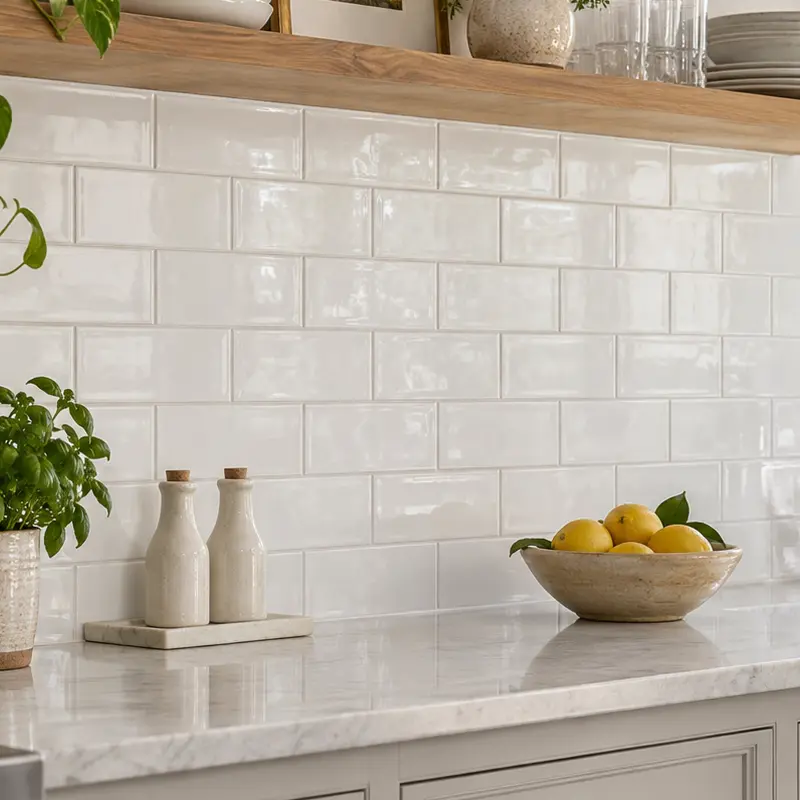
Where Ceramic Tile Makes Sense
Non-porcelain ceramic tile can be a strong choice for kitchen backsplashes, bathroom walls, feature walls and other decorative applications. Many products offer glazed finishes, expressive colors and accessible pricing.
Ceramic is not exclusively a wall material. Some ceramic tiles are specifically rated for floors, while others are not. Check the stated application rather than assuming every ceramic tile has the same strength or wear performance.
For a backsplash, consider the grout pattern, ease of cleaning, tile dimensions and any trim pieces needed at exposed edges. Explore additional design ideas in our backsplash collection.
Durability, Water and Slip Resistance
Does porcelain last longer?
Porcelain's dense body can be beneficial, particularly for busy floors. But a tile's service life depends on more than density. The glaze or surface, foot traffic, impact, installation quality and ongoing maintenance all influence results. Compare floor-use and wear guidance for the particular products on your shortlist.
Is porcelain waterproof?
Porcelain has very low water absorption, but a tiled shower is not waterproof simply because porcelain was installed. A properly designed shower also needs an appropriate waterproofing system, slope, drainage and correctly installed movement joints. Grout and tile alone should not be relied on as the waterproofing layer.
What about slippery floors?
Neither "porcelain" nor "ceramic" tells you whether a surface is safe when wet. Matte, textured, polished and other finishes can behave differently. For bathrooms, entrances and outdoor areas, review the manufacturer's slip-resistance information alongside the specific environment and intended use.
Which Tile Should You Choose for Each Space?
Porcelain is worth considering for...
- Busy residential floors and suitable commercial floor applications
- Bathrooms where a low-absorption tile body is desirable
- Large-format stone-look or wood-look design concepts
- Outdoor projects when the specific product is exterior-rated for the local conditions
Ceramic is worth considering for...
- Kitchen backsplashes and decorative wall installations
- Bathroom wall designs with glazed or patterned tile
- Projects prioritizing color, format or value
- Interior floors when the specific tile is rated for floor use
Bathroom tip: A wall tile and a floor tile may look identical but carry different application ratings. Never use a wall-only tile on a floor without explicit manufacturer approval.
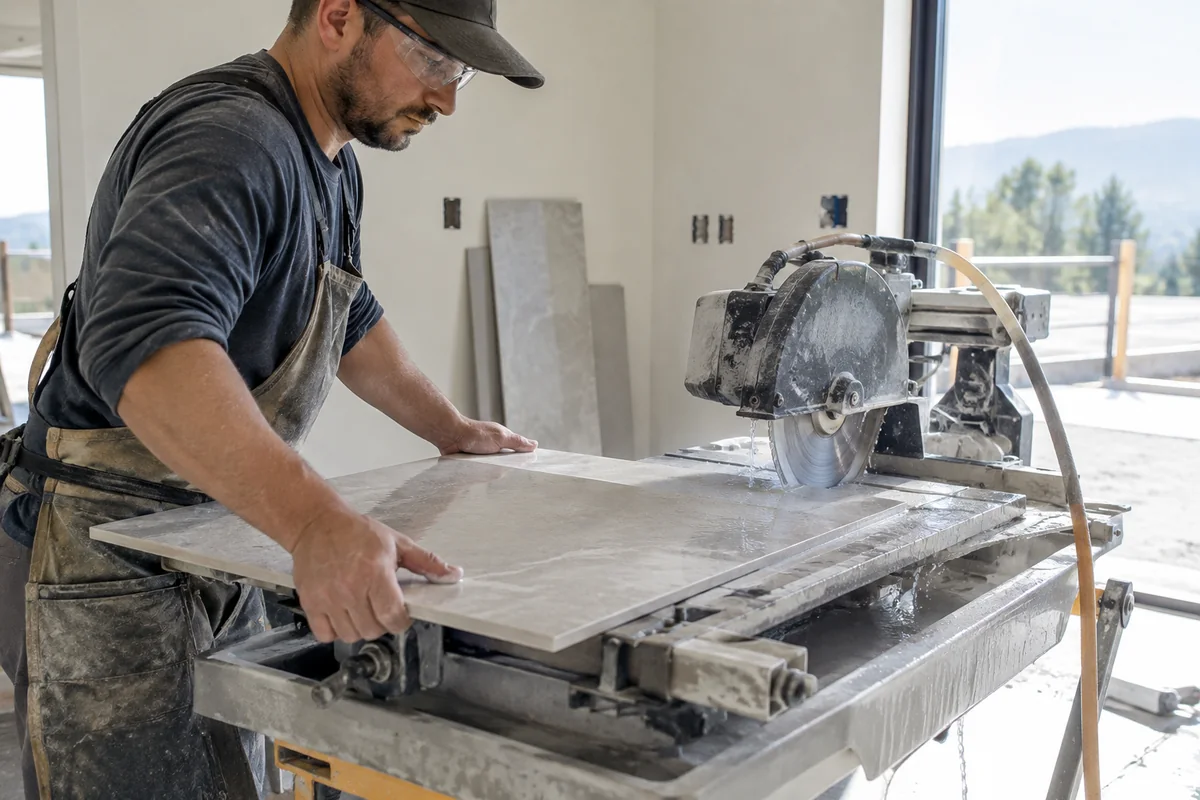
Compare the Total Installed Cost, Not Just Tile Price
Porcelain often costs more than comparable non-porcelain ceramic tile, though the price ranges overlap. Size, finish, manufacturing, design and availability can all affect the material price.
Installation matters too. Dense porcelain may be more demanding to cut and drill, and large-format tile often requires careful substrate preparation, handling and an appropriate setting method. Decorative ceramic patterns can also increase installation labor.
Calculate your total project budget with tile quantity, layout waste, trim, setting materials, waterproofing where needed, labor, delivery and any necessary floor or wall preparation. The least expensive tile per square foot is not always the least expensive finished project.
Six Questions to Ask
- Application: Is this exact product approved for your wall, floor, shower or outdoor space?
- Performance: What are its water-absorption classification and relevant wear or slip-resistance ratings?
- Finish: Will the surface work with the expected traffic, moisture and cleaning routine?
- Installation: Does the tile's size, thickness or edge detail require special preparation or tools?
- Visual consistency: Have you checked shade, caliber, batch and pattern variation?
- Project planning: Have you allowed for trim, waste, freight and a suitable installation system?
A physical sample can help you evaluate color, texture and sheen in your own lighting. It does not replace technical documentation, and one sample may not capture the full pattern variation across an installation.
So, Is Porcelain Better Than Ceramic?
Not automatically. Porcelain is an excellent option when its low absorption and the specifications of the chosen product match your installation requirements. Non-porcelain ceramic can be equally sensible for many walls, backsplashes and appropriately rated interior floors.
Start with the room and conditions, then compare the individual products—not just the material names. If you are exploring porcelain designs, browse the porcelain collection or review our porcelain tile buying guide before selecting a finish and size.
Frequently Asked Questions
Quick answers to common questions about porcelain and ceramic tile.
Is porcelain tile better than ceramic tile?
It depends on the application. Porcelain has a low-absorption tile body and many floor-rated options, while non-porcelain ceramic can be a good choice for decorative walls and approved floors. Compare the specific products.
Can ceramic tile be used on a bathroom floor?
Yes, if the exact ceramic tile is rated for floor use and its surface is appropriate for the bathroom's expected conditions. Wall-only tiles should not be used as floor tile without manufacturer approval.
Is porcelain tile completely waterproof?
No. Porcelain has very low water absorption, but a complete wet-area installation still requires an appropriate waterproofing and drainage system.
Is porcelain more expensive than ceramic?
Often, when comparing similar products, but not always. Format, finish, quality, brand and installation complexity can all affect total cost.
Can porcelain and ceramic tiles be used together?
Yes, when both are suitable for their intended locations. Coordinate thickness, dimensions, finishes and transitions with your installer.
Find Tile That Fits Your Space
Explore Stone Market USA's tile and stone collections, compare formats and finishes, and contact our team about samples, quantities and current availability.