

Polished Marble Mosaic Tiles: How to Choose, Install, and Maintain Them
Polished marble mosaic tiles combine the reflective surface of a polished stone finish with the visual structure of a small-format pattern. That combination can make a backsplash, accent wall, shower surface, or other interior feature feel more detailed—but it also makes material selection and maintenance worth considering before you order.
This guide explains what the polished finish changes, how to compare marble mosaics, which project conditions deserve extra attention, and what to ask before installation. The goal is not simply to choose an attractive pattern, but to select a material whose appearance, care requirements, and installation conditions fit the space.
What makes polished marble mosaic tiles different?
Finish & Performance
Where polished marble mosaics may fit
Finish & Performance
How to compare patterns and materials
Selection Guide
What makes polished marble mosaic tiles different?
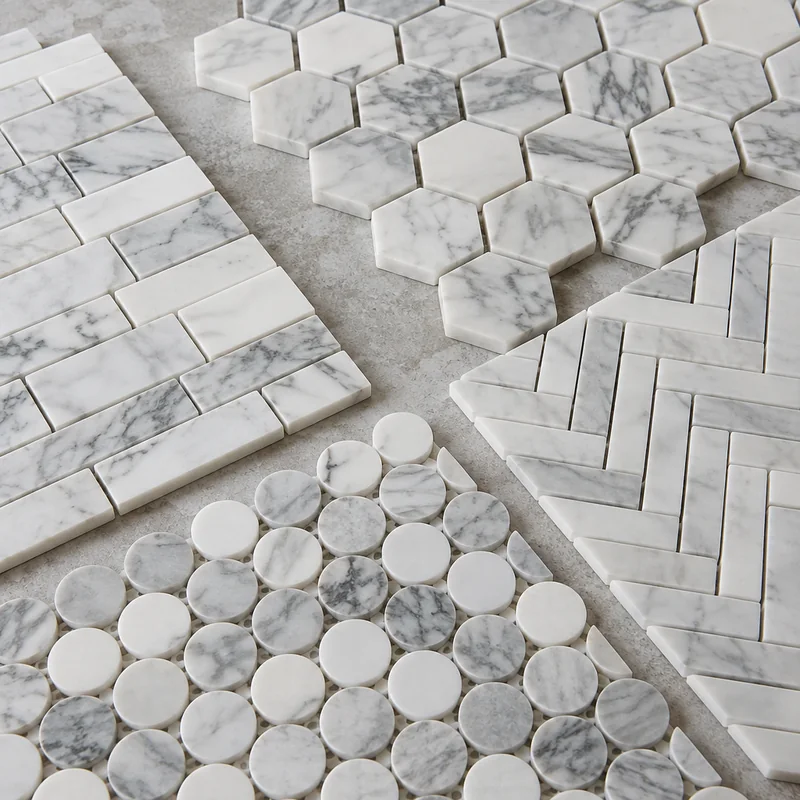
Marble is a natural stone, so its color, veining, movement, and shade can vary from piece to piece. A polished finish smooths and visually brightens the surface, often emphasizing the contrast between the stone background and its natural markings. On a mosaic sheet, those differences appear across many small pieces rather than one large field tile.
The mosaic format also changes how the installation reads. Repeated shapes create a pattern, while grout joints become part of the overall design. A light grout can make the pattern feel more continuous; a contrasting grout can define each piece more clearly. The final effect depends on the stone, pattern, grout color, lighting, and layout—not on the tile alone.
Where polished marble mosaics may fit
These tiles are commonly considered for decorative interior applications such as kitchen backsplashes, bathroom walls, vanity walls, fireplace surrounds, and selected floor or wet-area projects. The important qualification is that suitability depends on the specific tile, installation assembly, substrate, exposure, and applicable project requirements.
A polished surface may be a practical design consideration for a wall where reflection and pattern are priorities. For floors or areas exposed to water, do not assume that a polished finish provides the traction or performance the space requires. Ask the tile supplier and installer to evaluate the intended use, and confirm any applicable manufacturer guidance before purchasing.
How to compare patterns and materials
Start with the room, not just the pattern
Look at the surrounding materials before choosing a mosaic. Marble mosaics with pronounced movement may work best when neighboring surfaces are relatively quiet. A calmer stone can support a more decorative shape without making the room feel visually crowded. Consider cabinet color, countertop pattern, grout color, metal finishes, paint, and the direction of natural or artificial light.
Evaluate scale and repetition
A small mosaic can create a strong pattern across a large area. Before committing, estimate how much of the room the tile will cover and view a sample at a distance similar to the finished installation. A design that seems subtle in a small sample may become the dominant feature when repeated across a backsplash or wall.
Pay attention to natural variation
Marble is not a printed material with perfectly uniform color. Individual pieces and sheets may differ in tone, veining, and distribution of movement. A sample is useful for assessing the general character of a tile, but it cannot represent every piece in a natural-stone installation.
If consistency matters, ask how the material is selected, packed, and expected to vary. During installation, opening and mixing sheets from multiple cartons can help the installer review the overall distribution, but the exact approach should follow the applicable product and installation guidance.
Polished marble mosaics and maintenance
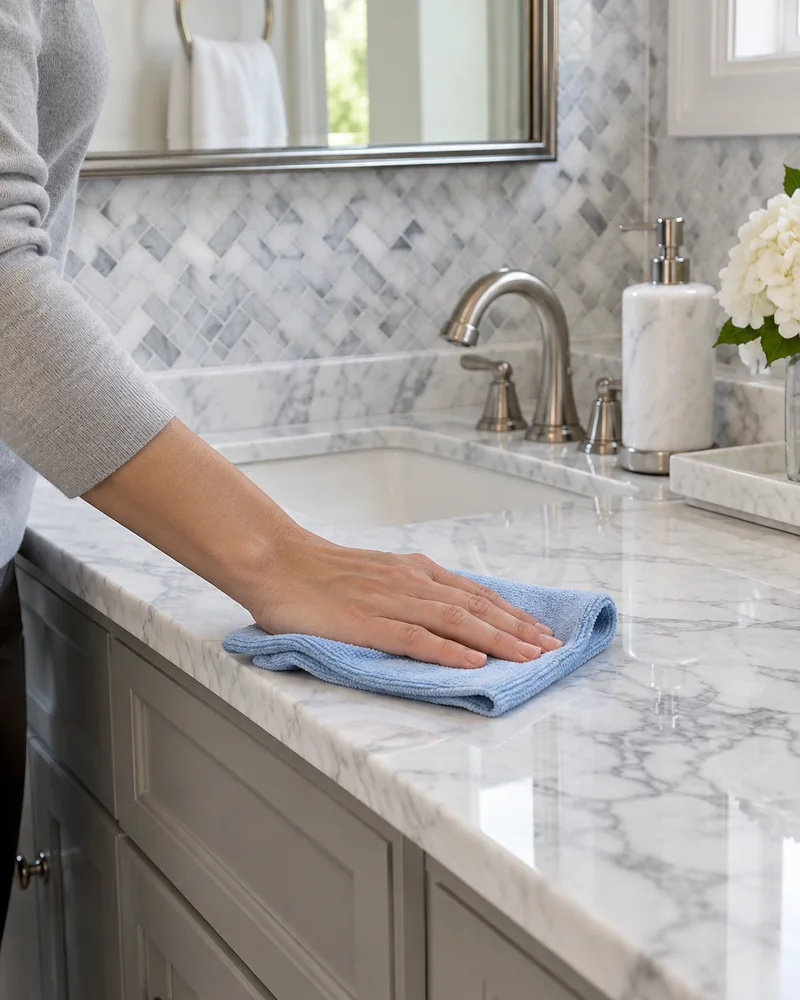
Marble is susceptible to etching from acidic substances. Etching is a change to the surface appearance rather than the same thing as a conventional stain, and polishing does not eliminate that characteristic. Kitchen backsplashes, bathroom surfaces, and dining areas should therefore be planned with realistic expectations about contact with cleaners, food, cosmetics, and other substances.
Use cleaning products that are identified as appropriate for marble or natural stone, and follow the product instructions. Acidic household cleaners should not be treated as generally suitable for marble. Routine care typically begins with removing spills and loose debris promptly, using a soft cleaning method that will not scratch the surface.
Sealing may be part of a natural-stone care plan, but it does not make marble stain-proof, waterproof, maintenance-free, or resistant to etching. Whether a sealer is appropriate, and how it should be applied or renewed, depends on the stone, finish, installation, and manufacturer or professional guidance.
Review the exact finish, product documentation, and intended application rather than relying on finish name or appearance alone.
Installation details worth planning early
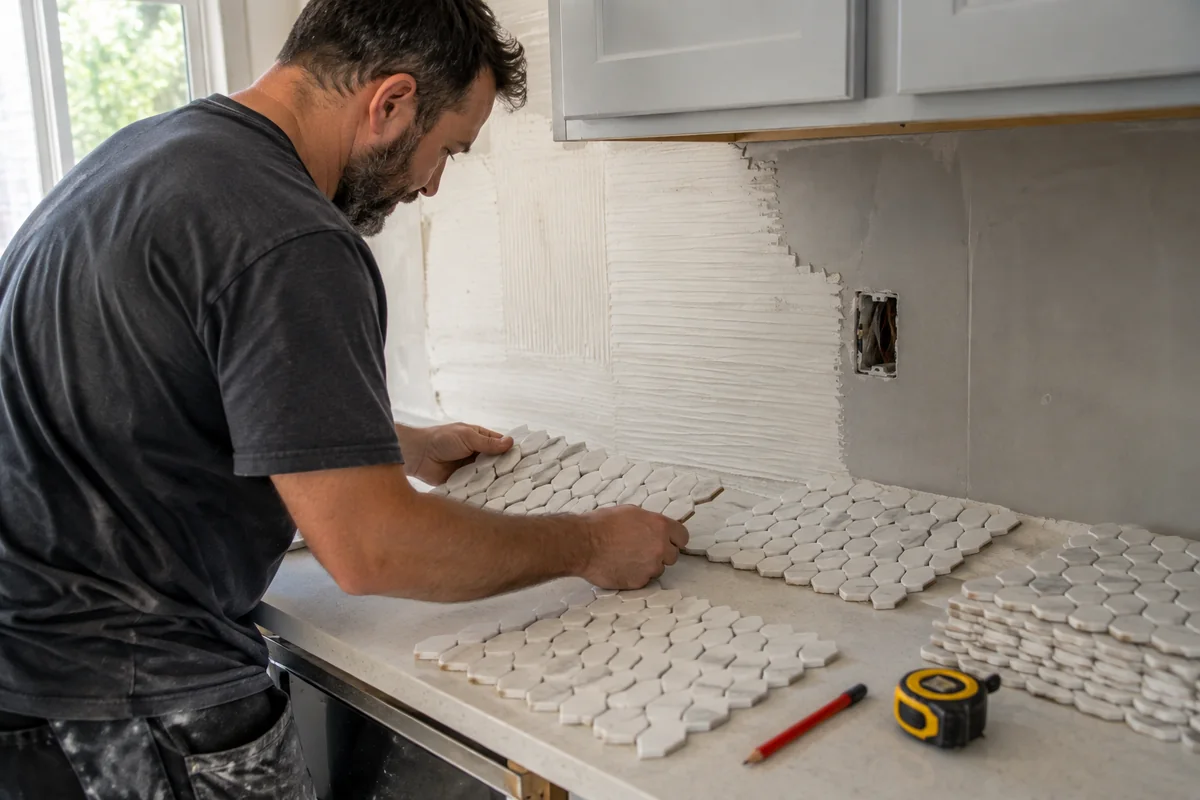
Mosaic sheets can simplify pattern placement, but they do not remove the need for careful installation. The installer must review the substrate, layout, sheet alignment, cuts, transitions, grout joints, and movement considerations. Small deviations can be noticeable when a repeating pattern is placed beside a cabinet, wall edge, plumbing fixture, or another straight reference line.
Dry-laying or planning the layout before setting material can reveal awkward cuts and help determine where the pattern should begin. The most visible area is not always the best location for a partial motif or narrow sliver. A qualified installer can help balance the layout with the dimensions and conditions of the room.
For bathrooms, showers, floors, fireplaces, and other areas with specific exposure or code considerations, rely on project-specific installation guidance rather than assuming that every marble mosaic can be used in the same way. The setting materials, grout, waterproofing assembly where applicable, substrate preparation, and finishing details all affect the result.
Confirm substrate preparation, waterproofing where required, setting materials, drainage, joints, cuts, and transitions before ordering.
Examples to review while comparing styles
If a curved pattern is part of your design direction, the Arabesque polished marble mosaic offers a specific example to examine alongside other shapes and stone colors. Review its visual character as a sample rather than assuming that a product name alone establishes performance or installation suitability.
A second option to compare is the Dolomite arabesque marble mosaic. Looking at both examples can help you assess how the stone color, pattern scale, and polished surface relate to your cabinets, counters, paint, and lighting before making a final selection.
A practical checklist before ordering
- Confirm the exact area where the mosaic will be installed and whether it is a wall, floor, wet area, or another exposure.
- Request or review a sample, while remembering that natural marble will vary beyond the sample.
- View the pattern with the intended grout color and adjacent materials.
- Ask about the recommended cleaning approach and whether sealing should be considered.
- Discuss substrate preparation, layout, cuts, transitions, and grout with the installer before work begins.
- Check whether the project has local requirements or conditions that call for professional review.
- Order enough material for the planned layout and retain relevant product and installation information for the installer.
Common mistakes to avoid
One frequent mistake is choosing a mosaic from a small photograph without considering full-scale repetition. Another is selecting grout only after the tile has arrived; grout can significantly alter the perceived contrast and pattern. It is also risky to treat polished marble as if it were porcelain or another non-stone material with different care characteristics.
Finally, do not assume that sealing will solve every maintenance concern. A well-planned installation still benefits from suitable cleaning products, prompt attention to spills, and expectations that account for the natural behavior of marble.
Frequently asked questions
Quick answers to practical selection, installation, care, and planning questions.
Are polished marble mosaic tiles difficult to clean?
They require stone-appropriate care rather than ordinary all-purpose cleaning by default. Use a product identified as suitable for marble or natural stone, avoid acidic cleaners, and address spills promptly. The exact care plan depends on the installation and the products used on it.
Can polished marble mosaics be used on a floor?
That depends on the specific material, location, exposure, and project requirements. A polished surface may need careful evaluation where wet traction is important. Confirm suitability with the supplier, applicable guidance, and a qualified installer before selecting it for a floor.
Will every sheet look the same?
No. Natural marble can vary in color, veining, movement, and shade. Samples help establish the general appearance, but they cannot show every piece that may appear in the completed installation.
Does polished marble need to be sealed?
Sealing may be appropriate in some installations, but it is not automatically required in the same way for every marble product or location. Ask for project-specific guidance, and remember that sealer does not make marble stain-proof, waterproof, or etch-proof.
Making the final selection
The strongest choice is the one that balances pattern, scale, natural variation, finish, maintenance expectations, and installation conditions. Compare samples with the room’s permanent materials, discuss the intended use with the installer, and verify care and installation guidance before ordering. That process helps ensure the polished marble mosaic supports the design without creating surprises after installation.
Find the Right Tile or Stone for Your Project
Browse Stone Market USA collections or contact our team for help comparing materials, finishes, applications, samples, quantities, and current availability.