

Natural Stone Color Variation: What to Expect and How to Plan With It
Natural stone is not manufactured to look identical from one piece to the next. Differences in shade, veining, movement, texture, and surface character are part of how many stone materials appear in a finished installation. That variation can be subtle, pronounced, or distributed unevenly across a shipment.
Understanding natural stone color variation before ordering helps you choose a material that fits your expectations and plan a layout that looks intentional. It also helps prevent a common mistake: treating a small sample, showroom display, or online image as a complete preview of a large installation.
What causes color variation in natural stone?
Natural Stone Character
Types of variation to look for
Natural Stone Character
Why a sample cannot show the whole installation
Installation Planning
What causes color variation in natural stone?
Natural stone forms through geological processes, so its appearance reflects the minerals, conditions, and layers present when it formed. Even pieces cut from the same quarry source may not show the same background color or pattern. Some tiles may be lighter or darker, while others may contain more visible veining, mottling, fossil detail, or mineral movement.
Color can also look different because of the way a surface is finished. A polished, honed, brushed, or tumbled surface may reflect light differently and emphasize different aspects of the stone. Lighting, grout color, moisture, and the surrounding finishes can also influence how the material is perceived after installation.
Variation is not automatically a defect, but it should be evaluated against the design goal. If you want a quiet, highly uniform field, a stone with strong movement may be frustrating. If you want a more organic surface with visual depth, noticeable variation may be an important part of the appeal.
For a broader starting point, browse mixed-color stone tiles when the design intentionally uses multiple related tones rather than seeking a single uniform shade.
Types of variation to look for
“Color variation” can describe more than a simple difference between beige and gray. Before selecting a stone, consider the full range of visual changes that may appear across the material.
- Background shade: The base color may shift from tile to tile, such as from warm cream to cooler ivory or from pale gray to charcoal.
- Veining and movement: Lines, clouds, bands, and mineral patterns may be sparse in one piece and prominent in another.
- Texture and surface character: Pores, pits, fossils, clefts, and other natural details may affect both appearance and touch.
- Pattern scale: A small sample may show only one section of a larger pattern, while full-size pieces can reveal broader movement.
- Edge and cut differences: The direction in which stone is cut can influence how veining and color are displayed.
These forms of variation can occur together. Two tiles with a similar background shade may still look quite different if one has strong veining and the other is relatively plain.
Why a sample cannot show the whole installation
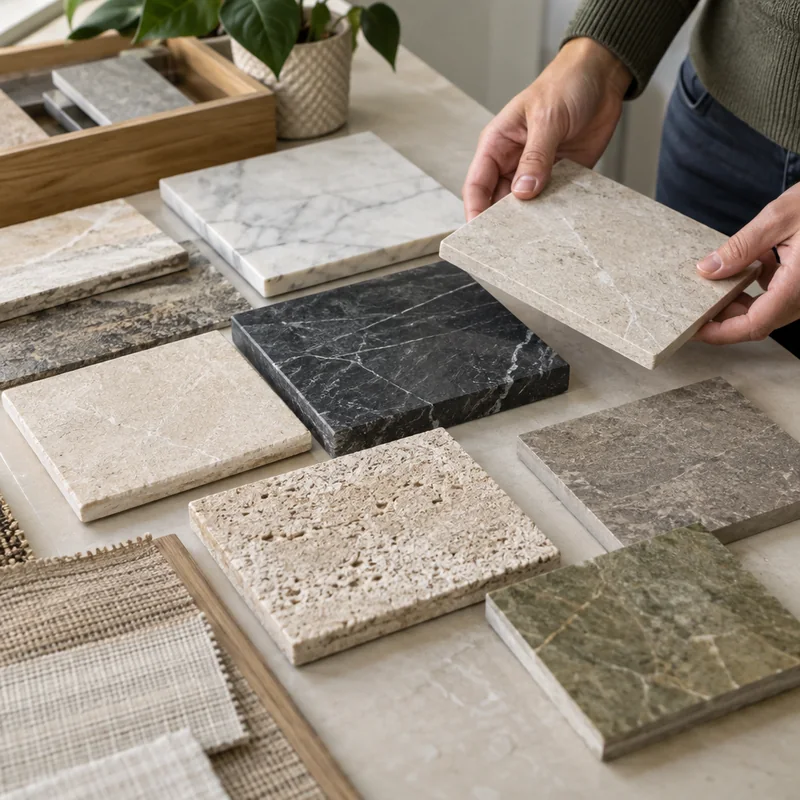
A sample is useful for assessing general color, finish, scale, and surface character, but it represents only a limited portion of the available stone. It should be treated as a reference point rather than a guarantee that every piece will match it.
Whenever possible, review several pieces together instead of judging one tile in isolation. Place them under lighting similar to the project, view them from normal standing distance, and compare them beside cabinetry, paint, countertops, or other materials that will remain in the room.
For larger projects, ask whether additional layout planning information or representative pieces are available before making a final decision. A larger group of samples still cannot predict every detail, but it can reveal whether the overall range is compatible with your expectations.
Confirm substrate preparation, waterproofing where required, setting materials, drainage, joints, cuts, and transitions before ordering.
How to plan a layout around variation
Decide how much contrast you want
Start by defining the desired visual range. A restrained installation may call for pieces with closely related shades and limited movement. A more expressive design may benefit from contrasting tones, prominent veins, or visible changes across the field.
Be specific when discussing this preference with a supplier or installer. “Mostly light” can mean different things to different people. It is more useful to describe whether you can accept darker pieces, strong lines, warm or cool undertones, and noticeable changes from one tile to the next.
Dry-lay before setting when practical
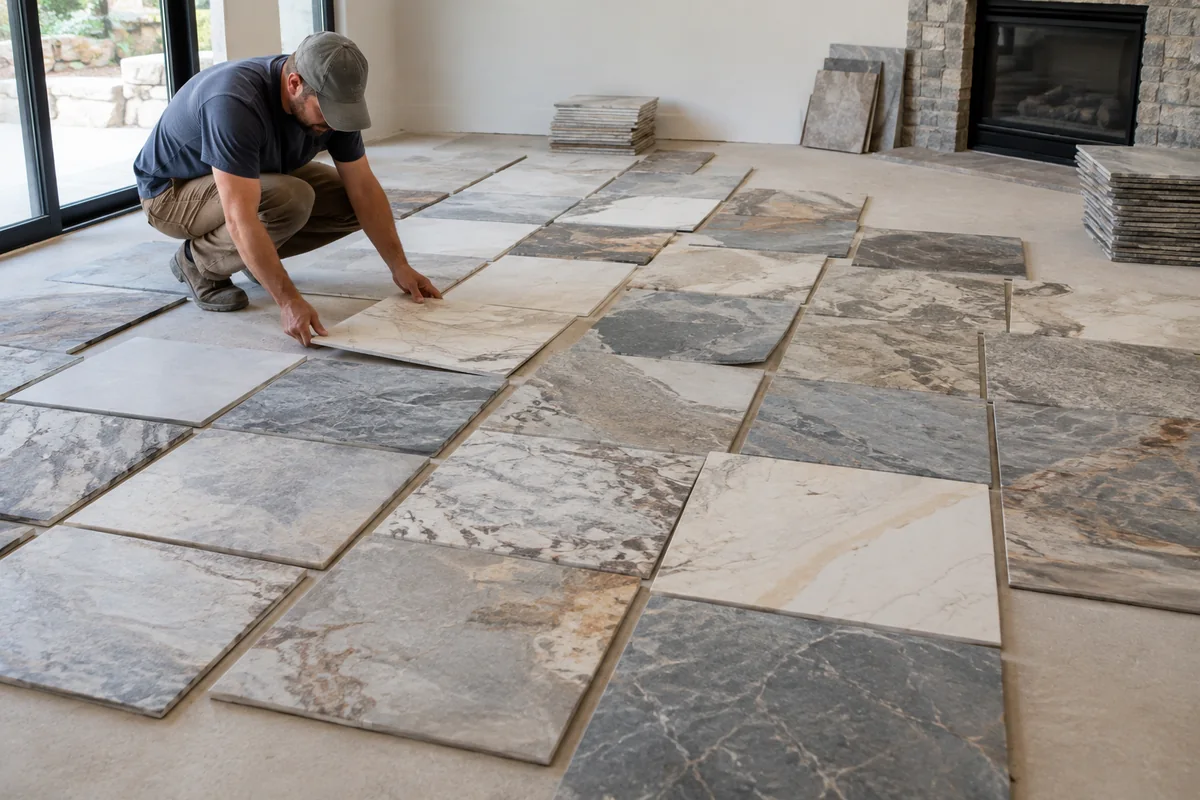
A dry layout allows you to see how individual pieces relate before adhesive or mortar is applied. It can help identify clusters of similar tiles, abrupt transitions, or highly active pieces that you may want to distribute more evenly.
For floors, walls, backsplashes, or other visible surfaces, the installer should work from the available material rather than opening boxes one at a time without a plan. The exact process depends on the project and installation system, so layout decisions should be coordinated with the qualified installer.
Distribute, rather than hide, natural differences
One common planning mistake is placing all darker or more active pieces in a single area and leaving the rest of the installation very uniform. Unless that concentration is intentional, spreading the range throughout the space often creates a more balanced result.
Another approach is to use variation as part of the composition. Veined pieces can become focal points, while quieter pieces can occupy areas where you want less visual activity. The goal is not to eliminate every difference but to make the overall arrangement feel considered.
Grout can influence the final impression as well. A close grout color may make individual pieces read as a more continuous surface, while stronger contrast can emphasize the boundaries between tiles. Grout selection should be tested with the actual stone and finish rather than chosen from a color name alone.
Review more than one sample or the expected variation range whenever possible, especially when veining or movement is visually prominent.
Ordering and batch considerations
Stone ordered at different times may not look exactly like stone purchased earlier, even when the material name and general color description are the same. Sources, cuts, finishes, and available selections can affect the appearance of a later order. For that reason, measure carefully and discuss project quantities before placing an order, allowing for the installation plan and any material that may need to be set aside during selection.
If you are adding to an existing installation, do not assume that a new shipment will blend seamlessly with the original. Read more about reordering stone in the same color before relying on a future purchase for repairs, expansions, or a second phase of construction.
When comparing options, shop tiles by color to organize your search by the general palette you want, then evaluate the individual stone’s range and movement rather than relying on the color label alone.
Questions to ask before choosing a stone
- How much shade and pattern variation should I expect within the material?
- Does the sample show a typical piece, or could the installed material include a wider range?
- Are there visible differences between the pieces currently available and older samples or photographs?
- Can I review multiple pieces together before installation?
- What layout approach does the installer recommend for this material and project?
- Should I plan for future matching needs, and how should leftover material be stored or documented?
These questions do not remove the natural differences that make stone distinctive, but they can make the selection process more transparent. If exact uniformity is essential, communicate that early and compare materials based on their actual appearance, not just their category or color name.
Variation in mosaics and smaller formats
Small-format materials can present variation differently from large tiles. Individual pieces may be less noticeable, but the repeated pattern can distribute many shades across a relatively small area. Mosaics may also combine pieces with different orientations, finishes, or tones, depending on how they are assembled.
Reviewing a mounted sheet alone may not show how adjacent sheets will relate. If the project has a strong color pattern or directional design, consider the transitions between sheets and confirm how the installer plans to align them. For additional background, explore natural stone tiles and mosaics while comparing format, pattern, and surface character.
How to set realistic expectations
The most reliable way to plan with natural stone color variation is to make a decision about the range, not a promise of perfect uniformity. Select samples that show the material’s general character, inspect multiple pieces when possible, and plan the layout before installation begins.
Also remember that lighting can change the appearance of stone throughout the day. A material that looks neutral in a showroom may appear warmer, cooler, brighter, or more contrasted in the project space. Reviewing samples in the intended room and under its likely lighting conditions can support a better-informed choice.
Before installation, confirm the selected material, finish, layout expectations, and project-specific installation requirements with the supplier and qualified installer. Natural variation is easier to appreciate when the range has been considered in advance—and much harder to accept when it comes as a surprise.
Frequently asked questions
Quick answers to practical selection, installation, care, and planning questions.
Is natural stone color variation normal?
Yes. Natural stone commonly varies in shade, veining, movement, texture, and pattern. The amount and type of variation depend on the particular stone and its source, so reviewing the actual material is important.
Can I choose natural stone with very little variation?
You can look for materials with a quieter visual range, but no natural stone should be assumed to be perfectly identical from piece to piece. Discuss your tolerance for shade changes and movement before ordering.
Will sealing eliminate color differences?
No. Sealing may be part of a stone-care plan, but it does not make natural stone uniform or remove natural veining and shade changes. Any care product should be selected and used according to applicable product and manufacturer guidance.
How should I compare a stone sample with online photos?
Use online photos for general orientation, not as a precise color guarantee. Screen settings, photography, lighting, finishing, and natural variation can all affect how stone appears. Compare physical samples in the project space whenever possible.
Find the Right Tile or Stone for Your Project
Browse Stone Market USA collections or contact our team for help comparing materials, finishes, applications, samples, quantities, and current availability.