

Mosaic Patterns Explained: Herringbone, Hexagon, Penny & More
Mosaic tiles are among the most versatile design elements in interior architecture. From luxurious marble bathrooms to elegant kitchen backsplashes, mosaic patterns can completely transform the visual character of a space.
The pattern you choose influences more than appearance. It changes how light, movement, proportion and geometry interact across the surface. Understanding the differences between popular patterns makes it easier to select a layout for kitchens, bathrooms, showers and decorative walls.
Explore our full mosaic tile collection or see how mosaics are commonly used in bathroom tile installations.
Why Mosaic Tile Patterns Matter in Design
A mosaic pattern creates visual rhythm. Some layouts introduce strong direction and geometry, while others soften the room with curved or repeating forms.
Geometric mosaics can help a compact bathroom feel more structured, while flowing patterns introduce movement and softness. Because mosaic pieces are smaller than standard field tiles, they allow designers to create detailed layouts that would be difficult to achieve with larger formats.
Many classic patterns have been used in architecture for centuries. Roman baths, Mediterranean villas and historic European interiors relied on mosaic layouts to create decorative surfaces that were both practical and visually distinctive. Modern marble mosaics continue this tradition through cleaner colors, updated dimensions and contemporary material combinations.
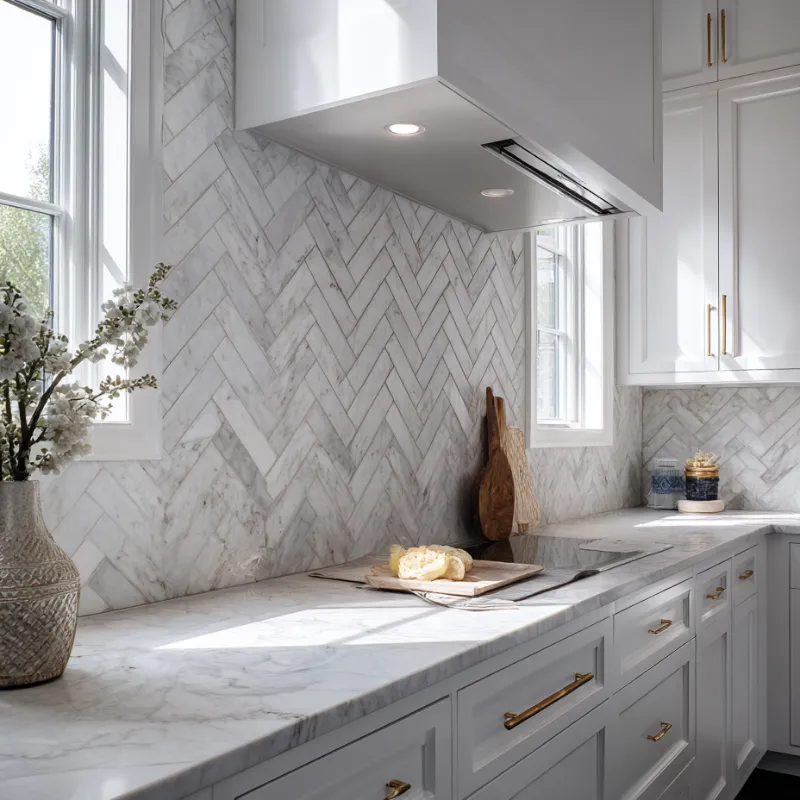
Herringbone Mosaic Pattern
The herringbone pattern is created by arranging rectangular pieces in a repeating zigzag layout. Its name comes from the resemblance to the angled structure of a fish skeleton.
Herringbone creates visual movement and naturally guides the eye across a surface. Depending on its orientation, the pattern can emphasize height, width or direction within a room.
It is frequently used on kitchen backsplashes, shower walls, vanity features and decorative accent areas.
Explore our Herringbone Mosaic Tile Collection .
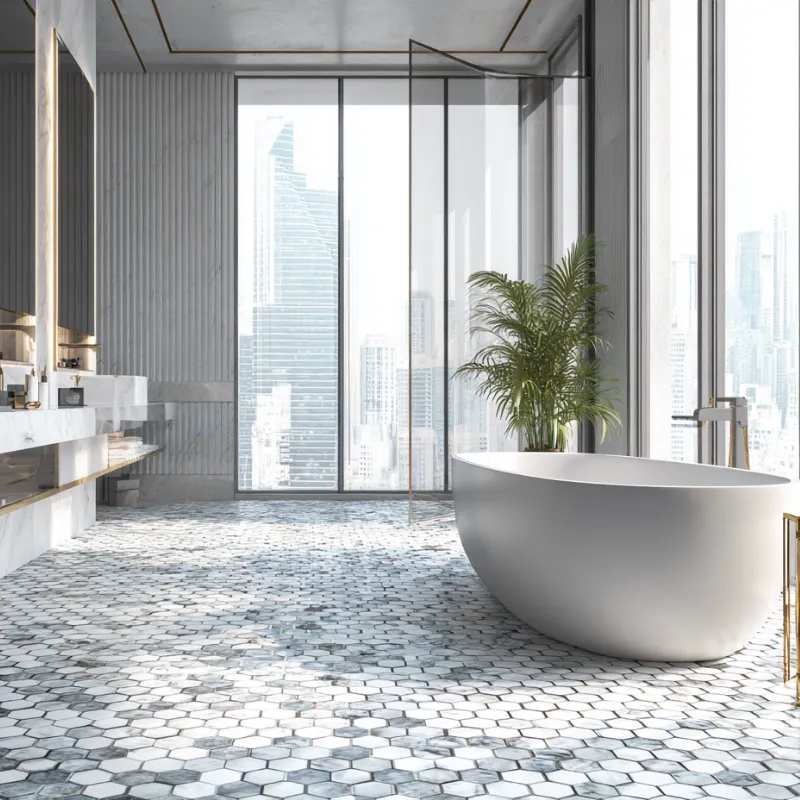
Hexagon Mosaic Pattern
Hexagon mosaics feature six-sided pieces arranged in a repeating honeycomb layout. The pattern combines geometric precision with a visual style that can feel both modern and timeless.
Smaller hexagons are commonly used for bathroom and shower floors, while larger hexagon mosaics work well on decorative walls and backsplashes.
The repeating geometry creates visual interest without relying on strong color, which makes hexagon tile particularly effective in neutral marble and natural stone palettes.
Browse our Hexagon Mosaic Tile Collection .
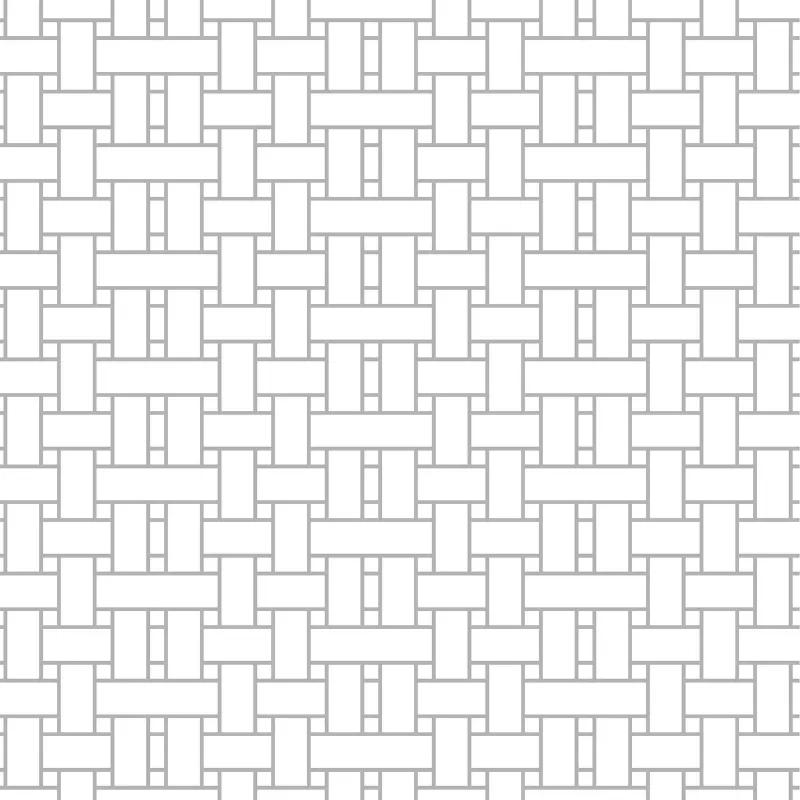
Basket Weave Mosaic Pattern
Basket weave is a traditional mosaic pattern designed to resemble woven fabric. Rectangular pieces are arranged in repeating groups, often with smaller contrasting inserts between them.
This pattern is closely associated with classic marble bathrooms and elegant residential interiors. It adds decorative detail while maintaining an organized and balanced structure.
Natural marble enhances the layout because variations in tone and veining create additional depth within the repeating pattern.
View our Basket Weave Mosaic Tile Collection .

Fish Scale Mosaic Pattern
Fish scale mosaics, also known as scallop or mermaid-scale tiles, feature curved pieces arranged in overlapping rows.
The rounded shape creates softness and movement, providing contrast against the straight lines of cabinets, mirrors, countertops and shower enclosures.
Fish scale mosaics are frequently used in spa-inspired bathrooms, decorative shower walls and statement kitchen backsplashes.
Explore our Fish Scale Mosaic Tile Collection .
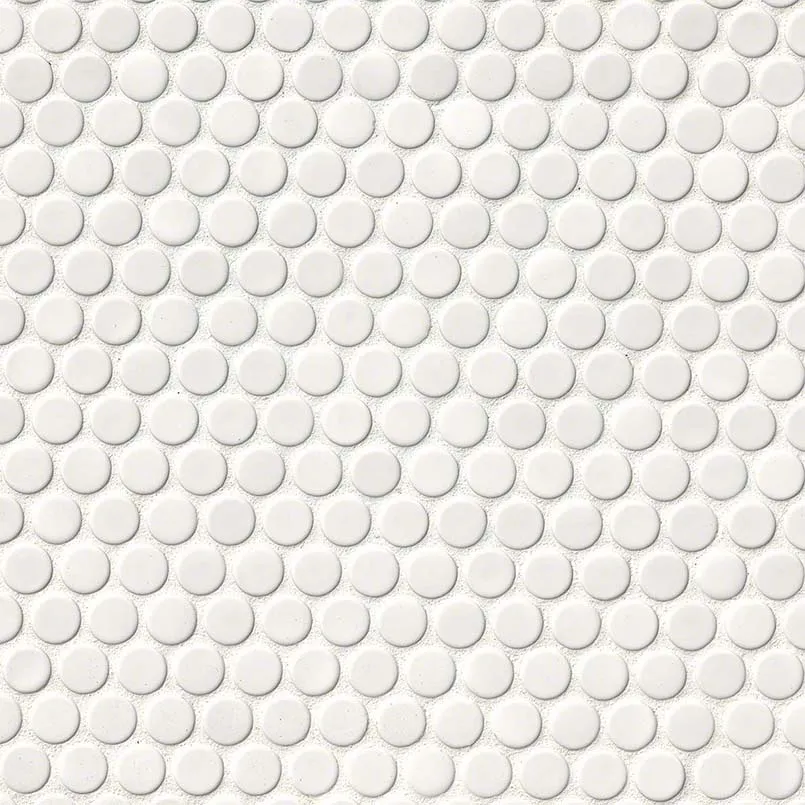
Penny Round Mosaic Pattern
Penny round mosaics consist of small circular pieces arranged in a close repeating grid. The pattern takes its name from the resemblance to small coins.
Penny rounds create a textured surface with a large number of grout joints. This makes them especially popular for bathroom and shower floors, where additional surface interruption can improve traction.
The pattern also works well on backsplashes and decorative walls where a subtle, repetitive texture is preferred over strong directional lines.
Other Popular Mosaic Tile Patterns
Beyond the most familiar layouts, several specialty patterns offer distinctive geometry and decorative character for custom interiors.
How to Choose the Right Mosaic Pattern
Choosing a mosaic pattern depends on the size of the room, the style of the interior and how much visual attention the surface should receive.
Geometric patterns such as hexagon and herringbone work especially well in modern interiors. Basket weave and penny round mosaics often feel more traditional, while fish scale and arabesque patterns create softer, decorative movement.
Material also affects how the pattern is perceived. Natural marble introduces variation in tone and veining, adding depth to even simple layouts. A solid-color porcelain or glass mosaic creates a cleaner and more uniform pattern.
Choose Geometry
Hexagon, herringbone and picket patterns create clean structure and directional movement.
Choose Timeless Layouts
Basket weave and penny round patterns work naturally with traditional marble bathrooms and vintage-inspired interiors.
Choose Decorative Forms
Fish scale, arabesque and waterjet mosaics create stronger focal points for walls, niches and backsplashes.
Can Different Mosaic Patterns Be Combined?
Different patterns can be combined successfully, but one should remain the dominant design element. For example, a small hexagon floor can be paired with a subtle herringbone shower wall when both materials share a similar color palette.
Avoid placing several strong patterns next to one another without a calm field tile between them. Too many competing shapes can make a bathroom or kitchen feel visually crowded.
Grout color also affects the result. Matching grout softens the pattern, while contrasting grout emphasizes every individual shape and joint.
Find the Right Mosaic Pattern for Your Project
Whether you are designing a bathroom floor, kitchen backsplash, shower wall or decorative feature, Stone Market USA offers natural stone mosaics in classic, geometric and specialty patterns.