Loading... (Warehouse Local Time)
Marble is one of those rare materials that feels both timeless and modern — but the real “make-or-break” detail is often the finish. Two pieces of marble can come from the same quarry and still behave differently once installed simply because one is honed and the other is polished.
This guide explains the practical differences (not just the look), so you can choose the right surface for bathrooms, interior walls, and high-traffic floors. We’ll cover appearance, traction, etching, cleaning, and the best applications for each finish — plus how many designers combine both for the best overall result.
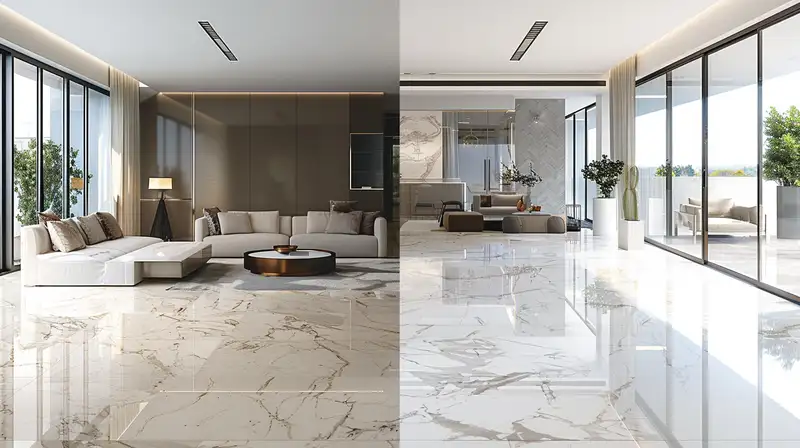
Honed marble has a smooth but matte surface. The polishing process stops before the stone becomes glossy, which creates a softer look with minimal reflections. It reads more “natural” and tends to feel calmer in a space.
Polished marble is buffed to a high-gloss finish. Light bounces off the surface, veining looks more dramatic, and the entire room can feel brighter. It’s the finish people associate with classic luxury interiors.
Both are real marble, both are premium — but they’re best used in different places. Think of it like choosing between a performance tire and an all-season tire: the material might be similar, but the behavior is not.
Honed marble is finished to a flat, satin-like surface. It’s not rough — it’s still smooth to the touch — but it doesn’t reflect light like a mirror. This makes honed marble especially popular in modern design, where the goal is to create visual flow without glare.
Because honed marble is less reflective, it also tends to hide small surface changes more naturally. That matters in real life, where daily wear is inevitable.
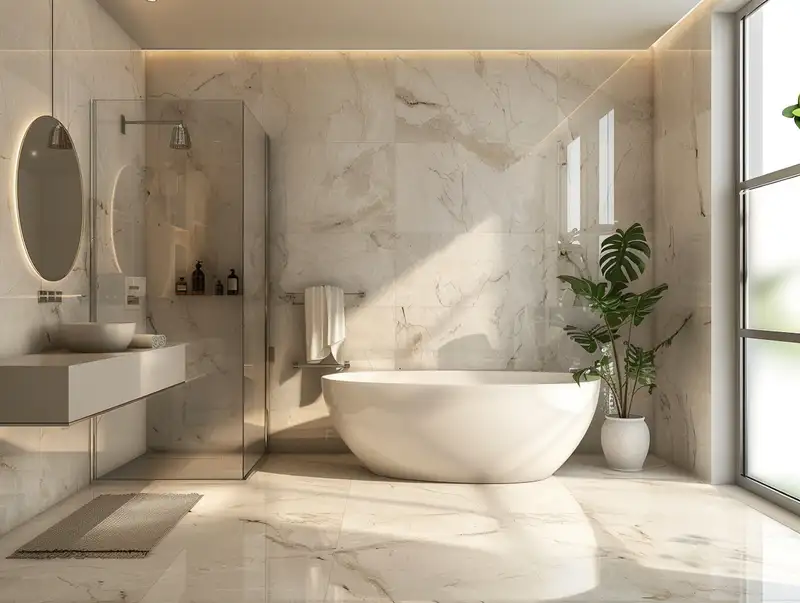
Honed marble is often the better default for interior floors because it balances beauty with daily comfort. On floors, traction matters. So does how the surface ages after months (or years) of foot traffic.
Common best-use areas include entryways, hallways, kitchens, and bathroom floors. In commercial settings, honed finishes are frequently chosen because they feel upscale while being more forgiving under repeated use.
If your project includes high-traffic spaces, you’ll usually be happier long-term with honed marble — especially when paired with proper sealing and routine cleaning.
Polished marble is finished to a high-gloss reflective surface. This finish intensifies the stone’s character: veining looks stronger, contrast increases, and the surface feels luminous. In the right space, polished marble is unbeatable for creating a “wow” moment.
Polished marble can also be easier to wipe clean in many situations because the surface is less absorbent than honed. That said, reflections are a double-edged sword — they also make surface changes more noticeable.
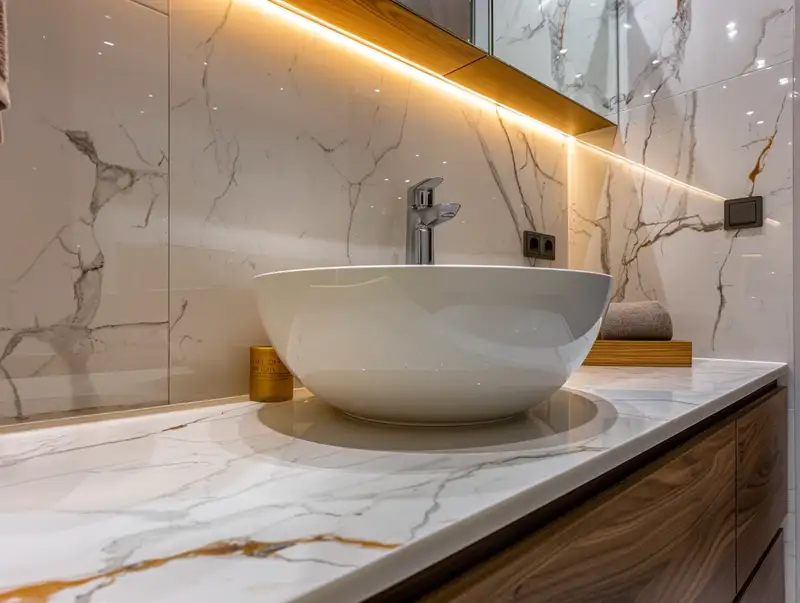
Polished marble is often the best choice for vertical surfaces, where slip resistance is irrelevant and visual impact is everything. That’s why you’ll see it used heavily on residential interior walls, bathroom feature walls, and shower surrounds.
In showers, polished marble walls create a brighter space by reflecting light — especially helpful in bathrooms with limited natural daylight. Many homeowners pair polished marble walls with honed marble floors to get the best of both worlds.
For floors, polished marble can still work in low-traffic areas, but it requires smarter placement and realistic expectations about reflections, water exposure, and ongoing maintenance.
Honed marble is generally the safer option for floors, especially in moisture-prone spaces. Polished marble can become slippery when wet, which is why it is usually reserved for walls, accents, and low-risk floor areas.
Marble is a calcium-based stone, which means it can react with acids (like lemon juice, vinegar, some cleaners, and certain shampoos). This reaction is called etching. Honed marble tends to hide etching more naturally. Polished marble may show etching as dull marks because the shine makes differences more visible.
Both finishes should be sealed. Polished marble is typically less absorbent, but that doesn’t mean it’s stain-proof. Honed marble may require more attention to sealing schedules, especially in kitchens and bathrooms.
Use a pH-neutral stone cleaner (or mild soap and water) and avoid harsh acids. For showers, consistent wipe-down habits help any marble finish look great. If your project includes bathroom and shower tiles, think in terms of routine maintenance rather than “set it and forget it.”
A common premium strategy is to combine finishes:
This approach is especially effective in bathrooms, where floors and walls face very different conditions. It also works beautifully in larger projects where you want the space to feel luxurious without becoming overly reflective.
Choose honed marble if your priority is everyday performance, slip resistance, and a softer, natural look — especially for floors and high-traffic areas.
Choose polished marble if you want a brighter, more dramatic appearance — especially for walls, showers, and focal surfaces.
If you’re unsure, the most reliable answer is this: match the finish to how the surface will be used. That’s the decision that creates long-term satisfaction.
Honed and polished marble are not “better vs worse.” They’re two different expressions of the same premium material. When used intentionally, both finishes can elevate a project — and choosing correctly can prevent regret later.
For walls and visual focal points, explore more ideas on residential interior walls. For wet-area design and materials, see bathroom shower tiles. For performance-focused spaces and heavier use, review options for commercial interior floors.