Loading... (Warehouse Local Time)
Herringbone mosaic tile is one of the most timeless and design-forward patterns you can use in a kitchen or bathroom. The zigzag layout adds movement and texture, instantly upgrading a backsplash or shower wall without needing bold colors. Because most herringbone mosaics are mesh-mounted, you get a high-end look with a practical installation format.
In this guide, you’ll learn what makes herringbone mosaics different, how to choose the right material and finish (polished vs. honed), where this pattern works best, and how grout color and lighting affect the final look. We’ll also show real product examples so you can compare warm neutrals, bright whites, and dramatic grays before you decide.
A herringbone pattern is formed by placing rectangular pieces at right angles to create a repeating V-shaped layout. In mosaic form, the pattern is pre-arranged on mesh-backed sheets, which helps keep spacing consistent and speeds up installation. Compared to straight-set subway tile, herringbone adds visual rhythm—making it ideal for feature areas like backsplashes, shower walls, niches, and accent panels.
Most designers use herringbone mosaics on one focal surface rather than the entire room. That keeps the pattern feeling premium instead of busy. If you want more definition, choose grout with mild contrast; if you want a calm, seamless look, match grout to the tile tone.
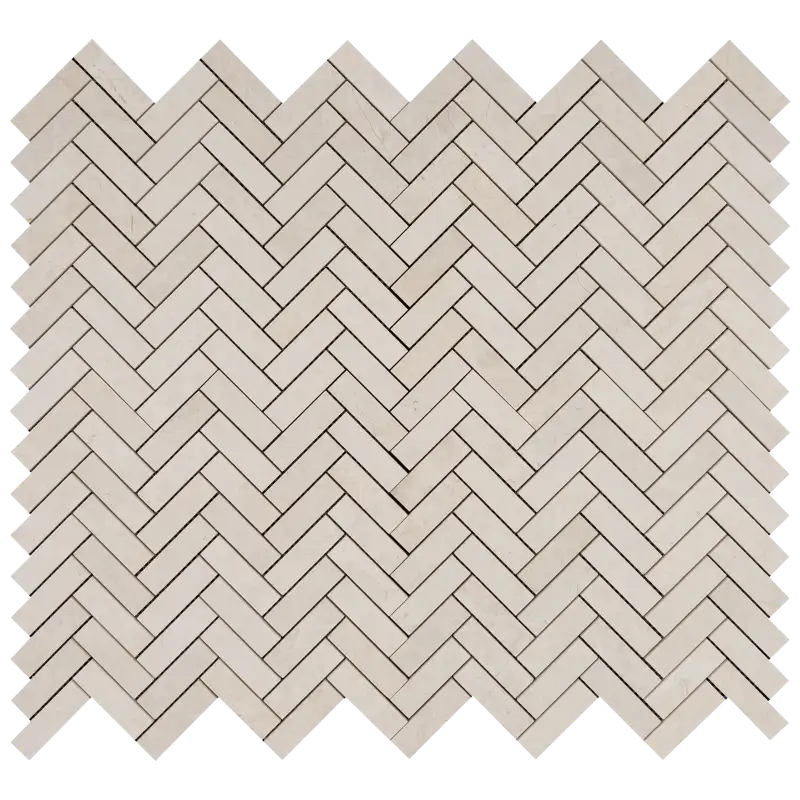
Marble • Honed • Warm Neutral
Soft, warm, and understated—ideal for neutral kitchens and spa-style bathrooms. The honed finish reduces glare, helping the stone look calm and natural in bright daylight.
View product →Best with: warm white grout, brass or brushed nickel fixtures, oak cabinetry.
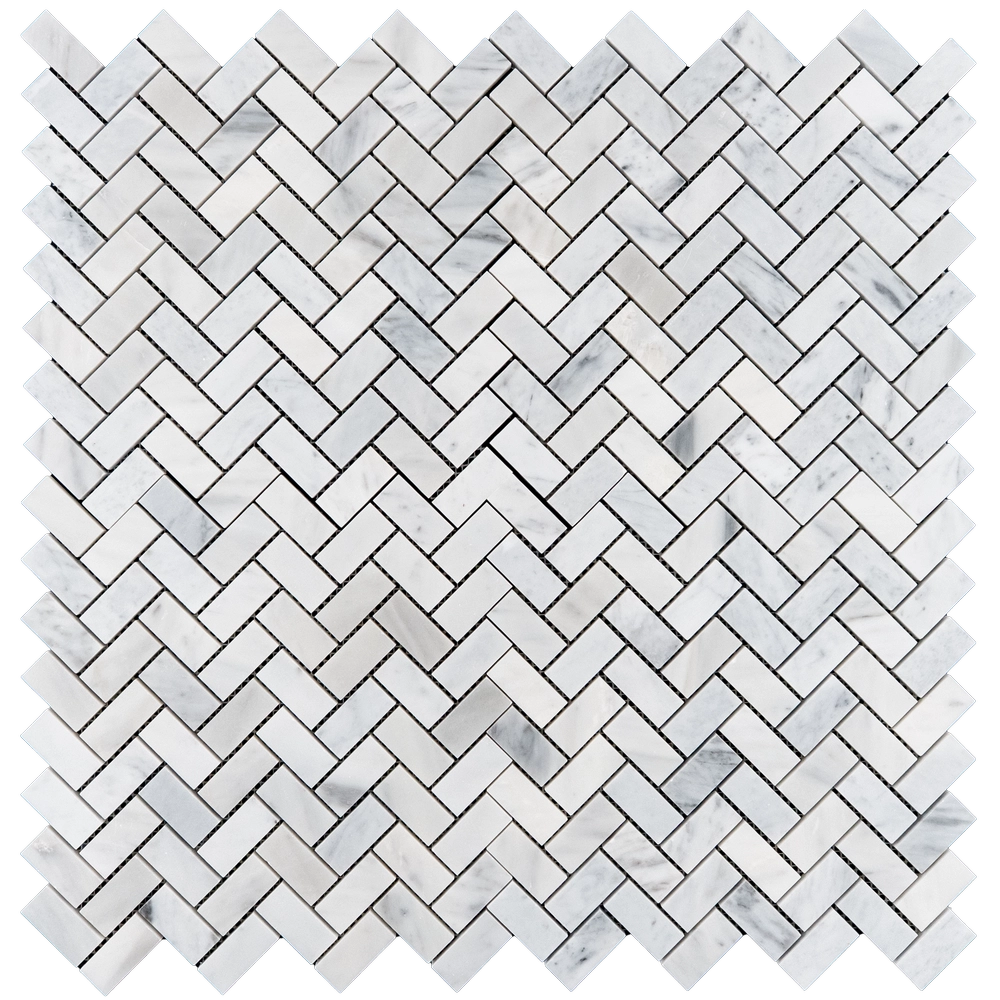
Marble • Polished • Classic White
A timeless white marble featuring soft gray veining on a bright background. The polished finish reflects light, making smaller spaces feel brighter and more open.
View product →Grout tip: white grout = seamless • light gray grout = more definition.
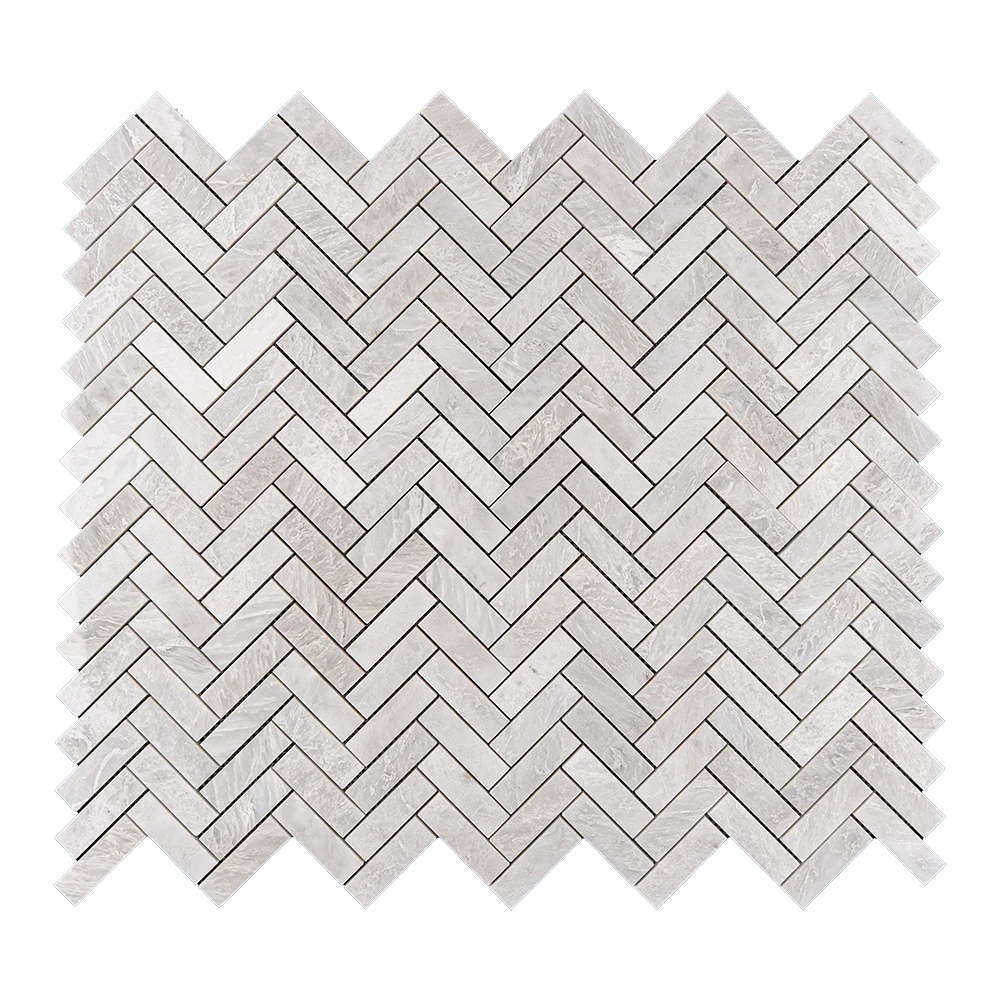
Marble • Polished • Modern White
Clean, crisp, and contemporary. If you like sharp contrast (white tile + darker cabinetry or hardware), Iceberg is a strong choice. The polished surface adds a premium, high-end sheen.
View product →Best with: flat-panel cabinets, minimal hardware, cool-toned counters.
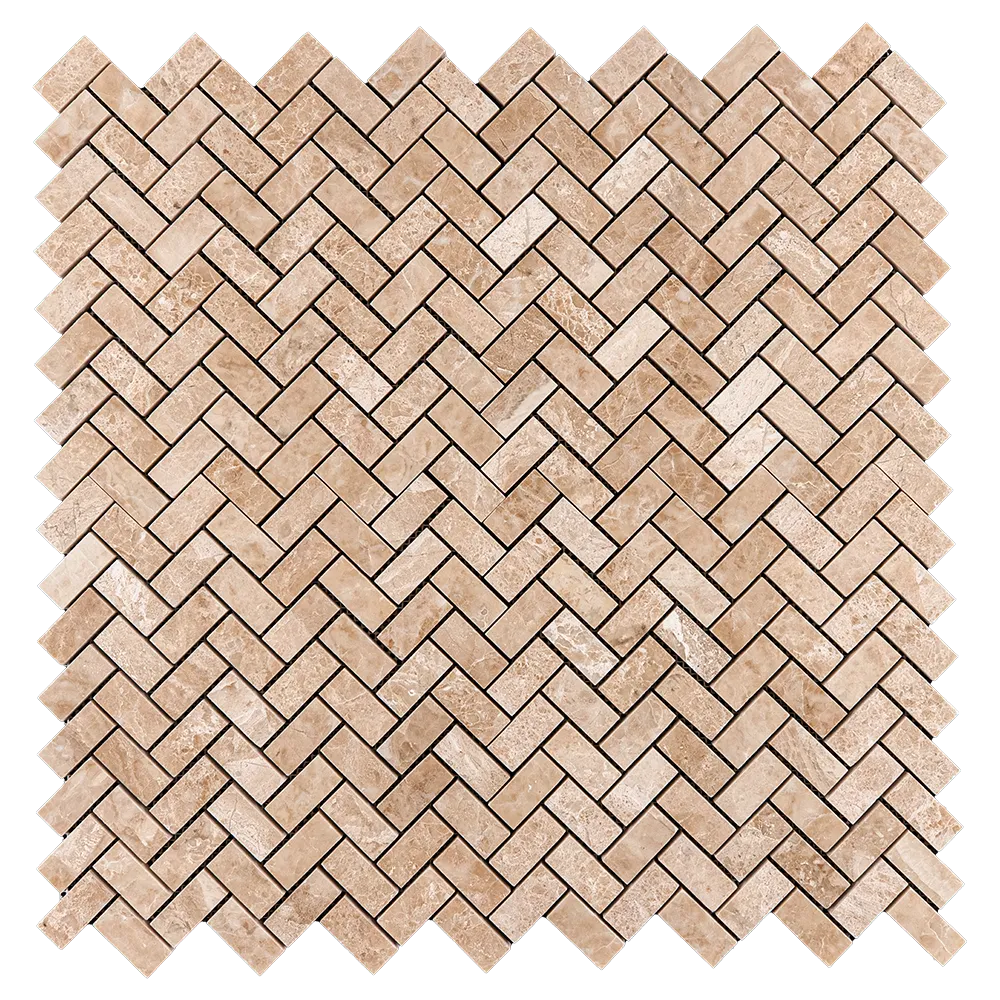
Marble • Polished • Warm Beige
Rich beige tones that create a welcoming, high-end atmosphere. A great option for Mediterranean, traditional, and warm transitional interiors.
View product →Pairs well with: travertine floors, wood vanities, warm lighting.
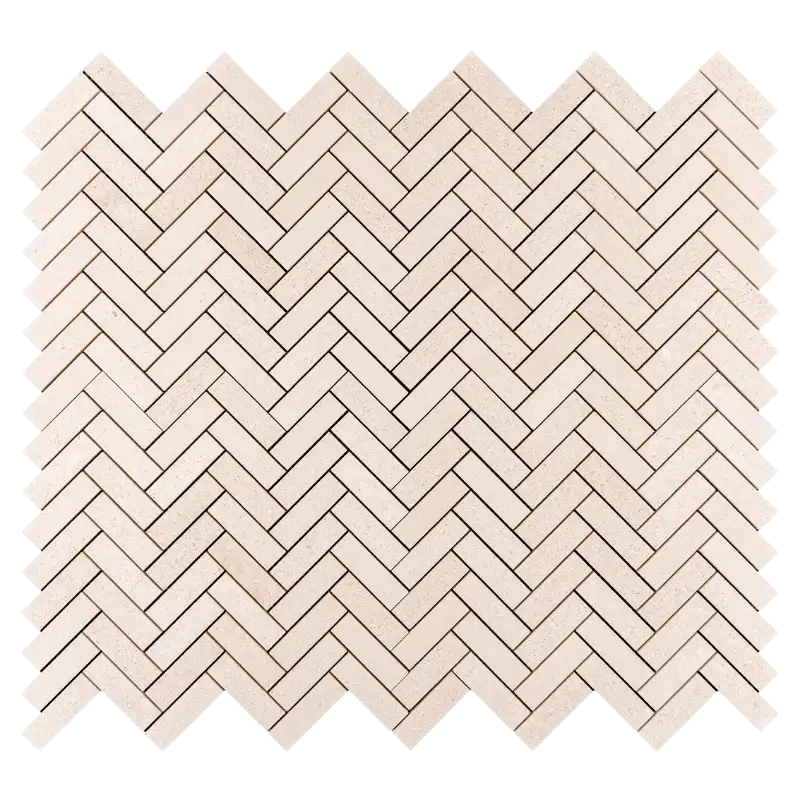
Limestone • Honed • Natural Matte
Organic, matte texture that feels calm and understated. Limestone is ideal when you want a softer surface and a natural, earthy vibe—especially in minimalist bathrooms.
View product →Great for: microcement-inspired spaces, natural oak, linen textures.
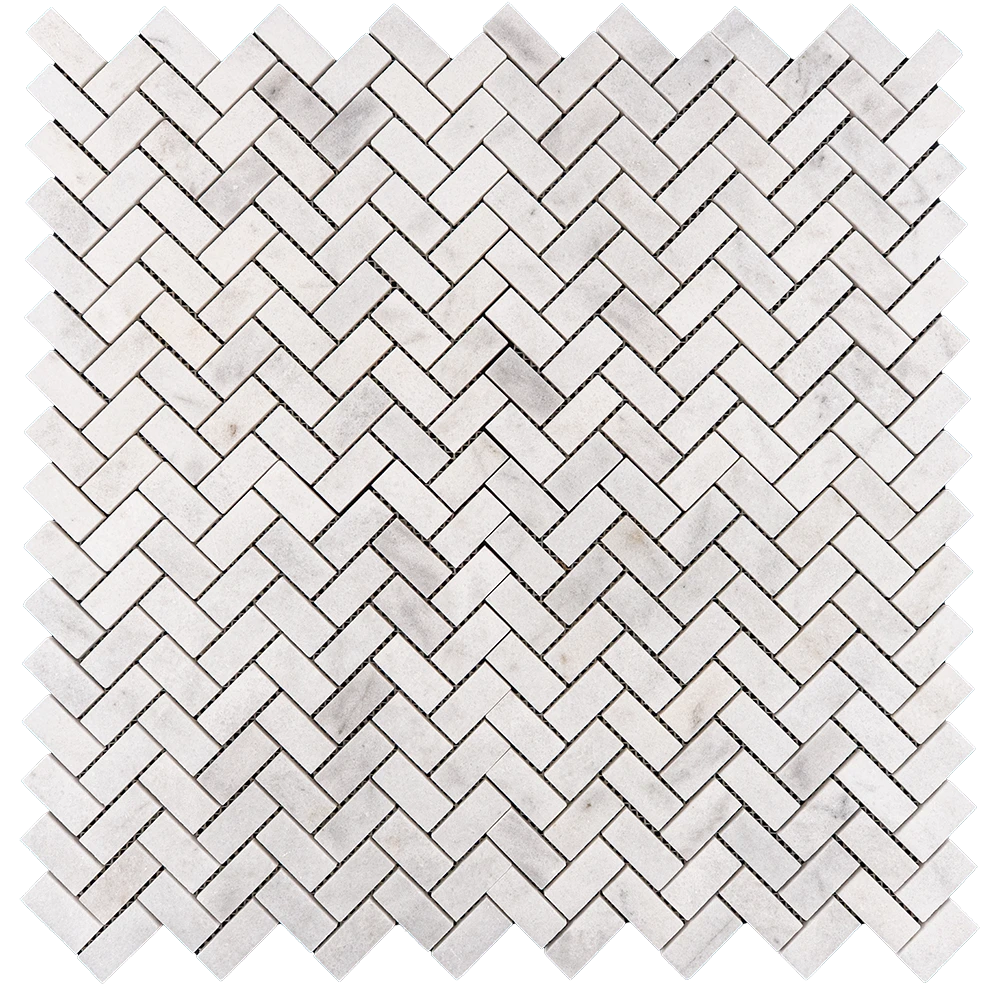
Marble • Polished • Creamy White
Creamy undertones offer warmth without going fully beige. Perfect if you want “white” but not icy-cool—excellent for transitional kitchens and elegant bathrooms.
View product →Pairs well with: beige quartz, warm gray cabinets, natural oak.
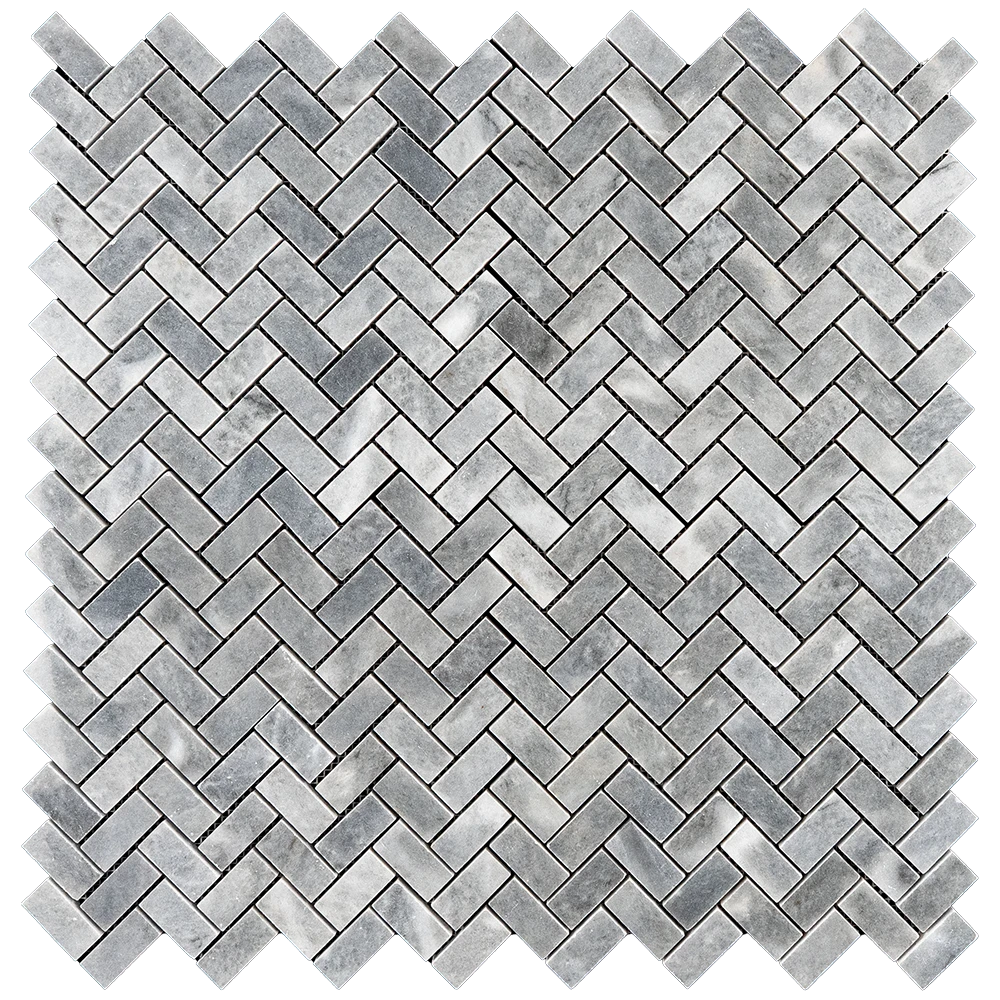
Marble • Polished • Dramatic Gray
Deep gray tones and expressive veining create a bold, luxurious statement. Ideal for feature walls, fireplaces, wet bars, and high-contrast powder rooms.
View product →Grout idea: charcoal grout for drama • light gray grout for a softer look.
Herringbone mosaics perform best as focal elements rather than full-room coverage. They add texture and detail without overwhelming the space. For most homes, the smartest approach is to pick one hero surface and let the pattern do the work.
Finish changes how the tile looks in real lighting. Polished mosaics reflect more light and feel more “glam,” while honed mosaics look softer and more natural. There isn’t a wrong choice—only the look you want.
Grout color can either highlight the zigzag pattern or let the stone blend into a seamless surface. If you want the pattern to stand out, choose mild contrast (for example, light gray grout with white marble). If you want a cleaner, calmer finish, match grout close to the tile tone.
A well-chosen herringbone mosaic tile can turn an ordinary wall into a designer feature. Pick your tone (warm vs. cool), decide on polished vs. honed finish, and use grout intentionally to control how bold the pattern feels. Use the examples above to compare styles and choose the option that best matches your space.