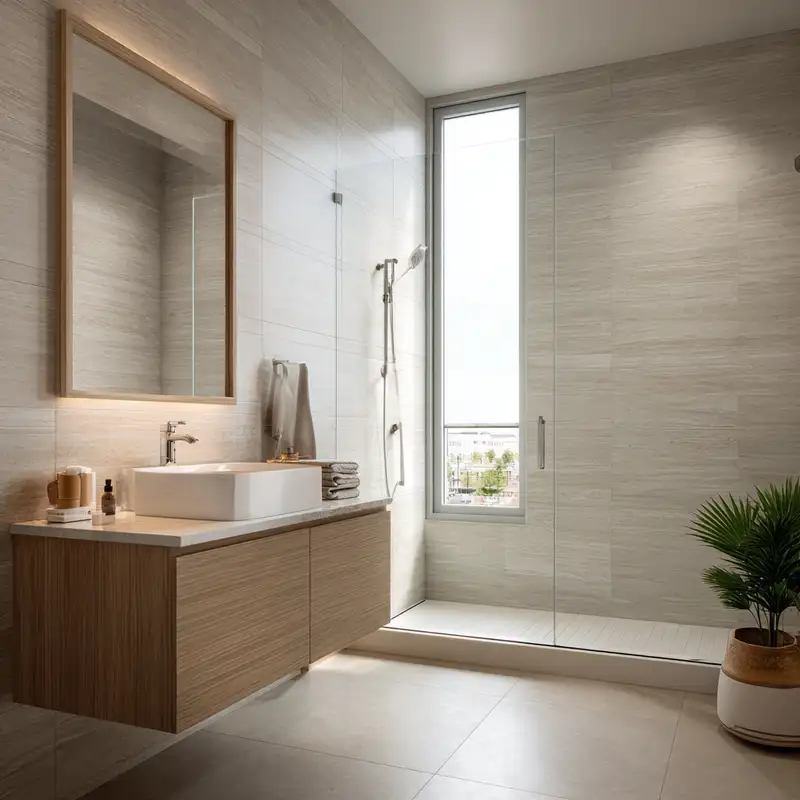
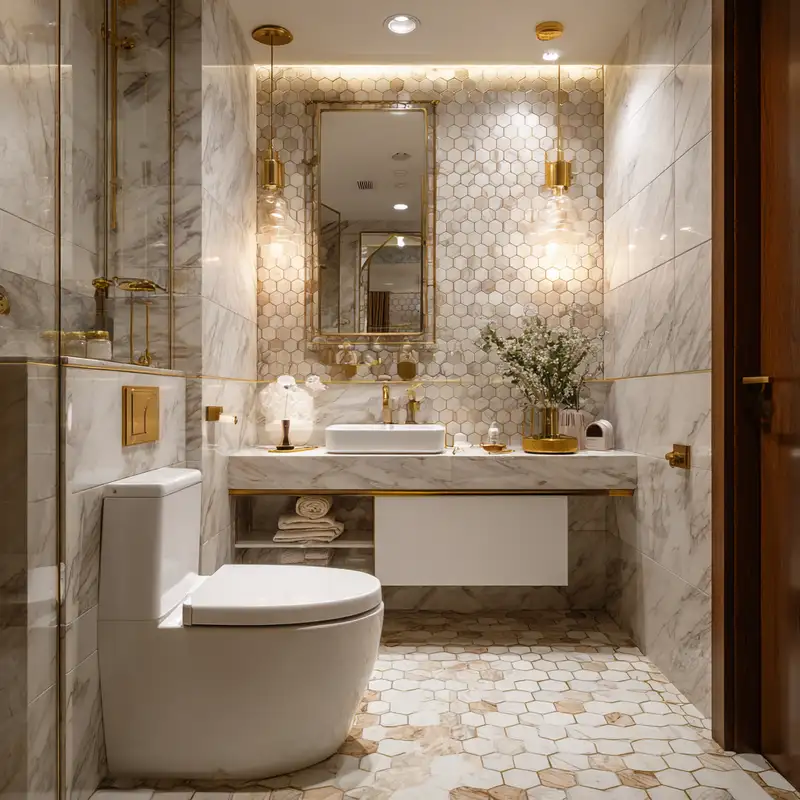
A small bathroom can feel cramped fast—especially when the tile layout adds too many lines, too much contrast,
or awkward cuts around fixtures. The good news is that you don’t need a bigger room to create a bigger feeling.
In many bathrooms, the quickest visual upgrade comes from choosing the right tile size and installing it with a layout that
supports the room’s proportions.
In this guide, we’ll cover the best tile sizes for small bathroom floors, walls, and showers,
plus practical design rules that help a tight space look cleaner, brighter, and more open. Along the way, you’ll also find direct links to
curated inspiration and product catalogs—so you can move from planning to selection without guessing.
Why Tile Size Matters in a Small Bathroom
Tile creates a pattern of joints across your floor and walls. In a compact room, your eyes pick up that pattern immediately.
If the grid is too dense, the bathroom can look visually “busy.” If the tiles are too large for the space, excessive cuts
can make the installation feel awkward and unbalanced.
The best tile size is the one that reduces visual fragmentation while still working with your room’s dimensions and real-world constraints
(like drains, slopes, niches, and plumbing locations). This is why many designers use larger formats on walls and main floors to
calm the space—then switch to smaller mosaics only where function demands it, such as shower floors.
Quick rule: fewer grout lines usually means a cleaner look and easier maintenance—especially on shower walls and behind vanities.
Use smaller tile where you need traction, slope control, or a decorative accent.
Best Tile Sizes for Small Bathroom Floors
Floors are tricky in small bathrooms because they include tight corners, doorways, toilets, vanities, and sometimes a shower entry.
The goal is to keep the floor visually calm while minimizing awkward slivers at the perimeter.
1) 12x12: The Classic “Fits Almost Everywhere” Option
12x12 is a safe, timeless size for smaller bathrooms. It’s large enough to avoid a tight checkerboard effect, but small enough
to fit compact footprints without excessive cutting. If you’re unsure what your installer can manage or you want a proven, low-risk format,
12x12 remains a strong choice.
2) 12x24: The Best “Make It Look Bigger” Floor Choice
For many small bathrooms, 12x24 is the sweet spot. The longer tile reduces the number of grout lines running across the room,
which makes the surface look more continuous. When installed in the direction of the room’s longest dimension, it can visually “stretch”
the floor and make the room feel larger.
If you want a modern, clean look, a 12x24 floor paired with a matching or close-tone grout is one of the fastest ways to reduce visual noise.
Even a small bathroom can feel high-end when the floor reads as one calm plane instead of a dense grid.
3) 2x2 / Penny Round / Small Mosaic: Best for Wet Areas and Shower Floors
Small mosaics are ideal where slope and traction matter—especially shower floors. A shower pan needs pitch toward the drain,
and small tiles follow that pitch more naturally than large tiles. Mosaics also provide extra grip thanks to more grout joints.
If you love mosaic style, keep it controlled: use mosaic on the shower floor or as a niche detail, then keep the main floor in a larger format.
You can browse options in our mosaic tile catalog.
Best Tile Sizes for Small Bathroom Walls
Wall tile size has a huge impact on how “open” a bathroom feels. In small rooms, wall tile becomes a background surface—so you usually want it to be
calm, continuous, and easy to clean.
1) 12x24 on Walls: The Most Versatile Choice
12x24 is one of the best wall tile sizes for small bathrooms. It reduces grout lines and creates a more seamless look.
On shower walls, fewer grout lines often means easier maintenance and a cleaner visual finish.
Orientation also matters. If the room feels narrow, a horizontal layout can make the space feel wider. If the ceiling feels low, consider a vertical
orientation to draw the eye upward.
2) Subway Tile (3x6, 4x12): Classic and Flexible
Subway tile is popular for a reason: it fits almost any wall and works with many patterns (running bond, vertical stack, herringbone).
In small bathrooms, be careful with high-contrast grout. Dark grout on bright tile can look bold, but it also emphasizes the grid and can make the space
feel more compact. A softer, tone-matched grout usually reads bigger and calmer.
3) Extra-Large Tiles (24x48 and Up): Luxury Look, Higher Skill Required
Extra-large tile can look incredible in small bathrooms because it creates near-seamless surfaces. But it demands very flat walls and precise installation,
especially around valves, niches, and corners. If you want a premium look with fewer risks, 12x24 often delivers the same “open” effect with easier execution.
Best Shower Tile Sizes for Small Bathrooms
In a small bathroom, the shower is often the main visual feature. The best shower tile strategy is usually:
calm, large-format walls plus a functional mosaic floor.
This keeps the shower looking clean and intentional while still meeting safety and slope requirements.
- Shower walls: 12x24 is the most reliable choice for a clean, spacious look.
- Shower floor: 2x2 mosaics (or similar) handle slope and traction better than large tiles.
- Accents: pick one area—niche, band, or a single feature wall—so the space stays calm.
For more shower-specific ideas, layouts, and inspiration, visit our
Bathroom & Shower Tiles page.
Layout Tricks That Make Small Bathrooms Feel Larger
1) Run Rectangular Tiles in the Direction You Want to “Expand”
With rectangular sizes like 12x24, direction is design. Running tiles along the longest dimension of the room can make the floor feel longer.
On walls, a horizontal stack can widen the feel of a narrow bathroom, while vertical orientation can make the ceiling feel higher.
2) Keep Transitions Simple
Too many changes—different colors, patterns, and materials—can “slice” a small room into visual sections. If possible, stay within a consistent tone family
across the floor, shower, and vanity wall. You can mix textures (matte walls with a textured mosaic floor) without changing the whole color story.
3) Use Low-Contrast Grout for a Bigger Look
High-contrast grout highlights the grid. In a small space, that can amplify visual clutter. If your goal is openness, choose a grout color that blends
with the tile. The surface will read more continuous and the room will feel calmer.
4) Choose One “Hero” Detail
Small bathrooms look best when there’s one focal point: a feature niche, a statement mosaic, or a patterned floor. If everything competes for attention,
the room can feel tighter. Keep the main surfaces quiet, and let one detail do the work.
Common Mistakes to Avoid
- Using tiny tile everywhere: great for shower floors, but too much small tile can make walls and main floors feel busy.
- Not planning cut placement: in small rooms, slivers show more. A simple layout plan improves symmetry and flow.
- Ignoring fixture locations: start with the room plan, not just a tile sample. Toilets, vanities, and niches change the layout.
- Mixing too many patterns: keep it cohesive—especially in compact bathrooms.
Shop Tiles and Mosaics for Small Bathrooms
Once you’ve chosen the right size direction, it’s time to pick the look and finish. Start here:
Final Thoughts
The best tile size for a small bathroom depends on what you want to fix. If the room feels busy, simplify it with larger wall tiles like 12x24.
If you want a cleaner floor with fewer lines, consider 12x24 installed in the direction that expands the space. And for shower floors, stick with mosaics
for slope and traction. With a calm base, smart layout direction, and one focused detail, even the smallest bathroom can feel intentional, elevated, and spacious.