

Basketweave Marble Mosaic Tile: Where and How to Use It
Basketweave marble mosaic tile combines the visual movement of a woven pattern with the natural character of marble. Its repeating arrangement of small rectangular pieces and contrasting square accents can suit both traditional and updated interiors, but the pattern deserves more planning than a simple stacked or straight-set tile.
This guide explains where the pattern works well, how to evaluate it for a particular room, and which practical details—such as scale, grout, layout, stone variation, and maintenance—should shape your decision.
What makes the basketweave pattern distinctive?
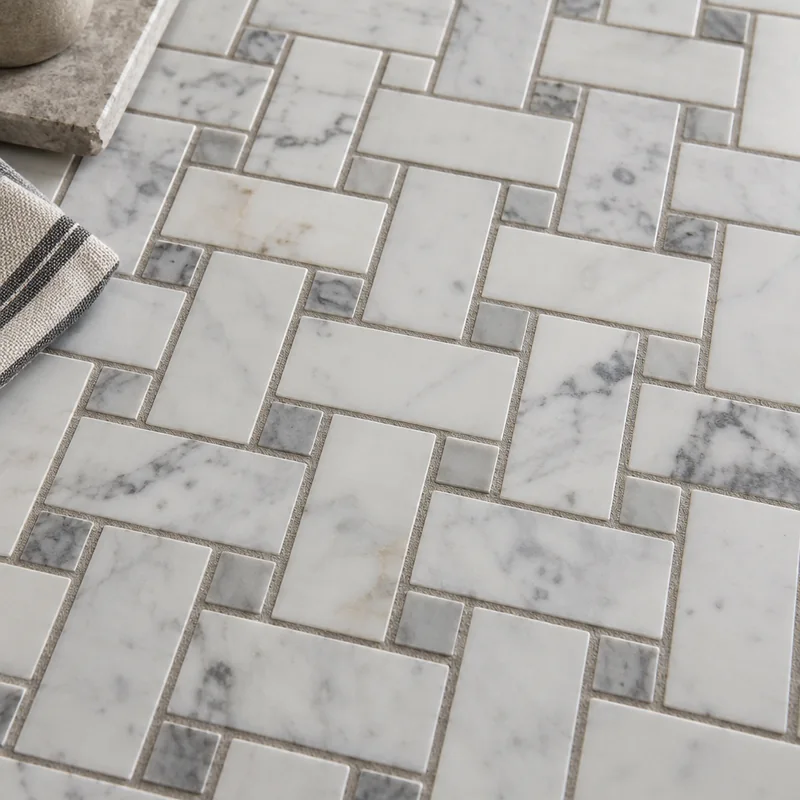
A basketweave mosaic is built from small stone pieces arranged to suggest strips passing over and under one another. The pattern creates direction and rhythm without relying on a large graphic motif. Depending on the marble colors, grout contrast, and scale of the individual pieces, it can read as quiet and finely detailed or more decorative and prominent.
Because the design is assembled from many small pieces, grout becomes part of the appearance rather than a minor installation detail. A grout color close to the stone can soften the pattern, while stronger contrast can make each woven unit more visible. The final effect also depends on lighting, surrounding materials, and the amount of pattern already present in the room.
For readers comparing styles, the Stone Market USA mosaic tile collection can provide a broader starting point for considering basketweave alongside other mosaic formats.
Where can basketweave marble mosaic tile be used?
Bathroom floors
Bathrooms are one of the most familiar settings for basketweave marble mosaic tile. The pattern can define the floor while keeping the walls relatively simple. It can work particularly well in a bathroom that needs visual detail without a large-format decorative panel.
For a floor application, do not evaluate appearance alone. Confirm that the specific tile, setting system, substrate, grout, and installation method are appropriate for the room and its conditions. Small pieces create frequent grout joints, but that does not by itself establish whether a particular product is suitable for a wet or frequently wet area. Manufacturer instructions and qualified installer advice should guide that decision.
Shower walls and other wet-area surfaces
The woven pattern can also be considered for shower walls, tub surrounds, or other bathroom wall surfaces when the selected product and complete installation system are approved for those conditions. Wall use often makes the pattern a focal point without requiring it to cover every surface.
Water management behind the tile remains a separate issue from the tile’s decorative appearance. A mosaic is not automatically waterproof, and stone selection does not replace proper substrate preparation, waterproofing, movement accommodation, or installation according to applicable requirements.
Kitchen backsplashes
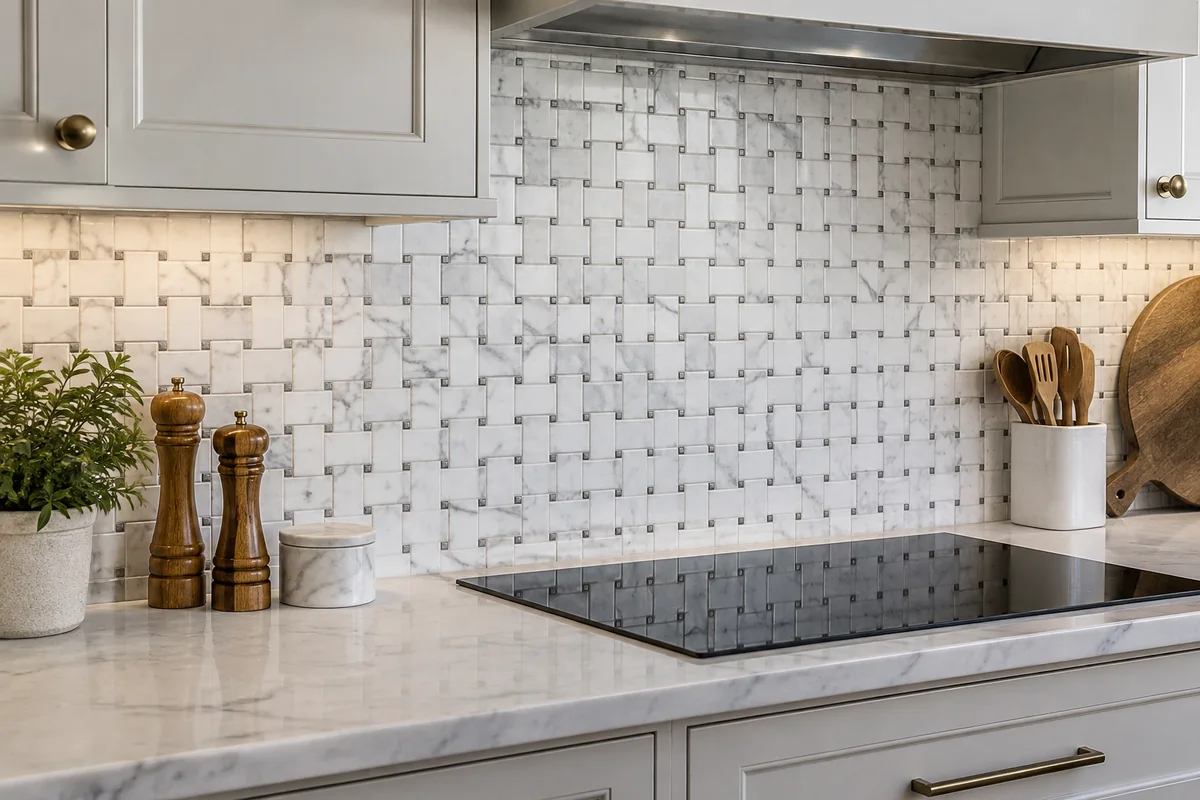
As a backsplash, basketweave marble introduces texture and pattern behind a range, sink, or countertop. It can complement plain cabinetry and solid-color counters, but it may compete with heavily veined stone, patterned cabinet finishes, or prominent hardware.
Marble can be sensitive to acidic substances and abrasive cleaning methods. In a kitchen, consider where splashes, cooking residue, and frequent wiping will occur. Ask how the selected stone should be cleaned and maintained, and avoid assuming that sealing will make it stain-proof or etch-proof.
Entryways, mudrooms, and smaller accent areas
A small entryway, powder room, laundry room accent, or fireplace surround can provide enough area for the pattern to make an impact without overwhelming the entire floor plan. Smaller rooms also make it easier to frame the mosaic with a border or transition to a simpler tile.
For an entry or mudroom floor, confirm the product’s documented suitability for the expected traffic and environmental conditions rather than relying on the fact that it is a mosaic. A qualified installer can also help assess the substrate, transitions, and edge details.
How to choose the right look
Start with the room’s visual hierarchy
Decide what should attract attention first. If the marble has noticeable veining or tonal variation, a restrained vanity, cabinet, or wall finish may allow the floor to remain the focal point. If the surrounding finishes already have strong pattern, a lower-contrast basketweave may be easier to live with.
Natural marble is not uniform. Pieces can differ in color, veining, movement, and shade, and the pattern may not look exactly like a single sample across a full installation. Review available samples in the room’s lighting, while remembering that one sample cannot represent every piece that may appear in the finished surface.
Consider scale and room size
The apparent scale of the basketweave depends on the size of each woven unit and the viewing distance. A tightly detailed pattern can feel delicate in a small room, while a larger pattern may read more clearly in an open space. Compare the sample against the room’s dimensions instead of judging it only in a showroom or on a screen.
Think about grout before ordering
Grout influences both the visual contrast and the practical upkeep of a mosaic. A close color generally allows the marble to lead, while a contrasting color emphasizes the geometry. The right choice depends on the stone, joint appearance, room conditions, and the installer’s recommendation.
Because mosaic sheets contain many joints, layout accuracy matters. Ask how the installer will align adjoining sheets, manage edges, and handle transitions. Poorly aligned repeat lines can make a regular pattern look uneven even when the individual pieces are attractive.
Marble-specific considerations
Marble is a natural stone, so variation is part of evaluating the material. Veining may continue across some pieces and change direction or intensity across others. Some installations are planned for a more blended appearance, while others intentionally allow movement to show. Neither approach can be assumed without reviewing the actual material and discussing expectations with the installer.
Cleaning should be approached conservatively. Use products and methods recommended for the particular marble and grout, and avoid acidic cleaners unless a qualified professional or product documentation specifically confirms their use. Wipe spills promptly when practical, especially in areas exposed to food, cosmetics, or other substances that may affect natural stone.
Sealing may be part of a stone-care plan, but it does not make marble waterproof, maintenance-free, stain-proof, or resistant to etching. Any sealing decision should follow product documentation and professional guidance for the selected stone and installation.
For broader material research, Stone Market USA’s information on marble tiles and mosaics can help you compare marble formats and think through how the stone may fit the rest of the project.
Planning the installation
Before buying, measure the areas carefully and identify where cuts, corners, drains, niches, outlets, doors, and transitions will fall. A basketweave pattern can make irregular cuts more noticeable than a plain tile, so the layout should be planned rather than left entirely to the installation stage.
Have the installer review the sheets and the proposed layout before setting begins. The installer may need to adjust the starting point, distribute cuts, or blend sheets so the repeat pattern appears intentional. These decisions depend on the room and the specific mosaic construction.
Also confirm the complete system: substrate condition, setting materials, grout, movement accommodation, edge treatment, and any wet-area waterproofing. General advice about mosaic installation cannot replace the product instructions, applicable requirements, or project-specific recommendations from a qualified professional.
The Stone Market USA mosaic tile guide is another useful resource when you are comparing sheet mosaics, layout considerations, and installation questions.
Plan substrate, setting materials, waterproofing, drainage, joints, transitions, cuts, and layout as one complete installation system.
Is a basketweave mosaic right for your project?
Before committing, ask yourself:
- Will the pattern support the room, or compete with existing veining and decoration?
- How will the grout color change the apparent contrast?
- Have you seen a sample in the project’s actual lighting?
- Where will cuts, borders, and transitions occur?
- Is the selected product documented as appropriate for the intended surface and conditions?
- What cleaning and care does the specific marble require?
If you want to examine a specific option, the basketweave Dolomite marble tile can be reviewed as one product example. Because product information and availability can change, confirm current details and intended-use guidance before ordering.
Final takeaways
Basketweave marble mosaic tile is most successful when its pattern, stone variation, grout, and installation layout are considered together. It can bring structure to a bathroom floor, add detail to a backsplash, or define a smaller accent area, but it should not be selected on pattern alone.
Compare samples, evaluate the surrounding finishes, confirm suitability for the intended conditions, and involve a qualified installer early. That process gives you a clearer idea of how the mosaic will look—and whether its maintenance and installation requirements fit the project.
Frequently asked questions
Concise answers to practical questions around selection, installation, care, and project planning.
Does basketweave marble mosaic tile work in a small bathroom?
It can, provided the pattern is balanced with the room’s other finishes. A smaller space may benefit from a less visually busy surrounding palette, but the appropriate scale and product suitability still need to be evaluated for the specific project.
Should grout match or contrast with the marble?
Matching grout tends to make the pattern quieter, while contrasting grout makes the woven geometry more noticeable. Review grout samples with the actual stone because lighting and marble variation can change the result.
Is marble mosaic tile maintenance-free after sealing?
No. Sealing does not make marble maintenance-free or protect it from every stain, etch, or change in appearance. Follow care guidance for the selected material and clean spills and residues using suitable products.
Can the same basketweave mosaic be used on a floor and a wall?
Not necessarily. Suitability depends on the specific product, installation conditions, substrate, and applicable requirements. Confirm intended use with product documentation and a qualified installer before using it in more than one location.
Find the Right Tile or Stone for Your Project
Browse Stone Market USA collections or contact our team for help comparing materials, finishes, applications, samples, quantities, and current availability.