

Honed, Tumbled, Leathered, and Sandblasted: Matching Stone Finish to Application
Choosing a natural stone is not only a matter of color or species. The finish changes how the surface reflects light, feels underhand or underfoot, shows variation, and may be maintained over time. A finish can also affect whether a stone feels appropriate for a quiet bathroom wall, a frequently used floor, a fireplace surround, or an outdoor paving project.
This guide explains four commonly discussed natural stone finishes: honed, tumbled, leathered, and sandblasted. The goal is not to label one finish as universally better, but to show what each one contributes, where it may be considered, and which questions to ask before ordering.
First, separate the stone from the finish
The underlying stone still matters. Marble, limestone, travertine, granite, and other stones differ in hardness, porosity, mineral composition, color variation, and sensitivity to certain substances. The same finish can therefore look and behave differently on different materials.
Finish names also describe a general surface treatment, not an assurance that every supplier or fabricator produces an identical result. The depth of texture, edge treatment, sheen, and degree of weathered appearance can vary. Review the actual material, request a sample when possible, and confirm project-specific care and installation guidance before making a final decision.
Honed stone: quiet, matte, and versatile
A honed finish is generally smooth with little or no reflective shine. It is produced by stopping the abrasive process before the stone reaches a polished appearance. The result can make veining and color feel softer, while small surface irregularities may be less visually prominent than they are on a high-sheen surface.
Honed stone is often considered for flooring, wall tile, bathroom surfaces, fireplace surrounds, and other interiors where a subdued appearance is preferred. Its low-sheen character can also make it easier to coordinate with wood, painted cabinetry, brushed metal, and textured fabrics.
That does not mean honed stone is maintenance-free or automatically suitable for every wet, exterior, or heavily used application. The stone itself, the exact product, the installation system, and the intended traffic all need to be evaluated. On a floor, ask how the selected stone and finish are expected to perform in the specific setting rather than relying on the word honed alone.
Tumbled stone: softened edges and an aged appearance
Tumbled stone is mechanically processed so that edges become softened and the surface can take on a worn, irregular, or time-aged character. Depending on the material and process, small pits, rounded corners, and variation in surface texture may be part of the appearance.
This finish is commonly associated with decorative backsplashes, accent walls, shower details, fireplace surrounds, and designs seeking a less formal look. Tumbled pieces can make a newly installed surface feel visually relaxed rather than sharply uniform.
The same irregularity that creates character can affect installation and cleaning. Uneven edges may produce wider-looking joints or require more attention to layout. Textured areas and open pits can also collect grout or debris if the installation is not handled carefully. Confirm the recommended grout approach and care instructions for the specific stone instead of assuming that all tumbled products are maintained in the same way.
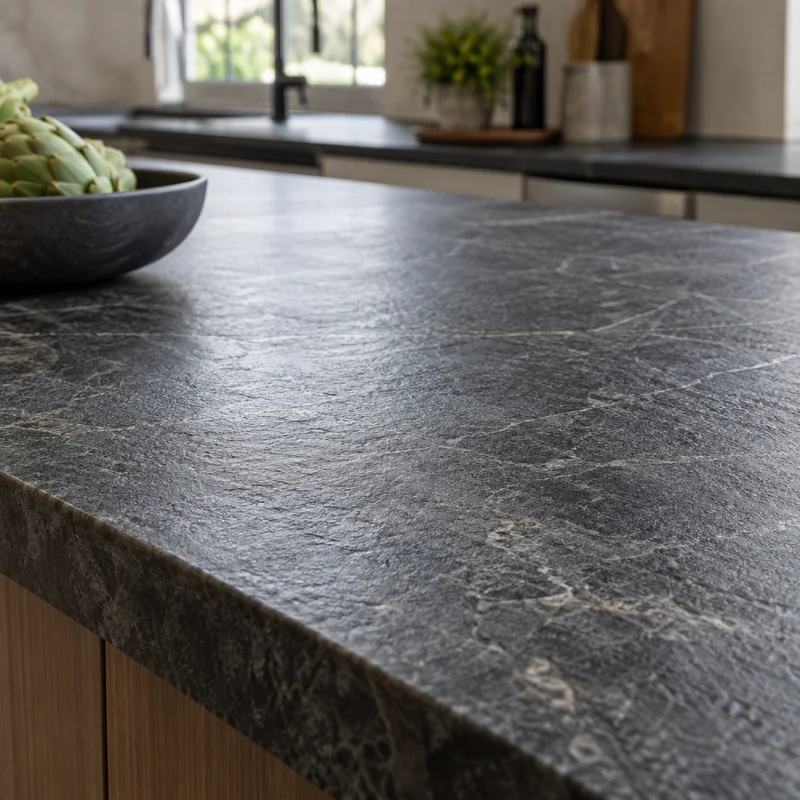
Leathered stone: textured without a strongly glossy surface
A leathered finish is typically textured and low-sheen, with a tactile surface that can emphasize the stone's natural movement. It is often selected when a completely flat matte finish feels too plain but a polished surface feels too reflective or formal.
Leathered surfaces are frequently seen in countertop and interior design discussions, especially for stones whose veining, mineral movement, or granular structure benefits from added texture. They may also appear on wall applications and other architectural surfaces. Whether a leathered finish is suitable for a particular use depends on the stone, fabrication details, edge profile, and care requirements.
Before choosing leathered stone for a work surface, run your hand across a sample and consider how the texture will interact with spills, crumbs, cookware, writing, or cleaning tools. Texture can influence the way light moves across the surface and may make wiping less straightforward than on a very smooth finish. Do not assume that leathered means more stain-resistant, scratch-proof, or suitable for every countertop condition.
For wet, exterior, or high-traffic applications, verify the exact stone's documented suitability rather than relying on surface texture alone.
Sandblasted stone: pronounced texture for architectural surfaces
Sandblasting uses an abrasive process to create a textured, generally non-reflective surface. The appearance can range from subtly rough to noticeably granular, depending on the stone and the treatment. Sandblasted stone can bring visual weight to a façade, wall, landscape element, or other design that benefits from a more pronounced surface.
Because texture is central to this finish, it deserves close evaluation before use on areas that must be easy to wipe or that receive frequent contact. Dust, soil, grout residue, and other material may be more noticeable or more difficult to remove from a textured surface than from a smooth one. A sample should be viewed in the intended light and, when relevant, considered alongside the proposed cleaning method.
Sandblasted stone is not automatically appropriate for every exterior or wet location. Outdoor exposure, freeze-thaw conditions, drainage, installation details, and local requirements can affect the decision. Verify the selected stone's documented suitability and follow the supplier's and installer's project-specific recommendations.
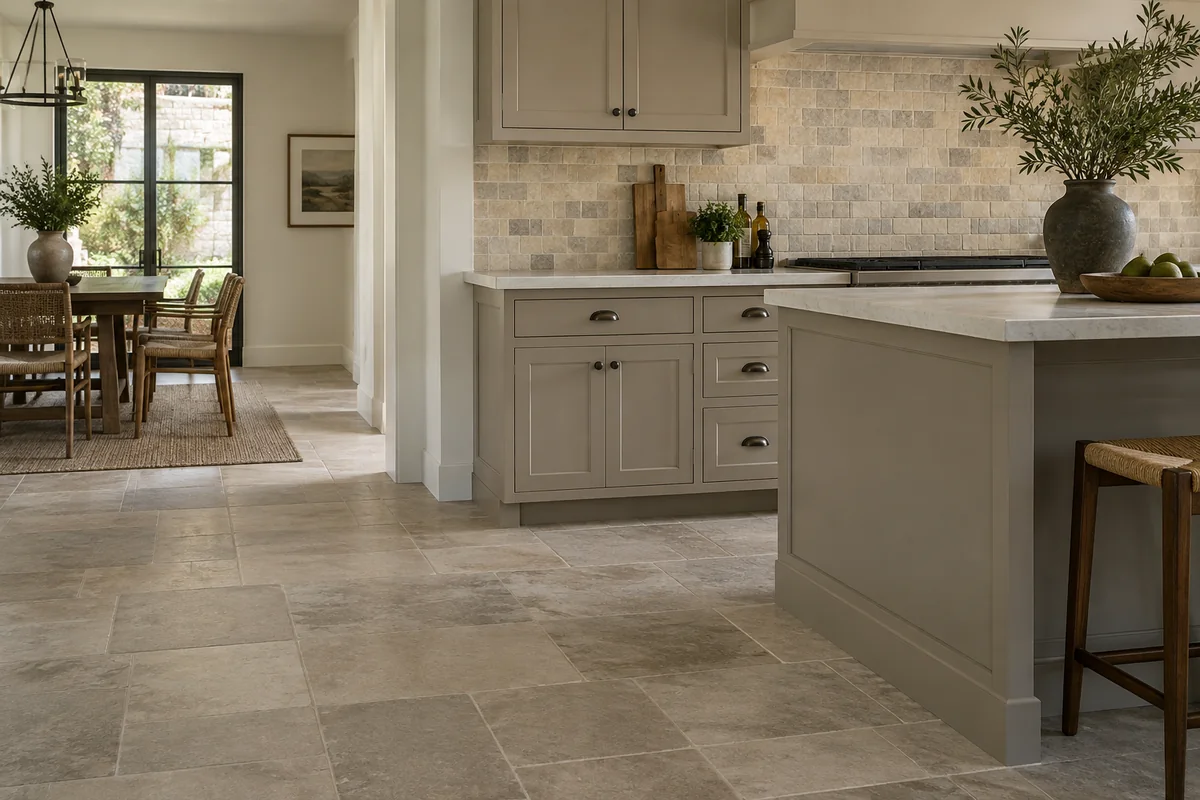
How to match the finish to the application
Start with the demands of the surface, then choose the visual character. The following framework helps narrow the options without treating finish names as a substitute for product-specific information.
For floors
Consider how the surface will be walked on, cleaned, and viewed under changing light. A honed finish may suit a calm interior floor, while a tumbled surface may support a more rustic design. More textured finishes can change the way dirt, grout, and furniture interact with the surface, so examine a representative sample and discuss maintenance with a qualified installer.
For entries, kitchens, bathrooms, and other areas where moisture or contaminants may be present, do not choose based on appearance alone. Ask about the exact stone, expected use, cleaning requirements, and any available technical documentation. Slip performance cannot be determined reliably from a finish name by itself.
For walls, backsplashes, and fireplace surrounds
Wall applications often give more freedom to prioritize texture and visual depth because the surface may receive less direct wear than a floor. Tumbled stone can soften a backsplash design, while leathered or sandblasted treatments can create a tactile accent. Even on a wall, however, consider dusting, grout joints, heat exposure where applicable, and the cleaning products that will be used.
For countertops and frequently touched surfaces
Look closely at how the finish feels in the hand and how easily a cloth can move across it. Leathered stone may appeal to someone who wants a tactile surface with limited sheen, but the texture should be judged in person. A honed surface may offer a quieter visual effect, yet the underlying stone still determines important care considerations. Confirm fabrication, edge, sealing, and maintenance guidance for the specific material.
For patios, paths, and landscape applications
Exterior selection requires more than matching a finish to a style board. Weather, drainage, climate, substrate conditions, installation method, and local requirements all matter. Some textured treatments may be considered for landscape settings, but no finish should be treated as proof of frost resistance, outdoor suitability, or slip performance.
If your project involves paving rather than interior tile, a dedicated guide to natural stone pavers can help you evaluate the broader material and installation questions alongside the surface finish.
Appearance alone does not establish wet-area or floor suitability. Review the specific product information and intended application before ordering.
Key trade-offs to compare before ordering
- Appearance: Decide whether you want low sheen, softened edges, tactile variation, or a more pronounced granular texture.
- Cleaning: Consider whether the surface has pits or texture that could hold grout, dust, food particles, or outdoor soil.
- Lighting: View samples under the project's likely lighting. A matte or textured surface can read differently in direct, diffuse, and artificial light.
- Natural variation: Color, veining, movement, and texture can vary from piece to piece. A sample is useful, but it cannot represent every piece in a natural-stone installation.
- Installation: Edge softness, thickness variation, joint layout, grout selection, substrate preparation, and movement accommodation should be reviewed with the installer.
- Care: Ask what cleaning products are appropriate for the specific stone. Acidic cleaners are not generally appropriate for acid-sensitive stones such as many marbles, and sealing does not make stone stain-proof or maintenance-free.
For a side-by-side look at the most commonly compared surface treatments, see this stone finish comparison before narrowing your selection. It can help clarify how honed and tumbled options differ from higher-sheen or otherwise treated surfaces.
Questions to ask a supplier or installer
- Is the finish consistent across the material, or should I expect noticeable variation?
- How does this specific stone respond to the intended cleaning routine?
- Are there pits, softened edges, or texture that will affect grout and layout?
- What project conditions should be checked before using it outdoors or in a wet area?
- Can I review multiple samples or a larger panel before approving the material?
Making the final choice
Choose the finish by balancing the surface's visual role with the practical work it must do. Honed is often the understated option, tumbled introduces softened and aged character, leathered adds tactile depth with limited sheen, and sandblasted creates more pronounced texture. None of those labels replaces evaluation of the stone itself or project-specific installation guidance.
The most reliable process is to compare samples in realistic lighting, think through cleaning and daily contact, and verify the material's documented suitability for the application. That approach makes the finish part of an informed design decision rather than an afterthought.
Frequently asked questions
Practical answers to common questions related to this material, application, care, selection, and project planning.
Is honed stone easier to maintain than polished stone?
Not necessarily. A honed surface has less reflectivity, but maintenance depends on the stone, finish details, installation, exposure, and cleaning routine. Compare the care guidance for the exact material rather than assuming one finish requires less attention.
Does tumbled stone always look rustic?
No. Tumbled stone commonly has softened edges and an aged quality, but the final impression also depends on color, stone type, joint width, layout, and surrounding materials.
Is leathered stone appropriate for a countertop?
It may be considered for some countertop projects, but suitability depends on the specific stone and fabrication. Review a sample in person and ask how texture affects cleaning, daily use, sealing, and care.
Does sandblasting make stone slip-resistant?
A finish name alone cannot establish slip performance. If the stone will be used where slip exposure matters, request applicable product information and obtain project-specific guidance from the supplier and qualified installer.
Find the Right Tile or Stone for Your Project
Browse Stone Market USA collections or contact our team for help comparing materials, finishes, applications, samples, quantities, and current availability.