

What Is Porcelain Tile? Types, Pros, Cons, Uses & Buying Guide
If you are comparing tile for a floor, wall, kitchen, bathroom, or exterior project, it helps to understand exactly what you are buying. So, what is porcelain tile? It is a dense ceramic tile made from refined clay and other mineral materials, then fired at high temperatures. Its manufacturing process produces a tile with very low water absorption and a hard, durable surface.
That description explains why porcelain is widely considered for demanding applications, but it does not mean every porcelain tile is suitable for every location. Surface texture, finish, thickness, size, installation method, and the product’s technical ratings all matter. This guide explains the main types, benefits, drawbacks, uses, and buying questions to consider.
Readers who are ready to compare styles can begin with Stone Market USA’s porcelain tile collection, then narrow the options based on the project requirements described below.
How is porcelain tile made?
Porcelain tile is a type of ceramic tile, but the terms are not interchangeable in every technical sense. Porcelain is generally made from more refined raw materials and fired under conditions that create a denser body. Under commonly used industry standards, porcelain tile has water absorption of 0.5% or less when tested according to the applicable standard.
Low absorption can make porcelain useful where a tile may encounter moisture, temperature changes, or frequent wear. However, absorption is only one part of a product evaluation. The glaze, surface profile, edge treatment, thickness, installation system, and intended-use ratings should also be reviewed for the specific tile.
Common types of porcelain tile
Glazed porcelain tile
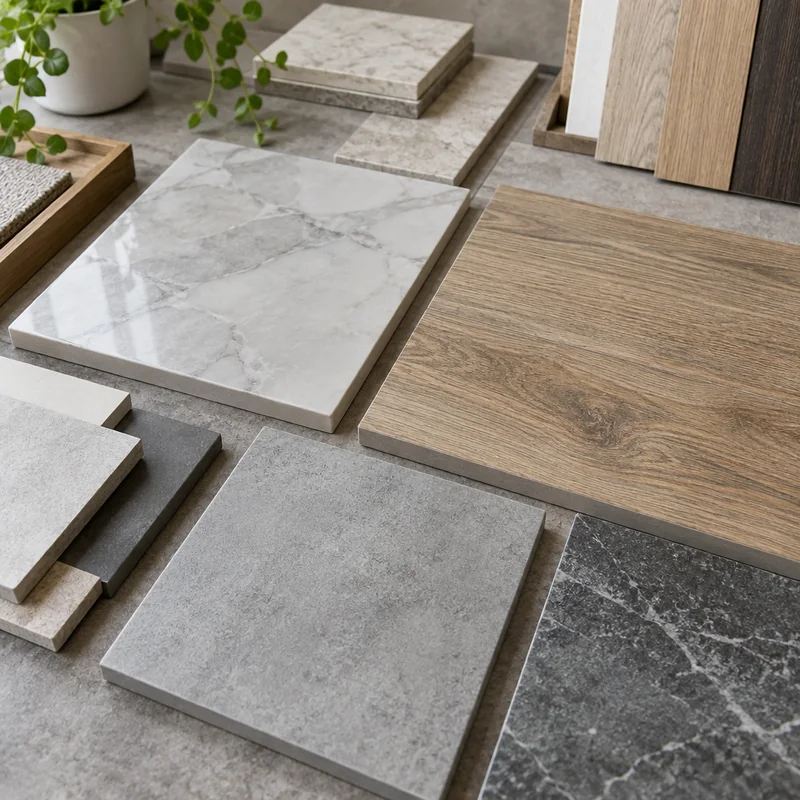
Glazed porcelain has a decorative or protective surface layer applied over the tile body. The glaze can create colors, patterns, stone looks, concrete looks, or wood visuals. Because the appearance is concentrated at the surface, chips may be more noticeable on some glazed products, depending on the design and body color.
Through-body or full-body porcelain
With through-body or full-body porcelain, the color or visual material extends more consistently through the tile body than it does with a surface-only design. This can be useful in settings where edge visibility or surface wear is a concern, although the suitability still depends on the product’s published ratings and the project conditions.
Polished and matte finishes
Polished porcelain has a reflective surface that can emphasize pattern and make a room feel visually brighter. Matte porcelain has less shine and often provides a more understated appearance. A polished surface may show footprints, smudges, or scratches more readily, while a matte finish can have a different cleaning and tactile profile.
Wood-, stone-, and concrete-look porcelain
Modern printing techniques allow porcelain to reproduce the visual character of timber, marble, limestone, travertine, slate, and concrete. These are visual categories rather than guarantees of identical performance. Compare the actual product’s finish, ratings, recommended applications, and maintenance instructions before making a decision.
Advantages of porcelain tile
- Low water absorption: Its dense body absorbs very little water compared with many other tile materials, subject to the product’s tested rating.
- Many design options: Porcelain is available in a wide range of colors, patterns, formats, and surface finishes.
- Hard-wearing surface: Properly selected and installed porcelain can be appropriate for areas that receive regular foot traffic, provided the product is rated for that use.
- Consistent manufactured appearance: Unlike natural stone, porcelain is produced to a controlled design. Individual pieces can still have shade or pattern variation according to the product’s classification.
- Simple routine care: Many porcelain surfaces can be maintained with regular dust removal and cleaning using products compatible with the tile and grout system.
Limitations and potential drawbacks
Porcelain is not automatically the best material for every project. Its density makes it harder to cut than some less-dense ceramic tiles, so accurate layout and appropriate cutting equipment are important. Large, heavy, or unusually shaped tiles may also require more planning and handling during installation.
The material can feel hard and cool underfoot, especially in rooms without a heating system. Grout joints still require cleaning, and textured or deeply structured surfaces may take more effort to maintain than smooth ones. A glazed finish can also be damaged by impact, abrasive treatment, or unsuitable chemicals.
Porcelain tile is often described as waterproof, but that wording can be misleading. The tile itself may have very low absorption, while grout joints, movement joints, transitions, substrates, and penetrations remain part of the overall assembly. Wet-area and exterior installations require a suitable system, correct detailing, and compliance with applicable requirements.
Where can porcelain tile be used?
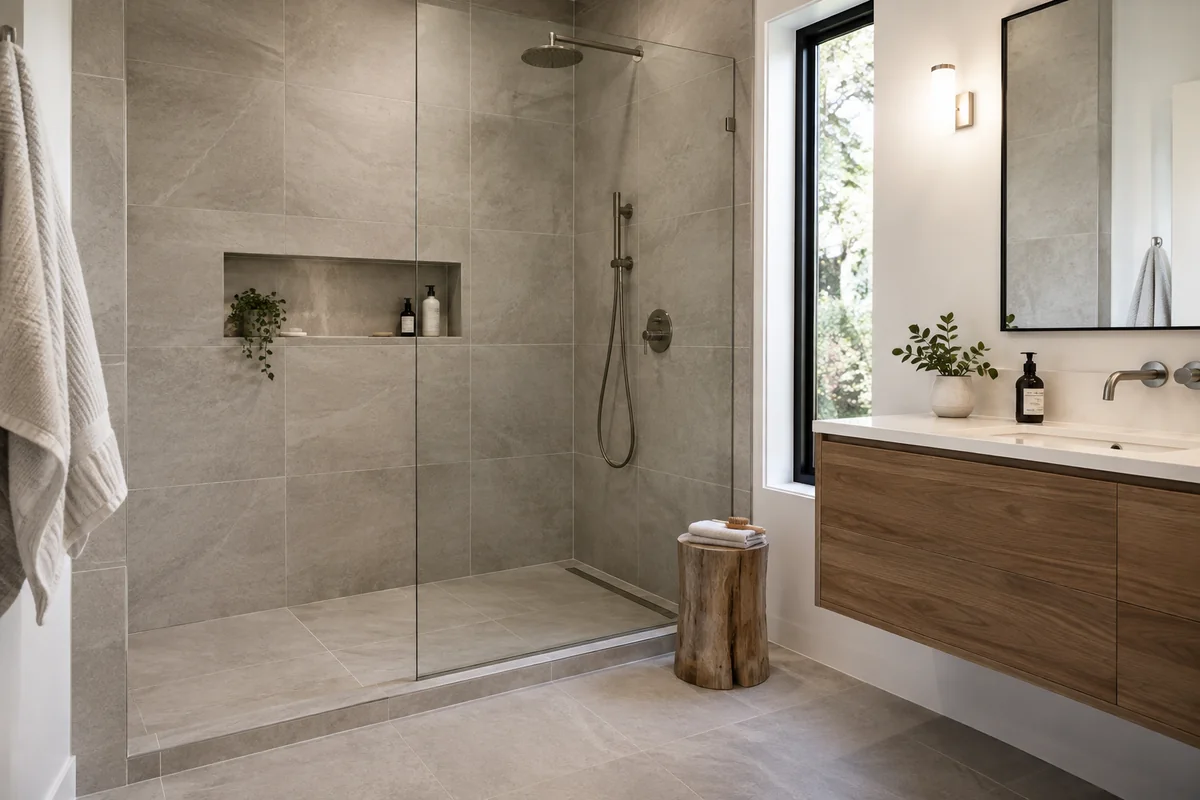
Common applications include residential floors, backsplashes, shower and bathroom walls, entryways, kitchens, laundry rooms, and accent walls. It is also used in commercial and exterior projects when the selected product and installation system are rated for those conditions.
For floors, assess expected traffic, footwear, furniture loads, surface texture, and slip-related considerations. For walls, weight, substrate condition, tile format, and installation materials matter. In showers and other wet areas, the tile is only one component of the water-management system.
Outdoor projects require additional review. Temperature exposure, freeze-thaw conditions, surface drainage, installation method, and regional requirements can affect whether a particular porcelain product is appropriate. Never assume that a porcelain tile is outdoor-rated solely because it has low water absorption.
Porcelain tile compared with ceramic tile
Porcelain and ceramic tile are both fired clay-based products. The practical distinction is usually density and water absorption: porcelain generally meets a stricter absorption threshold, while ceramic tile includes a broader range of bodies and applications.
That does not make ceramic tile inferior. A ceramic tile may be a sensible choice for a wall or a lower-demand interior application, depending on its ratings and the project. Porcelain may be preferable when low absorption, a dense body, or a particular visual is important. Compare the actual technical information rather than choosing by label alone.
What to check before buying porcelain tile
- Confirm the location. Identify whether the tile will be used on a wall, floor, shower, backsplash, covered exterior, or exposed exterior.
- Review technical ratings. Look for the manufacturer’s information on water absorption, wear, slip-related performance where relevant, frost exposure where relevant, and intended application.
- Choose the finish carefully. View polished, matte, textured, and relief surfaces under the lighting and cleaning conditions of the room.
- Measure the layout. Account for room dimensions, grout joints, cuts, transitions, pattern direction, and a reasonable allowance for cuts and breakage. Confirm quantities with the installer or supplier.
- Check shade and caliber. Manufactured tiles are sorted into shade and dimensional categories. Tiles for one installation should be compared and coordinated before setting.
- Order or inspect a sample. A small sample helps you assess color, texture, scale, and coordination with cabinets, paint, stone, and fixtures. It may not represent every visual nuance across a full installation.
- Plan installation materials. Tile size, substrate, layout, grout joint, setting material, movement accommodation, and transitions should be evaluated as one system.
For a warmer, plank-style visual, a wood-look porcelain tile can be a useful category to compare with natural wood or stone-inspired surfaces. Review the individual product information before deciding whether its size, finish, and ratings fit the project.
If a lighter, neutral palette is under consideration, an ivory porcelain tile may provide a starting point for comparing tones and surface styles. Use samples and project-specific technical information to make the final selection rather than relying on the color name alone.
How to care for porcelain tile
Routine care usually begins with removing loose dirt and wiping the surface with a cleaner compatible with the tile, grout, and any adjacent materials. Follow the product and cleaner instructions, avoid abrasive methods unless specifically approved, and address spills before they collect in textured surfaces or grout joints.
Porcelain tile generally does not require sealing in the same way some porous natural stones do, but grout and other materials in the installation may have separate care requirements. Do not assume that sealing any part of the assembly makes the entire surface stain-proof, waterproof, or maintenance-free.
Final decision: is porcelain tile right for your project?
Porcelain tile is a strong candidate when you want a dense, low-absorption manufactured surface with broad design flexibility. The best choice depends less on the word “porcelain” and more on whether the specific tile matches the location, traffic, moisture exposure, finish, layout, and installation system.
Before ordering, compare samples, verify the product’s intended use and ratings, confirm quantities and shade information, and discuss substrate and installation details with a qualified professional when the project is complex.
Frequently asked questions
Quick answers to practical questions related to selection, installation, care, and project planning.
Is porcelain tile better than ceramic tile?
Neither material is automatically better. Porcelain generally has lower water absorption and a denser body, while ceramic tile may be appropriate for many interior walls and other applications. The right choice depends on the location and the product’s ratings.
Does porcelain tile need to be sealed?
The porcelain surface itself commonly does not need sealing, but grout and other materials may have different requirements. Follow the care guidance for the specific installation.
Can porcelain tile be used outdoors?
Some porcelain tile is suitable for particular exterior conditions, but not all products are. Check the product’s exterior, frost, surface, and installation requirements, and account for local conditions and building requirements.
Is porcelain tile difficult to install?
Its density can make cutting and handling more demanding than with some ceramic tile. A suitable layout, tools, substrate, setting materials, and installer experience are important, especially for large or complex installations.
Find the Right Tile or Stone for Your Project
Browse Stone Market USA collections or contact our team for help comparing materials, finishes, applications, samples, quantities, and current availability.