

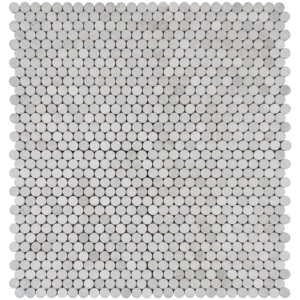
Soft Circular Geometry with Fine Surface Detail
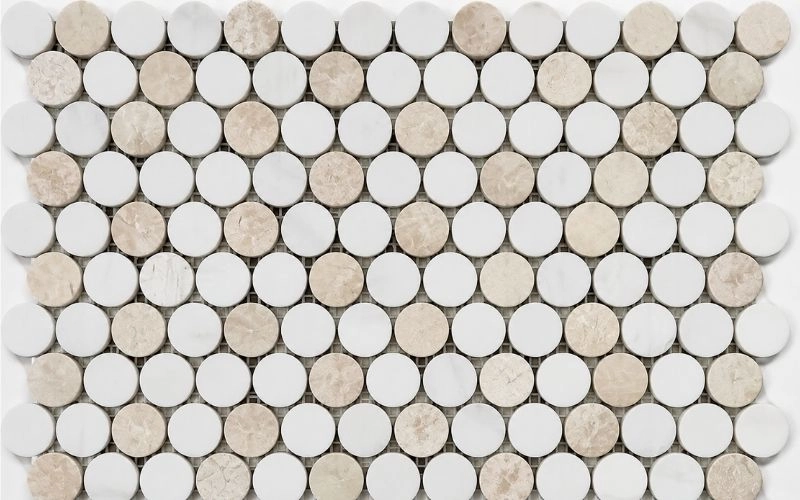
Penny round mosaic tile uses small circular chips to create a detailed repeating pattern with soft geometry and a distinctive handcrafted appearance.
The closely spaced circles create more visible grout joints than many larger tile formats. This additional grid of joints can strengthen the pattern, introduce texture, and help small mosaics follow curved, sloped, or compact surfaces.
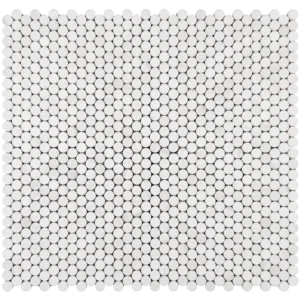
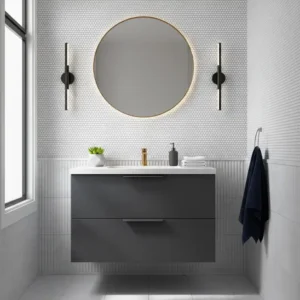
Penny mosaics are commonly used for shower floors, bathroom floors, kitchen backsplashes, vanity walls, niches, pools, fireplaces, powder rooms, bars, and commercial feature areas. Single-color designs feel calm and continuous, while stone blends create greater contrast and material movement.
Why Choose Penny Round Mosaic Tile?
Penny mosaics combine timeless circular geometry, fine visual texture, flexible applications, and broad compatibility with classic, modern, organic, and hospitality-inspired interiors.
Timeless Circular Pattern
Small round chips create a familiar design that works across vintage, traditional, transitional, and contemporary spaces.
Fine Visual Texture
Repeating circles and closely spaced grout joints introduce detail without relying on sharp or complex geometry.
Flexible Surface Coverage
Small mesh-mounted chips can adapt more easily to compact, curved, sloped, and carefully detailed installation areas.
Strong Material Expression
Marble, dolomite, porcelain, and stone blends create varied color, veining, contrast, and natural surface character.
Penny Round Materials and Design Styles
Compare material color, chip size, finish, grout contrast, natural variation, traction, maintenance, and application requirements before choosing a penny round mosaic.
Dolomite Penny
Bright white marble with subtle gray movement for clean bathrooms, shower floors, backsplashes, and vanity walls.
Carrara & Iceberg Penny
White and light-gray stone with natural movement for timeless bathrooms, kitchens, niches, and feature surfaces.
Two-Tone Marble Blend
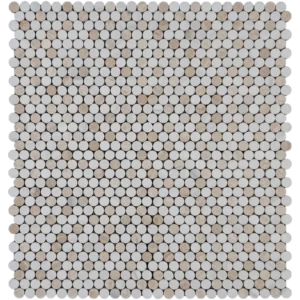
White, beige, gray, or contrasting marble chips create a more decorative field with layered color and movement.
Honed, Polished & Matte
Polished finishes reflect more light, while honed, matte, and textured surfaces create softer and quieter results.
Where Can Penny Round Tile Be Used?
Product suitability depends on the material, finish, traction, moisture, traffic, substrate, grout, and complete installation system.
- Shower floors: Selected small-format penny mosaics can follow drainage slopes and provide additional grout-joint texture.
- Bathroom floors: Create detailed flooring in powder rooms, primary bathrooms, guest baths, and vanity areas.
- Kitchen backsplashes: Add a soft circular pattern behind ranges, sinks, counters, bars, and open shelving.
- Shower walls and niches: Use penny mosaics across full walls or as a contrasting feature within selected sections.
- Pools and water features: Approved products may be used for pools, fountains, spas, and decorative water installations.
- Commercial accents: Introduce fine detail in hotels, restaurants, boutiques, cafés, reception areas, and hospitality interiors.
Choosing the Right Penny Round Mosaic
Consider chip size, material, finish, grout color, natural variation, traction, maintenance, and surrounding finishes before making a final selection.
- Chip size: Smaller circles create finer visual texture and a greater number of visible grout joints.
- Material: Natural stone offers authentic variation, while porcelain provides more consistent color and pattern.
- Grout color: Matching grout softens the circles; contrasting grout makes each chip more defined and graphic.
- Finish: Honed and matte finishes appear softer, while polished stone reflects more light and emphasizes color depth.
- Traction: For wet floors, confirm the product’s finish, chip size, grout-joint texture, and application suitability.
- Room coordination: Review samples with countertops, cabinetry, flooring, paint, fixtures, hardware, and lighting.
Control Sheet Seams and Circular Spacing
Penny mosaic installations require careful planning to maintain even chip spacing, prevent visible sheet lines, control grout joints, blend material variation, and manage cuts around drains, corners, fixtures, and transitions.
Dry-Lay Multiple Sheets
Review sheet connections and adjust individual penny chips to maintain consistent spacing between modules.
Blend Multiple Boxes
Mix sheets from different boxes to distribute natural stone color, veining, and tonal movement evenly.
Plan Cuts Carefully
Review drains, niches, corners, outlets, fixtures, and wall transitions before setting the first sheets.
Use Suitable Materials
Confirm thinset, grout, sealer, waterproofing, substrate preparation, and coverage for the selected product.
Penny Round Mosaic Tile FAQs
Helpful answers for comparing materials, finishes, grout, wet-area applications, samples, quantities, sealing, maintenance, and installation.
What is penny round mosaic tile?
Penny round mosaic tile is made from small circular chips arranged on mesh-mounted sheets to create a repeating dotted pattern.
Is penny tile suitable for shower floors?
Selected penny mosaics may be suitable for shower floors. Small chips can follow slope changes and provide additional grout joints, but the individual product specifications must be confirmed.
Can penny mosaics be used on bathroom floors?
Many penny mosaics are designed for bathroom floors. Confirm the material, finish, traction, traffic rating, substrate, and installation requirements.
What grout color works best with penny tile?
Matching grout creates a softer continuous field. Gray, charcoal, or contrasting grout makes each circular chip more visible and graphic.
Is marble penny tile difficult to maintain?
Maintenance depends on the stone, finish, sealer, grout, exposure, and cleaning products. Use stone-compatible cleaners for natural marble.
Does marble penny round tile need sealing?
Many marble and natural stone installations benefit from a suitable penetrating sealer. Requirements depend on the material, finish, grout, and application.
How can visible sheet lines be avoided?
Dry-layout several sheets, adjust individual chips, maintain consistent spacing, blend multiple boxes, and use an installer experienced with mosaics.
Is honed or polished penny tile better?
Honed finishes have a soft matte appearance, while polished finishes reflect more light. The best option depends on the room, moisture, desired appearance, and product suitability.
How much extra penny mosaic should I order?
Additional material may be needed for cuts, sheet adjustment, drains, corners, pattern alignment, variation, breakage, and future repairs.
Can I order a penny round mosaic sample?
Sample availability depends on the individual product. Review the product page or contact Stone Market USA to confirm material, color, finish, chip size, and current inventory.
Need Help Choosing Penny Round Mosaic Tile?
Contact Stone Market USA for assistance comparing penny mosaic materials, colors, chip sizes, finishes, grout options, applications, quantities, samples, and current availability.