

Best Mosaic Tiles for Pools
A complete guide to choosing beautiful, durable mosaic tile for swimming pools, waterlines, spas, steps, fountains, and luxury outdoor living spaces.
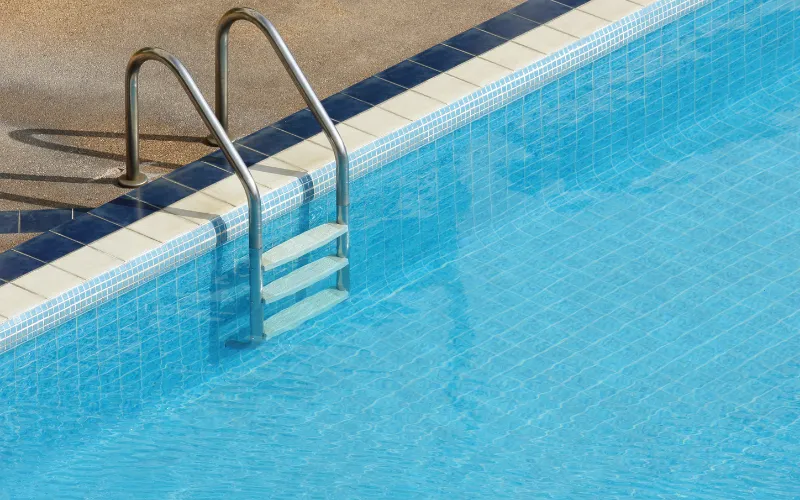 Pool Mosaic Inspiration
Choosing the best mosaic tile for a pool is not simply a matter of finding an attractive blue. The tile must also perform reliably in an environment shaped by water, sunlight, pool chemicals, temperature changes, and continuous use.
The right mosaic can transform a standard swimming pool into a carefully designed outdoor feature. It can introduce reflection, depth, color, and architectural detail while helping define important areas such as the waterline, steps, benches, raised spas, spillways, and decorative walls.
Mosaic tile is particularly effective in pool design because its small format can follow curves and transitions that are difficult to cover with large tile. This flexibility makes mosaics suitable for rounded edges, contoured pool walls, fountains, overflow details, spa interiors, and custom patterns.
From luminous glass mosaics in light aqua tones to dramatic deep-blue waterline designs, each material and color creates a different visual relationship with the water. The most successful selection considers not only how the sample looks when dry, but also how it appears when wet, submerged, shaded, and exposed to direct Florida sunlight.
This guide explains the principal materials, colors, patterns, applications, installation considerations, and maintenance requirements involved in selecting pool mosaic tile. It is intended to help homeowners, designers, builders, architects, and contractors compare options with greater confidence before placing an order.
To review available formats and finishes as you read, explore the complete Stone Market USA mosaic tile collection . Product suitability should always be confirmed for the exact pool system, installation area, climate, and project specifications.
Quick Pool Mosaic Summary
For most pool projects, the strongest mosaic choice is one that balances appearance with technical suitability. Before choosing solely by color or pattern, confirm where the material will be installed and whether it is approved for that application.
- Small mosaic formats adapt well to curves, steps, benches, waterlines, and spa walls.
- Glass mosaics create reflection, movement, and visual depth around water.
- Light blue and aqua tones typically produce a bright, coastal, inviting appearance.
- Navy and deep blue mosaics create stronger contrast and a more dramatic luxury look.
- Waterline tile should coordinate with the coping, patio, home exterior, and landscape.
- Pool-rated setting materials, grout, waterproofing, and movement joints are essential.
- Samples should be reviewed in natural light and, whenever possible, near water.
- Extra material should be ordered for cuts, waste, lot variation, and possible future repairs.
What This Guide Helps You Evaluate
A pool tile decision affects more than surface color. This guide approaches the selection process through material performance, design coordination, installation planning, and long-term maintenance.
Material Selection
Understand the visual and practical differences between glass, porcelain, and natural stone applications.
Design Coordination
Compare water color, coping, pavers, architecture, and landscaping as one complete exterior composition.
Installation Planning
Identify why substrate preparation, waterproofing, adhesives, grout, and movement accommodation matter.
Long-Term Care
Consider cleaning, mineral deposits, chemical exposure, finish suitability, and replacement material.
Why Mosaic Tiles Work So Well in Pool Design
Mosaic tile combines design flexibility with a format that can follow the curves, transitions, and architectural details commonly found in swimming pools and spas.
Large-format tile performs well on many flat surfaces, but pools rarely consist of flat planes alone. Rounded walls, radius corners, built-in benches, steps, tanning ledges, spillways, and raised spa surrounds require a material that can adapt without creating awkward cuts or excessive tension across the surface.
Mosaic sheets are composed of small individual pieces mounted on mesh or another backing system. Because each piece is separated by a grout joint, the sheet can flex more easily around curves and gradual changes in elevation. This makes mosaic tile one of the most practical decorative formats for complex pool geometry.
The smaller scale also allows designers to create a controlled visual rhythm. A consistent square mosaic can feel calm and architectural, while mixed tones, iridescent glass, or geometric shapes can introduce movement and become a focal point.
Mosaic tile is especially effective at the waterline, where a narrow band of material visually separates the pool interior from the coping and surrounding deck. That band may occupy only a small portion of the total surface, yet it strongly influences the final character of the pool.
Beyond appearance, the waterline is also an active maintenance zone. Mineral residue, sunscreen, body oils, and changing water levels can leave visible marks. A properly selected and installed mosaic surface provides a defined area that can be cleaned and maintained more easily than an unfinished transition.
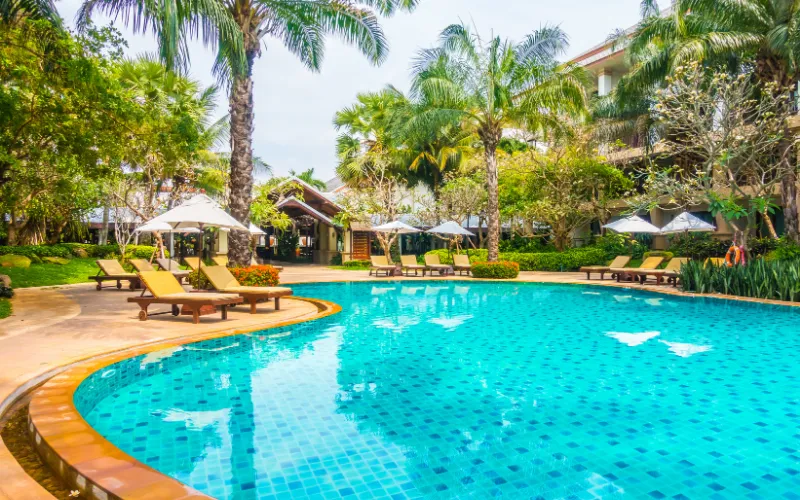
Follows Curves
Small individual pieces adapt more naturally to rounded walls, steps, spa contours, and curved pool details.
Defines Features
Mosaic tile can highlight waterlines, benches, steps, spillways, overflow edges, fountains, and raised spa walls.
Adds Visual Depth
Variation in color, finish, and reflection creates movement that becomes more pronounced when the surface is wet.
Supports Custom Design
A broad range of shapes, colors, and materials allows the pool to coordinate with the architecture and surrounding hardscape.
Where Pool Mosaics Are Commonly Used
Mosaic tile can be used as a subtle border or as a dominant design material. The correct use depends on the technical approval of the product and the visual role it needs to play within the project.
- Swimming pool waterlines
- Raised spa walls and spillways
- Pool steps and step markers
- Built-in benches and seating areas
- Fountains and decorative water features
- Infinity edges and overflow details
- Outdoor shower walls
- Fire-and-water feature surrounds
A mosaic used only above the waterline may not face the same conditions as a product installed continuously underwater. For this reason, a visually suitable tile is not automatically technically suitable for every pool application.
Glass Mosaic Tiles for Pools
Glass mosaic tile is one of the most visually expressive materials used in pool and spa design. Its reflective surface interacts with sunlight, moving water, and nighttime lighting in a way that opaque materials generally cannot reproduce.
When installed near or beneath water, glass can create a sense of depth and movement. Light passes across the surface, reflects from different angles, and changes as the water moves. This effect is especially noticeable in aqua, turquoise, cobalt, navy, and mixed blue mosaics.
Glass mosaics are frequently selected for luxury swimming pools, raised spas, resort-style waterlines, fountains, and decorative spillways. They can also be used more sparingly to create step markers, borders, or narrow accent bands.
- Strong light reflection
- Rich color under water
- Suitable for curved details
- Effective on focal features
- Available in mixed tones
- Modern and resort-inspired
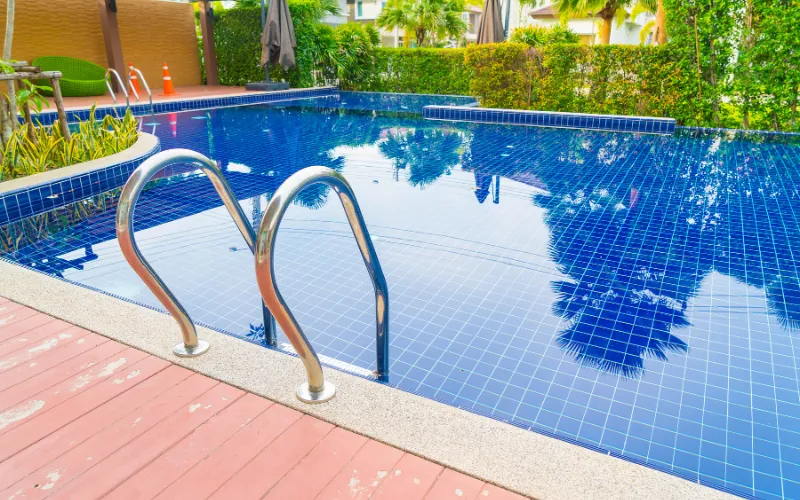
Why Glass Changes the Appearance of Water
The visible color of a finished pool is influenced by several elements working together: the interior pool finish, water depth, surrounding surfaces, sky reflection, sunlight direction, shade, and artificial lighting. Mosaic tile contributes to this overall impression, but it does not act alone.
Light-colored glass can make shallow areas appear bright, fresh, and transparent. Deeper blue glass can make the waterline feel more defined and can introduce stronger contrast against light coping or pale stone pavers. Iridescent finishes may shift between multiple tones depending on the viewing angle.
The grout color also affects the final appearance. A grout that is close to the tile color creates a more continuous visual field, while a contrasting grout emphasizes the shape of every individual mosaic piece. Neither approach is universally better; the correct choice depends on the intended design.
Advantages of Glass Mosaic Tile
- Reflective surfaces enhance sunlight and pool lighting.
- Saturated colors can remain visually strong when wet.
- Small pieces work well on curved pool and spa surfaces.
- Mixed shades create a handcrafted, layered appearance.
- Smooth surfaces are generally straightforward to clean.
- Glass can coordinate with modern, coastal, and resort designs.
Glass pool tile should be installed using a complete system approved for the product and application. Substrate preparation, waterproofing, setting material, grout, cure time, and movement joints must follow the recommendations of the tile and installation-system manufacturers.
The best glass mosaic does not simply add color—it changes how sunlight and moving water are experienced throughout the day.
Where Glass Mosaic Has the Greatest Visual Impact
Covering every pool surface with decorative glass is not necessary to create a premium effect. In many projects, a carefully placed waterline, spa face, spillway, or fountain wall provides enough reflection and color to transform the overall environment.
Raised spas are particularly effective locations because the vertical exterior wall is visible from the patio. When the spa includes a spillway, moving water activates the reflective qualities of the glass and creates a focal feature during both daytime and evening use.
Glass can also create visual continuity between a pool and nearby spaces. The same mosaic may appear as a small accent in an outdoor shower, cabana bathroom, or outdoor kitchen backsplash, helping connect multiple areas without repeating the material excessively.
For additional design direction, review the Mosaic Tile Trends 2026 guide to compare current color, finish, and pattern ideas.
Choosing the Best Mosaic Tile Color for a Pool
Pool mosaic color influences the mood of the outdoor space, the apparent color of the water, and the way the pool connects with the surrounding architecture and landscape.
Blue remains the most familiar pool tile color because it reinforces the visual association with clean water, open sky, and coastal environments. However, the category includes many distinct design directions—from nearly white ice blue to vibrant turquoise and deep midnight navy.
A color should be evaluated as part of the complete project rather than as an isolated sample. The same tile may appear pale in a showroom, brighter outdoors, darker underwater, or more reflective beneath pool lights. Nearby coping, pavers, walls, vegetation, and furniture can further change the way the color is perceived.
Light Blue
Light blue mosaics create a fresh, open, and relaxing appearance. They often make pool water feel clean and inviting without introducing heavy contrast.
Works Well With White coping, pale limestone, light travertine, coastal architecture, and bright landscaping.Deep Blue
Navy and deep blue mosaics introduce depth, definition, and stronger contrast. They are often selected for luxury pools, raised spas, and contemporary designs.
Works Well With Light coping, gray stone, minimalist architecture, metal accents, and evening pool lighting.Aqua & Turquoise
Aqua and turquoise mosaics create a lively, resort-inspired atmosphere. These shades can make shallow water appear especially bright and energetic.
Works Well With Palm landscaping, white or cream surfaces, coastal homes, light pavers, and modern outdoor furniture.Neutral Tones
White, beige, gray, and stone-inspired mosaics create a more understated transition between the pool and surrounding outdoor materials.
Works Well With Natural stone patios, modern concrete, warm exterior walls, wood-look surfaces, and quiet landscape palettes.Match the Mosaic to the Entire Outdoor Space
The pool should feel connected to the home, patio, coping, and landscape. Strong designs use either deliberate harmony or deliberate contrast—not unrelated materials selected one at a time.
Coastal Palette
Pair light blue or aqua mosaics with white coping, pale limestone, light travertine, and soft neutral furnishings.
Modern Contrast
Combine deep navy or mixed blue glass with gray pavers, charcoal accents, clean architectural lines, and restrained landscaping.
Natural Warmth
Use neutral or muted blue mosaics alongside beige stone, tumbled finishes, warm exterior walls, and organic planting.
Review Samples in the Actual Environment
Whenever possible, place mosaic samples near the future pool area and observe them during morning sun, afternoon light, shade, and evening conditions.
Wet the sample to see how saturation, contrast, and reflection change. Compare it directly with the coping, paver, or stone planned for the surrounding surface.
Should the Pool Tile Match the Patio?
The mosaic does not need to match the patio exactly. In fact, exact matching can make the design feel flat. The goal is coordination: similar undertones, compatible levels of warmth or coolness, and a clear relationship between the pool, coping, deck, and architecture.
A deep blue waterline can provide strong contrast against light travertine or limestone. A pale aqua mosaic can create a quieter relationship with white marble accents. Neutral gray mosaic may connect more naturally with concrete, porcelain pavers, or modern charcoal details.
When the property includes several connected areas—such as a pool, patio, outdoor kitchen, spa, and shower—it helps to establish a consistent material story. The Timeless Natural Stone Design Ideas guide offers additional inspiration for coordinating indoor and outdoor surfaces.
Waterline, Spa, and Pool Feature Ideas
Mosaic tile does not need to cover an entire swimming pool to have a strong architectural impact. Strategic placement at the waterline, spa, spillway, or feature wall can define the complete outdoor design.
The most successful pool designs treat mosaic tile as part of the architecture rather than as a decorative afterthought. The location of the mosaic determines how often it will be seen, how it interacts with moving water, and how much influence it has on the overall space.
A narrow waterline band may introduce just enough color to connect the pool with the sky and landscape. A fully tiled spa face can become a dominant focal point. A spillway or fountain wall can use reflection and movement to create a more dynamic experience.
Because every feature is exposed to different levels of moisture, sunlight, chemicals, and physical use, design decisions should always be paired with technical confirmation from the tile supplier, installer, and installation-system manufacturer.
Pool Waterlines
A waterline band creates a visual transition between the pool interior, water surface, coping, and surrounding deck. It is one of the most visible areas of the finished pool.
Raised Spas
Mosaic tile can transform the exterior face of a raised spa into a premium architectural feature, especially when combined with a spillway or overflow detail.
Water Features
Fountains, columns, rain walls, and decorative water surfaces use movement and reflection to make glass mosaics appear more active and dimensional.
Steps and Benches
Contrasting mosaic accents can help identify changes in depth, step edges, built-in seating, and other important functional areas.
Infinity Edges
Mosaic tile can reinforce the visual continuity of an infinity or overflow edge, particularly where water moves across a vertical exterior surface.
Outdoor Feature Walls
Poolside walls, outdoor showers, fire-and-water features, and cabana accents offer additional opportunities to repeat color and material in a controlled way.
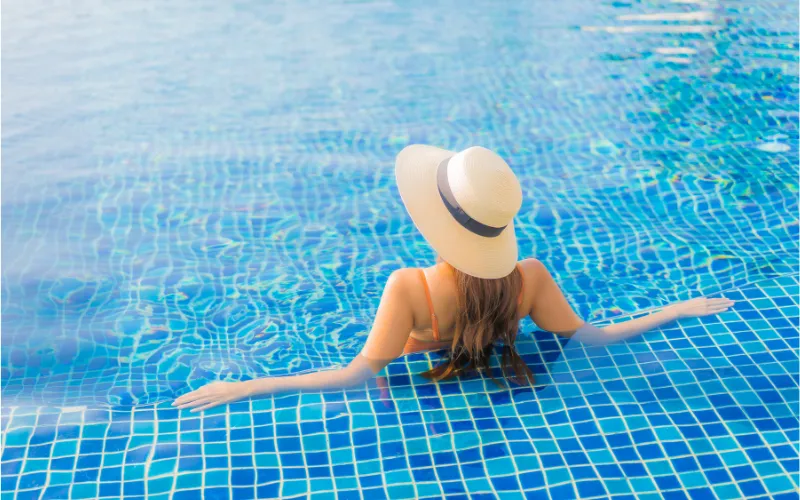 Raised Spa & Water Feature
Designing a Pool Waterline
The waterline is often the first tiled surface noticed when approaching a swimming pool. It frames the water, introduces color, and visually connects the pool interior with the coping and surrounding patio.
Traditional pool designs frequently use blue square mosaics in a consistent band. Contemporary designs may use elongated rectangles, mixed blue and gray tones, subtle iridescence, or a nearly monochromatic color field.
The width and intensity of the waterline should respond to the scale of the pool. A highly varied mosaic may create a dramatic statement in a small residential pool, while a larger pool may benefit from a quieter tile that remains visually balanced from a distance.
Maintenance should also be considered. Because changing water levels can leave mineral marks and residue, the selected surface should be compatible with approved pool-cleaning methods and the expected water chemistry.
Evaluate More Than the Tile Color
A successful waterline combines material suitability, visual proportion, grout selection, and coordination with the surrounding exterior finishes.
- Confirm that the tile is approved for the intended pool waterline application.
- Compare the mosaic with the coping, deck, pool finish, and home exterior.
- Review the tile dry and wet under natural outdoor light.
- Decide whether grout should blend with or emphasize the mosaic pattern.
- Consider how visible mineral residue may be on very dark or highly reflective surfaces.
- Order enough matching material for cuts, waste, and future repairs.
Raised Spas, Spillways, and Overflow Edges
A raised spa naturally attracts attention because its vertical surface rises above the pool deck. Mosaic tile can turn that elevation into a deliberate design feature rather than a secondary construction element.
Glass mosaics are particularly effective on spa faces because they react to moving water and artificial light. When the spa includes a spillway, the flow of water repeatedly changes the reflection and makes the surface appear more dimensional.
The tile may match the pool waterline for continuity or use a related but more dramatic variation to distinguish the spa. For example, a light blue pool waterline may be paired with a deeper mixed-blue spa face.
- Use matching tile for a calm, unified composition.
- Use a deeper tone on the spa for stronger visual hierarchy.
- Align grout joints carefully across visible corners.
- Coordinate spillway material with coping and wall caps.
- Review the design under nighttime pool lighting.
- Confirm suitability for continuously wet vertical surfaces.
Should the Spa Match the Pool Waterline?
Matching the spa and waterline creates a consistent material story and is often the safest approach for a refined, timeless design. The repeated tile helps visually connect the spa with the pool, even when the two elements have different elevations.
A contrasting spa can also work well when the contrast is intentional. The spa may use a darker version of the same color family, a more reflective finish, or a more varied blend. This allows it to become a focal point without appearing unrelated to the pool.
Avoid introducing a completely separate color or pattern unless it also connects with another element in the outdoor environment, such as the home exterior, patio furniture, fire feature, or landscape materials.
Matching Waterline and Spa
Repeating the same mosaic creates consistency and makes the pool and spa read as one complete composition. This approach works especially well in classic, coastal, and understated luxury designs.
Coordinated Contrast
Using a deeper, more reflective, or more varied mosaic on the spa creates emphasis while preserving harmony through a shared color family or finish.
Fountains, Columns, and Decorative Water Features
Mosaic tile performs especially well on vertical surfaces where moving water can travel across the face. Fountains, sheer descents, rain walls, scuppers, columns, and decorative spillways all provide opportunities to combine texture, reflection, and sound.
Glass mosaics can make these features feel brighter and more active, while neutral porcelain or stone-inspired mosaics can create a more architectural and restrained appearance. The correct choice depends on whether the water feature should blend quietly into the landscape or become a primary focal point.
Repetition should be controlled. Using the same bold mosaic on the waterline, spa, fountain, outdoor kitchen, and every wall may weaken its impact. A stronger composition often selects one major focal surface and repeats the material only in smaller supporting accents.
Choose the Focal Point
Decide whether the spa, fountain, waterline, or feature wall should attract the most attention.
Set the Color Hierarchy
Use the strongest color or most reflective finish on the primary feature and quieter materials elsewhere.
Repeat with Restraint
Carry the mosaic into one or two small accents to create continuity without making the design feel repetitive.
Test Day and Night
Evaluate how the surface responds to direct sun, shade, moving water, landscape lighting, and underwater illumination.
A premium pool design does not depend on using more decorative material. It depends on placing the right material where water, light, and architecture give it the greatest impact.
Poolside Feature Walls and Outdoor Showers
Mosaic tile can extend the pool design beyond the water itself. Outdoor shower walls, cabana backsplashes, poolside columns, and fire-and-water features can repeat the same color family and help the outdoor environment feel intentionally connected.
These secondary surfaces also provide flexibility when a particular mosaic is not approved for full submersion. A product may still be appropriate for an exterior vertical decorative application, depending on the manufacturer’s specifications, climate, substrate, and installation system.
For outdoor showers and vertical walls, consider how the surface will interact with sunlight, water spotting, soap residue, and routine cleaning. Highly textured or deeply irregular mosaics may create a beautiful handcrafted effect but can require more detailed maintenance.
A successful feature wall should also relate to the scale of the space. Small, highly detailed mosaics can appear busy across a very large wall. In that situation, the mosaic may work better as an inset, border, niche, or framed central panel.
Best Mosaic Shapes and Patterns for Pool Areas
The pattern of a mosaic influences how calm, modern, decorative, or traditional a pool feels. Shape should support the architecture rather than compete with it.
The shape of the individual mosaic pieces changes the visual rhythm of the pool surface. Small square mosaics create a familiar and balanced appearance. Rectangular mosaics introduce a more linear direction. Hexagon mosaics add a geometric character that can feel modern, decorative, or handcrafted depending on the color and finish.
Pattern scale is equally important. A highly detailed mosaic may look attractive in a small sample but feel busy when repeated across a large waterline or spa wall. Conversely, an extremely simple mosaic may appear flat if the surrounding architecture has very little texture or visual movement.
The best selection usually responds to the home itself. A clean contemporary residence often benefits from simple geometry and controlled color variation. A Mediterranean, coastal, or transitional home may support more tonal variation and a softer handcrafted look.
Square Mosaics
Square mosaics create a balanced grid and remain one of the most timeless options for waterlines, spas, and pool interiors.
Best For Traditional pools, modern waterlines, curved surfaces, and designs that need a calm visual rhythm.Rectangular Mosaics
Rectangular pieces create stronger horizontal or vertical movement and can make a waterline feel more architectural.
Best For Contemporary pools, narrow waterline bands, modern spa faces, and linear exterior architecture.Hexagon Mosaics
Hexagon mosaics add a recognizable geometric detail and work especially well when the color palette remains controlled.
Best For Boutique pools, spa accents, outdoor showers, feature walls, and projects that need a stronger design statement.Match the Pattern to the Visual Complexity of the Space
Pool design usually feels strongest when one element provides visual movement and the remaining materials support it.
Simple Architecture
A pool area with plain walls, minimal landscaping, and quiet hardscape can support more tonal variation or a more decorative mosaic pattern.
Detailed Architecture
Homes with strong stonework, decorative railings, multiple finishes, or complex landscaping usually benefit from a simpler mosaic.
Large Pool Surfaces
Larger installations often look more refined with consistent color and a controlled pattern that remains balanced from a distance.
Small Feature Areas
Spa faces, fountain panels, niches, and outdoor shower walls can support a more expressive geometric or mixed-tone mosaic.
To compare additional mosaic layouts, visit the Shop by Pattern collection. Pattern pages can help you review square, hexagon, herringbone, basketweave, penny round, and other formats for poolside bathrooms, showers, feature walls, and related spaces.
Using Natural Stone Around Pools
Glass mosaic often brings color and reflection to the waterline, while natural stone brings warmth, texture, and architectural continuity to the surrounding outdoor space.
Balance Reflective Mosaic with Natural Texture
Travertine, marble, limestone, and other natural stones are frequently used for pool decks, coping, walls, steps, and outdoor living areas. Their variation and texture can soften the reflective appearance of glass mosaic and make the pool feel more connected to the architecture.
A deep blue waterline can create a Mediterranean contrast with light travertine. A pale blue glass mosaic may feel brighter when paired with white or cream stone. Gray stone can support aqua, navy, or mixed blue mosaics in a contemporary design.
The most important consideration is suitability. Natural stone varies in density, porosity, finish, texture, and maintenance requirements. A stone that performs beautifully on an interior wall may not be appropriate for a wet exterior walking surface.
Blue Mosaic + Travertine
Light or deep blue mosaic paired with cream or beige travertine creates a relaxed Mediterranean and resort-inspired atmosphere.
Aqua Mosaic + Light Marble
Pale aqua or light blue glass can coordinate beautifully with white marble accents for a brighter, more refined outdoor design.
Navy Mosaic + Gray Stone
Deep blue mosaic with gray limestone, porcelain pavers, or concrete-inspired surfaces creates a stronger contemporary contrast.
Why the Stone Finish Matters
The visual appearance of natural stone is only one part of the selection. Finish affects texture, reflection, maintenance, and how the surface may perform when wet.
- Honed finishes create a softer, lower-sheen appearance.
- Tumbled finishes introduce texture and an aged character.
- Brushed or textured finishes may provide more surface grip.
- Polished finishes can become visually and physically less practical in wet walking areas.
- Porosity and sealing needs vary by stone type and finish.
- Suitability should be confirmed for the exact climate and pool environment.
Pool Mosaic Installation and Maintenance
Even a premium mosaic tile can fail if the substrate, waterproofing, setting material, grout, expansion planning, or maintenance system is incorrect.
Pool tile installation is a complete assembly rather than a single product decision. The tile, substrate, waterproofing membrane, adhesive, grout, movement joints, edge details, and curing process must work together in a continuously wet and chemically active environment.
Installation requirements vary by product and project. Glass mosaic, porcelain mosaic, and natural stone may require different setting materials, trowel techniques, grout products, and preparation methods. The installer should follow the published instructions of all manufacturers involved in the assembly.
Pool construction also requires appropriate curing time before filling or exposing the installation to chemicals. Filling the pool too soon can compromise materials that have not completed their required cure.
Prepare the Substrate
The surface must be stable, clean, properly formed, and suitable for the waterproofing and tile installation system.
Use Approved Materials
Select waterproofing, setting material, and grout approved for the specific tile and submerged or wet-area application.
Control Alignment
Mosaic sheets must be adjusted carefully so sheet lines, uneven joints, and excessive adhesive buildup do not remain visible.
Respect Cure Times
Allow each component to cure according to the manufacturer’s requirements before grouting, cleaning, filling, or chemical exposure.
Confirm the Complete Installation System
The final specification should be reviewed by qualified project professionals before installation begins.
- Substrate condition and dimensional stability
- Pool-rated waterproofing system
- Tile-specific setting material
- Suitable grout type and color
- Movement and expansion joint placement
- Interior and exterior corner treatment
- Required cure time before filling
- Compatibility with pool chemistry and cleaning methods
Cleaning Pool Waterline Mosaic
Waterline tile is exposed to mineral deposits, sunscreen, body oils, pool chemicals, and changing water levels. Routine maintenance helps prevent heavy buildup and preserves the original color and reflection of the mosaic.
Use cleaning products and tools approved for the specific tile, finish, grout, and pool system. Abrasive pads, aggressive chemicals, and improper tools may scratch glass, alter natural stone, or damage grout joints.
Regular inspection is also important. Loose pieces, cracked grout, failed joints, or visible movement should be evaluated before water penetrates further into the assembly.
| Maintenance Area | Recommended Approach | What to Avoid |
|---|---|---|
| Routine Waterline Cleaning | Use approved non-abrasive products and clean residue before heavy mineral buildup develops. | Harsh scrapers, aggressive pads, and unapproved acidic cleaners. |
| Glass Mosaic | Use tools and cleaners that preserve the reflective surface and grout joints. | Abrasive methods that may scratch or dull the glass. |
| Natural Stone | Follow stone-specific cleaning and sealing guidance based on the exact material and finish. | Generic acidic cleaners and products not approved for natural stone. |
| Grout and Joints | Inspect regularly for cracking, separation, staining, or missing material. | Ignoring small failures that may allow further moisture intrusion. |
| Water Chemistry | Maintain balanced pool chemistry according to the pool professional’s recommendations. | Long-term chemical imbalance that may contribute to scale, staining, or material deterioration. |
Include Extra Tile for Cuts, Waste, and Future Repairs
Mosaic sheets may require additional material around curves, corners, steps, spillways, and detailed transitions. Shade and tone can also vary between production lots, particularly in glass blends and natural materials.
Keeping extra matching material can be valuable if a repair is needed later. Replacement tile purchased years afterward may not match the original production lot exactly.
The appropriate overage depends on the pattern, application, layout, installer, and project complexity. Confirm the final quantity with the installer before ordering.
For a broader overview of mosaic materials, shapes, applications, and design planning, visit the Ultimate Mosaic Tile Guide Hub .
Pool Mosaic Material Comparison
Glass, porcelain, and natural stone can each contribute to a successful pool design, but they differ in appearance, maintenance, installation needs, and recommended applications.
| Material | Visual Effect | Maintenance | Design Flexibility | Common Applications | Key Consideration |
|---|---|---|---|---|---|
| Glass Mosaic | Reflective, luminous, vibrant, and strongly influenced by water and light. |
Generally straightforward when cleaned with approved non-abrasive products. |
Available in many colors, blends, finishes, and small formats. | Waterlines, spas, spillways, fountains, accents, and approved submerged applications. | Requires proper setting materials, grout, substrate preparation, and installation technique. |
| Porcelain Mosaic | Clean, controlled, consistent, and available in stone-look or modern color options. |
Often selected for practical maintenance and durability. |
Suitable for simple, contemporary, and architectural pool designs. | Waterlines, exterior walls, pool areas, and selected submerged applications when approved. | Confirm finish, slip considerations, exterior rating, and application approval. |
| Natural Stone | Organic, varied, warm, architectural, and naturally distinctive. |
Maintenance and sealing needs vary by material and finish. |
Excellent for coordinating pool mosaics with patios, coping, and walls. | Pool decks, coping, walls, steps, accents, and selected wet-area installations. | Porosity, finish, chemistry, climate, sealing, and suitability must be evaluated carefully. |
Choose Glass Mosaic
Glass is ideal when the design goal is to maximize light, movement, saturated color, and a resort-inspired visual effect.
It is especially effective on waterlines, spa faces, spillways, fountains, and carefully selected submerged applications.
Choose Porcelain Mosaic
Porcelain is a strong option for projects that prioritize consistent appearance, practical maintenance, and clean modern design.
It can also coordinate well with porcelain pool pavers and stone-look exterior surfaces.
Choose Natural Stone
Natural stone is ideal when the goal is to connect the pool with patios, walls, coping, landscaping, and organic architectural materials.
Material and finish suitability should be confirmed for every wet or exterior application.
Common Pool Mosaic Selection Mistakes
Many pool tile problems begin before installation. The most common mistakes occur when color, application, installation, and ordering decisions are treated separately.
Choosing from a Dry Sample Only
Mosaic color and reflection can change significantly when wet, submerged, exposed to sunlight, or viewed beneath pool lighting.
Assuming Every Mosaic Is Pool-Rated
A tile suitable for a bathroom wall or backsplash may not be approved for exterior, waterline, or submerged installation.
Ignoring Grout Color
Grout can either blend the mosaic into one surface or emphasize every individual piece and joint.
Selecting Materials Independently
Pool tile, coping, deck, walls, furniture, and landscaping should be reviewed as one coordinated composition.
Ordering the Exact Measured Quantity
Cuts, curves, breakage, pattern alignment, waste, and future repairs all require additional material.
Finalizing Tile Before Installer Review
The installer should review the tile backing, finish, sheet construction, application, and installation system before the order is placed.
Using Too Many Feature Materials
Repeating bold mosaic across every pool feature can make the design feel busy and reduce the visual impact of the main focal point.
Overlooking Long-Term Maintenance
Very dark, textured, reflective, or porous surfaces may show residue differently and require specialized care.
How to Choose the Best Mosaic Tile for Your Pool
The best pool mosaic is the one that satisfies the technical requirements of the application while supporting the complete architectural and landscape design.
Define the Application
Identify whether the mosaic will be used at the waterline, inside the pool, on a spa, spillway, fountain, or exterior wall.
Confirm Suitability
Verify that the product and complete installation system are approved for the exact environment.
Coordinate Materials
Compare the mosaic with the coping, deck, pool finish, home exterior, and surrounding landscape.
Test the Sample
Review the material dry, wet, in sun, in shade, and under nighttime lighting whenever possible.
Plan the Order
Confirm quantity, overage, production lot, grout, installation materials, lead time, and spare material before purchasing.
For a bright, relaxed pool, light blue and aqua glass mosaics are strong choices. For a more dramatic and luxurious appearance, deep blue, navy, or mixed blue glass can provide greater contrast and visual depth.
For a quieter and more architectural result, porcelain or neutral mosaics may integrate more naturally with stone-look pavers, modern concrete surfaces, or restrained exterior palettes.
The final decision should balance design, maintenance, technical suitability, budget, installation complexity, and long-term product availability. A well-selected mosaic can make a relatively small surface feel custom, intentional, and connected to the complete outdoor living environment.
Frequently Asked Questions
The following answers address the most common questions about selecting mosaic tile for pools, spas, and waterlines.
Are mosaic tiles good for swimming pools?
Yes. Mosaic tiles are well suited to swimming pools because their small format can adapt to curves, steps, benches, waterlines, spas, spillways, and detailed architectural features. The exact tile must still be approved for the intended pool application.
What color mosaic tile is best for pools?
Blue remains the most popular family of pool mosaic colors. Light blue creates a bright, clean appearance, while deep blue creates stronger contrast and a more dramatic luxury effect. Aqua, turquoise, gray, white, and neutral tones can also work well depending on the surrounding design.
Can glass mosaic tile be used in a pool?
Many glass mosaic products are designed for pool waterlines, spas, fountains, and selected submerged applications. Product suitability must be verified, and the tile should be installed using an approved pool-rated system.
What is the best tile for a pool waterline?
Glass and porcelain mosaics are common waterline choices because they are available in many colors, shapes, and finishes. The best option depends on the desired appearance, maintenance expectations, pool system, climate, and installation specification.
Should pool mosaic tile match the patio?
It does not need to match exactly, but it should coordinate with the patio, coping, home exterior, and landscape. Deliberate contrast often looks stronger than exact matching.
How much extra mosaic tile should be ordered?
The correct overage depends on the pool shape, curves, cuts, pattern, application, and installer. Confirm the final quantity with the installer and retain additional matching material for future repairs.
Does grout color affect pool mosaic appearance?
Yes. A grout color close to the mosaic creates a more continuous appearance, while contrasting grout emphasizes the individual pieces and pattern. Samples should be reviewed with the proposed grout before installation.
Can natural stone be used around pools?
Natural stone is commonly used for pool decks, coping, walls, steps, and outdoor living areas. Suitability depends on the stone type, finish, porosity, climate, maintenance needs, slip considerations, and pool environment.
Explore Mosaic Tile for Your Pool Project
Compare mosaic colors, materials, patterns, and finishes for swimming pools, spas, waterlines, fountains, outdoor showers, residential projects, and commercial applications. Contact Stone Market USA for product information, availability, samples, and project assistance.
Product suitability, installation requirements, slip characteristics, maintenance, sealing, chemical compatibility, and exterior performance vary by material and application. Always review current product specifications and consult qualified project professionals before installation.