

Natural Stone Fireplace Surrounds: A Practical Guide to Material, Heat-Area, and Finish Selection
A fireplace surround has to work as more than a decorative backdrop. The stone must suit the room, the finish should be practical for its location, and the design must account for the areas exposed to heat. A surround may also connect to a hearth, mantel, adjacent millwork, flooring, or built-ins, so a material that looks appealing in a small sample may need further evaluation in the full composition.
This natural stone fireplace surround guide explains how to compare stone types, separate the design zone from the heat zone, coordinate surface finishes, and prepare better questions for your installer or stone supplier.
To begin comparing formats and styles, browse Stone Market USA’s natural stone tiles and mosaics. Tile and mosaic options can be useful for a surround design, but the appropriate material, setting system, and layout depend on the fireplace assembly and project conditions.
Start by mapping the fireplace, not by choosing a color
Natural Stone Character
Compare stone by appearance and use conditions
Selection Guide
Plan the heat-exposed areas with the full assembly in mind
Material Guidance
Start by mapping the fireplace, not by choosing a color
Before selecting a stone, measure and sketch the entire installation area. Identify the firebox opening, the material immediately around it, the hearth, the mantel or shelf, and any side returns or upper wall treatment. A drawing or elevation helps reveal whether the stone will be used as a narrow trim, a broad field, a full-height feature, or a combination of formats.
It is also important to distinguish the visible surround from the components closest to the fire. A fireplace may include several zones with different exposure levels and different requirements. The area directly bordering the opening may not be treated the same way as a decorative wall farther above or beside it. The hearth may also face separate requirements related to its construction, projection, and relationship to the firebox.
Do not assume that a stone tile is automatically suitable for every location around every fireplace. Confirm the fireplace manufacturer’s installation requirements, applicable building requirements, substrate conditions, and the recommendations of a qualified installer before ordering material. Those details can affect allowable clearances, backing materials, adhesives or mortars, grout joints, movement accommodation, and whether a particular finish or format is appropriate.

Compare stone by appearance and use conditions
Natural stone is not a single uniform category. Marble, limestone, travertine, slate, and other stones can differ in color, porosity, veining, texture, edge character, and response to cleaning or handling. The right comparison is not simply which stone looks best in a photograph. Consider how the stone will relate to heat exposure, airborne dust or soot, touch, cleaning, and the room’s existing materials.
Marble
Marble is often selected for its veining and range of backgrounds, from restrained neutrals to more expressive movement. A polished surface can emphasize depth and reflect light, while a honed surface presents a softer, lower-sheen appearance. Because marble can be sensitive to acids and may show etching or surface changes, cleaning products and maintenance habits deserve attention before it is selected for a prominent surround.
Limestone and travertine
Limestone and travertine can introduce a quieter, more architectural character. Their surface may include pores, filled areas, open texture, or naturally varied markings, depending on the stone and finish. These details can affect how the surround reads at close range and how readily dust collects in textured areas. Ask how the supplied material is finished and whether the intended installation calls for a particular treatment or care method.
Slate and other textured stones
Slate and other cleft or naturally textured stones can create a stronger visual contrast with smooth cabinetry, painted walls, or metal fireplace components. Texture can help conceal small variations in appearance, but it may also make precise detailing, cleaning, and transitions more involved. Review the actual surface rather than relying only on the stone name, since finish and lot variation can significantly change the result.
For a broader comparison of available stone families, use the option to shop natural stone by material. Treat the material category as a starting point, then verify the specific stone’s finish, format, variation, and installation guidance before making a project decision.
Plan the heat-exposed areas with the full assembly in mind
Heat planning is not just a question of whether a stone can tolerate warmth. The fireplace is an assembly that may include the appliance, framing, wallboard or backer, mortar or adhesive, grout, trim, mantel, and nearby combustible materials. Each part can have its own limitations and required clearances.
Ask these questions before finalizing the layout:
- Which surfaces are directly adjacent to the firebox opening?
- Will the stone continue onto the hearth or another horizontal surface?
- What clearances are required around the appliance and mantel?
- What substrate and setting materials are specified for the installation?
- How will corners, inside returns, control joints, and transitions be handled?
- Does the selected tile or slab format fit the approved installation method?
A qualified installer should review the actual fireplace model and site conditions rather than relying on a general rule for all fireplaces. Gas, wood-burning, electric, and prefabricated systems may have different instructions. Local requirements may also affect the design. Stone selection should follow that review, not replace it.
If the surround will be installed over an existing surface, investigate the substrate before purchasing tile. A sound-looking wall may still require preparation, removal of unsuitable layers, or correction of unevenness. These conditions can influence the finished plane, grout alignment, and the amount of material needed for cuts.
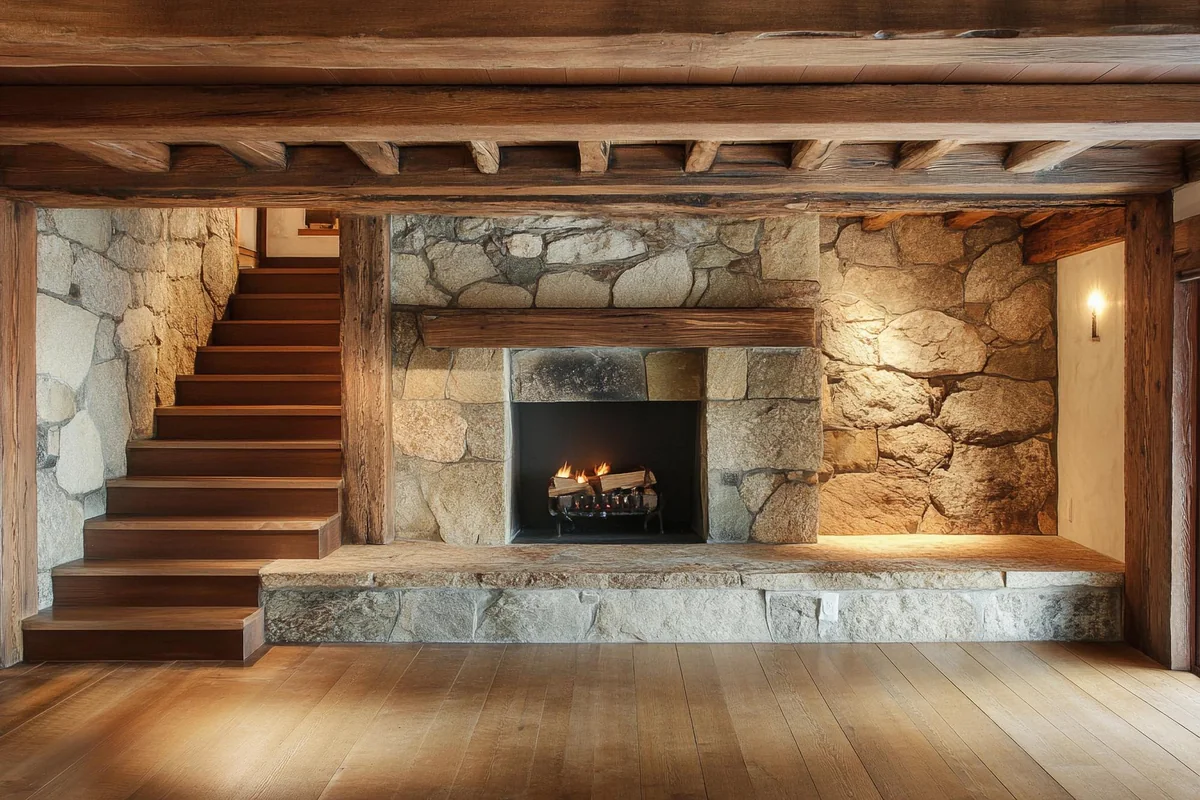
Coordinate the finish with the room
Finish coordination is where a practical stone selection becomes a coherent design. Compare the stone’s sheen, texture, edge profile, and visual movement with nearby surfaces rather than considering the surround in isolation.
Polished, honed, and textured surfaces
Polished stone reflects more light and can make veining appear sharper. It may coordinate well with polished metal, glass, or other reflective elements, but it can also make fingerprints, dust, or surface marks more noticeable depending on the stone and location.
Honed stone has a matte or low-sheen appearance that generally reads more quietly beside painted walls, natural wood, and brushed hardware. It does not eliminate maintenance considerations, and the final appearance can vary by stone, color, and lighting.
Textured, tumbled, brushed, or cleft finishes add tactile variation and can reinforce a rustic or heavily layered interior. They may require more attention at grout lines, corners, and transitions because the surface is less visually uniform. Use a physical sample to study how light changes across the texture.
Color, pattern, and scale
Choose the overall visual role of the fireplace before choosing a layout. A quiet stone in a large format can let the mantel or room furnishings lead. A strongly veined stone may work better when the layout allows its movement to remain legible. Small mosaics can add pattern, but many grout lines may make the surround feel busier, particularly when the surrounding room already contains patterned flooring, textiles, or cabinetry.
Natural stone should be reviewed as a range rather than as one exact color. Pieces may differ in shade, veining, movement, texture, and pattern. A sample is useful for checking undertones and finish, but it cannot represent every piece in a natural-stone installation. If consistency or vein direction matters, discuss selection and layout expectations with the supplier and installer before ordering.
For a closer explanation of how this affects design decisions, read about natural stone color variation. That context can help you decide whether to embrace movement, request a more controlled visual range when available, or revise the layout so variation feels intentional.
Review the exact finish, product documentation, and intended application rather than relying on finish name or appearance alone.
Common planning mistakes to avoid
- Choosing from a tiny sample alone. A small sample may not show the stone’s full range of movement or how the finish reacts to the room’s lighting.
- Treating the firebox edge as an ordinary wall. The area nearest the opening requires review of the complete fireplace system and its instructions.
- Ignoring transitions. Plan how the surround meets the hearth, mantel, drywall, trim, flooring, and adjacent walls before installation begins.
- Overlooking grout and joint layout. Grout color, joint width, and alignment can change the apparent scale and contrast of the stone.
- Assuming sealer solves every maintenance concern. Sealing may be part of a care plan for some stones, but it does not make natural stone stain-proof, waterproof, etch-proof, or maintenance-free.
- Ordering before confirming quantities and cuts. The installer should account for the layout, waste, corners, pattern matching, and any future material needs before the order is placed.
A related review of common natural stone mistakes can help you audit the project before material is purchased. The most expensive problems are often caused by decisions about layout, substrate, transitions, or expectations rather than by the stone itself.
A practical selection process
Use this sequence to narrow the options without separating design from installation:
- Confirm the fireplace type, manufacturer instructions, required clearances, and local project requirements.
- Map the surround, hearth, mantel, side returns, and any adjoining surfaces.
- Choose a short list of stone families based on the room’s palette and the desired visual scale.
- Compare physical samples in the actual room and under daytime and evening lighting.
- Review finish, texture, edge details, grout, and transitions with the installer.
- Confirm substrate preparation, setting materials, layout, quantity, and care guidance before ordering.
This process keeps the design decision grounded in the actual fireplace rather than in a single photograph or isolated tile sample. If the project includes a hearth or other horizontal surface, make sure those components are reviewed as part of the same assembly and not added after the surround has already been finalized.
Final takeaway
The most successful natural stone fireplace surrounds balance three decisions: the stone’s visual character, the demands of each heat-related zone, and the way the finish coordinates with the rest of the room. Compare real samples, expect natural variation, and resolve clearances, substrates, setting materials, and transitions with the appropriate professionals before installation. That preparation makes it easier to select a stone that looks right and fits the project conditions.
Frequently asked questions
Quick answers to practical selection, installation, care, and planning questions.
Can any natural stone be used around a fireplace?
No single general rule covers every stone, fireplace, or installation. Confirm the fireplace manufacturer’s instructions, the complete assembly, local requirements, and the installer’s recommendations before selecting material for a heat-exposed area.
Should the fireplace surround and hearth use the same stone?
They can use the same stone, but they do not have to. Using one material can create continuity, while a complementary stone or finish can separate the vertical surround from the horizontal hearth. The hearth’s specific construction and installation requirements still need separate review.
Is polished stone better than honed stone for a fireplace surround?
Neither finish is universally better. Polished stone is more reflective and can emphasize pattern, while honed stone is generally quieter and less glossy. Compare the finish with the room’s lighting, nearby materials, cleaning expectations, and the stone itself.
Do I need to seal a natural stone fireplace surround?
That depends on the stone, finish, location, and care guidance for the selected material. If sealing is recommended, it should be viewed as one maintenance step—not a guarantee against stains, moisture, etching, or damage. Follow the applicable product and installer guidance.
Find the Right Tile or Stone for Your Project
Browse Stone Market USA collections or contact our team for help comparing materials, finishes, applications, samples, quantities, and current availability.